
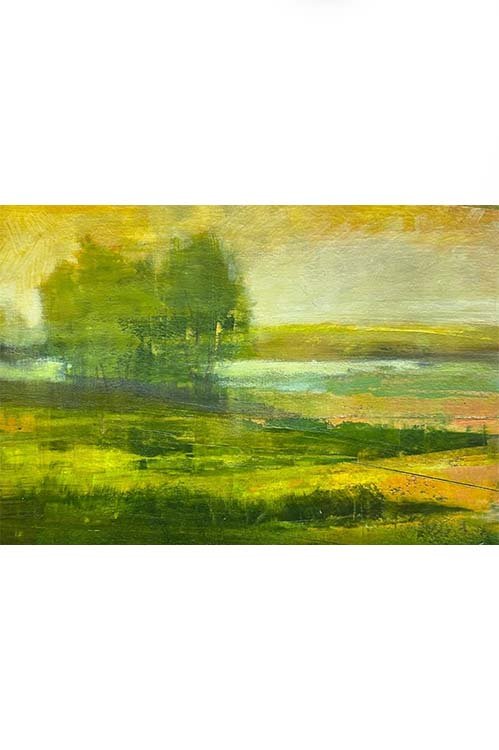
 Image 1 of 2
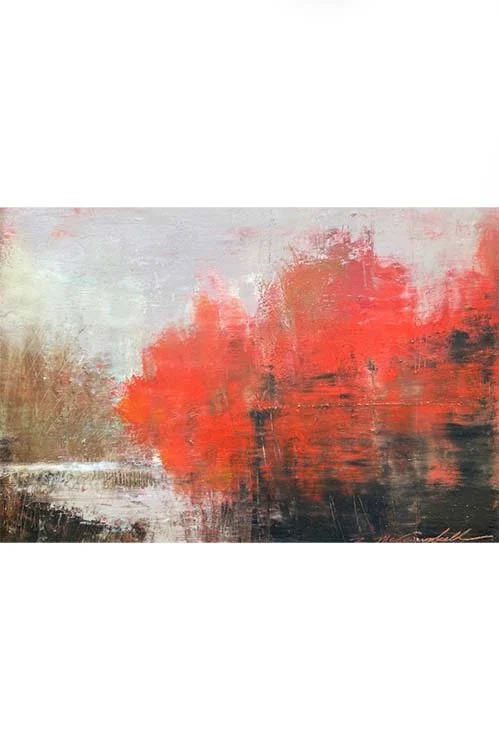 Image 2 of 2
Abstracting the Landscape: Oil & Cold Wax on Paper (Online Course) Fall 2026 w/ Rachael McCampbell
November 4 to December 9 (Wednesdays), 10:00 AM to 12:30 PM, Eastern Time
**All sessions are live and will be recorded, students do not have to be present. All recordings will be available to students for 3 months after the final session, after 3 months the recording will be deleted.
Please check your email spam/junk folder for your Zoom invite. Our business hours are 10:00 AM through 5:00 PM. All course information and email correspondence will be sent during business hours. If students purchase a course, workshop, demo or recording outside business hours or during the weekend the course information or recording will be sent the following business day.
DEMO:
Course Description
Reimagine the landscape through expressive shapes, textures, lines, and rhythm using cold wax and oil on paper. This course invites you to loosen your hand and uncover your creative voice through layered mark-making using unconventional tools. We’ll move from small studies to fully realized paintings, with depth and personality, embracing the history within each layer. You’ll finish with mounted works ready to hang—and a deeper connection to your process.
Course Outline
Week 1 — Seeing Differently: Breaking the Landscape into Shapes
Learn to simplify the landscape by translating what you see into essential shapes, lines, and value patterns.
Week 2 — Materials & Mark-Making: Learning the Language
Explore cold wax and oil on paper while experimenting with unconventional tools to create a wide range of expressive marks.
Week 3 — Building the Painting: Layers & History
Develop depth and interest through layering, adding and subtracting paint to create surfaces rich with visual history.
Week 4 — Abstraction & Editing: The Art of Omission
Refine your compositions by editing, simplifying, and pushing abstraction to strengthen mood and design.
Week 5 — Resolution & Voice: Finishing with Intention
Bring your paintings to completion, resolving edges, values, and composition while developing a confident, personal voice.
Course Materials
Set Up: Have your supplies on a table with paper towels and trash can. If you have window ventilation, it’s nice to use that. Have a large sheet of palette paper, a glass palette, or a large sheet of parchment paper taped down to your table. You need room to mix the cold wax with oil. 12 x 16” or larger is good.
Materials:
Pad of Arches 12” x 16” Oil Paper (NOT WATERCOLOR PAPER)
Oil Paints:
Oil paint by Gamblin other professional-grade makers are fine (the only student-grade I recommend is the Gamblin 1980 brand)
All paints are 37 ml tubes, except for Titanium white, get a 150 ml tube.
Red Cadmium Light
Quinacradone Magenta
Phthalo Blue
Ultramarine Blue
Cadmium Yellow Medium
Hansa Yellow Light or lemon yellow
Titanium White 150 ml. Tube
Ivory Black
Raw Umber
You will need at least two transparent colors like sap green, Transparent Orange, Indian yellow, Green gold or Dioxazine Purple, etc….
Optional Colors- or any color you like:
Warm White
Yellow ochre
Burnt Umber
Dioxazine purple
Indian Yellow
Green Gold
Asphaltum
Cadmium Chartruese
Radiant Magenta
Also, I do not recommend water soluble oils but if you have them, they will work ok. They just seem dryer and harder to manipulate. And you CANNOT USE water.
Please Bring:
A journal and pen
1 16 oz Gamsol (odorless mineral spirits, to clean your tools constantly —or you can clean with vegetable oil if you want to bring that)
Gamblin Cold Wax Medium, 16 oz can
2 empty glass jars to hold some Gamsol in to clean your brush and one that stays clean, or a brush cleaner cannister works great
A large pad of Palette paper- 16 x 20” or larger (Or a roll of Wax paper and masking tape to tape it on the table—doesn’t work as well as palette paper but it’s okay).
A selection of OLD oil or acrylic brushes: flat, round and fan etc. Not good brushes. We mainly don’t use a lot of brushes but bring a few flat and round synthetics if you want to for finer details.
A roll of blue painter’s tape 1” wide
Roll of masking tape (optional to hold down wax paper that won’t work with the blue painters tape)
A roll of Wax Paper for uses in the cold wax process
A regular 2B pencil
1 Pad of newsprint paper (18 x 24” or 24” x 36”) or you can use sheets of an old newspaper. But the newsprint works best.
Scissors
Utility knife to create masks
Apron – it’s a very messy process…wear old clothes
Lots of the thin, disposable Nitrile gloves or protective gloves, at least 8 pairs (I buy a box of them from Costco and they last a long time).
Texture making items such as: cardboard, raffia, bubble wrap, metal dish scrubber, soft string or yarn, jute, stamps, stencils, cookie cutter tools you don’t care about, combs, etc.
Brayers: YOU CAN JUST BRING ONE BRAYER, 2” or 4” soft rubber brayer
Dough or bowl scrapers (I bring more than one so I don’t have to clean them constantly) My favorite is this small and medium sized pair that you can purchase on Amazon through Messermeister:
https://www.amazon.com/dp/B0BFJNJ92C?ref=ppx_yo2ov_dt_b_fed_asin_title for $15
I also like Princeton Catalyst #6 for when the wax hardens up on day 2.
At least one or two R&F Pigment Sticks (I love to use the transparent color alizarin orange, sap green.
One 4 oz bottle of Gamblin Galkyd Lite Medium
Stencils (optional) if you have them (you can make your own with newsprint)
Mark making tools such as: (optional) Vine and compressed charcoals, pencils, Art Graf Carbon, Stabillo “Woody” wax and/or water soluble wax pencils. You do NOT have to bring all these or any of these pencils, only if you have them. They are rarely used. Some mixed media artists like to use these but others don’t. I think bringing some vine charcoal would be a good idea though.
12 inch ruler
A triangle ruler to measure 90-degree angles
Powered pigments (optional) if you have them, Dry chalky pastels like Rembrandt or Metallic Pan pastels, or other metallic powders are fun to use like Pan Pastels, I like the gold powders.
Palette knives. Bring several so you don’t have to clean constantly. For Cold Wax Medium, I like the trowel-shaped ones. See my list on my website for the exact type, NOTE: DO NOT BRING OIL PASTELS, WE CANNOT USE THEM WITH THIS PROCESS MOUNTING AND FRAMING: OPTIONAL PART OF THE WORKSHOP
Part of this workshop is to show you how to mount your work on a cradled wood panel and frame it too IF YOU WANT TO! IF YOU SIMPLY WANT TO WORK ON PAPER AND NOT FRAME ANYTHING THEN IGNORE THIS PART, OR, YOU CAN MOUNT IT AND NOT BUY THE FRAME, IT’S UP TO YOU. IF YOU WANT TO TRY THIS, YOU WILL NEED THIS:
Two 12 X 16 X 1.5” cradled wood panels (these fit the Arches Pad of paper you are buying) You might only mount one and can save the other one for later, I use these: https://www.dickblick.com/products/blick-premier-wood-panels/?fromSearch=%2Fsearch%2F%3Fsearchword%3Dcradled%20wood%20panels
1 jar of GOLDEN HEAVY GEL MEDIUM 8 oz jar—this is the glue for the paper to panel
1 or 2 FLOAT FRAMES, GOLD OR WHATEVER COLOR YOU WANT. JUST MAKE SURE IT’S THE CORRECT DEPTH FOR YOUR 1.5” CRADLED PANEL.
EXAMPLE: https://www.dickblick.com/products/blick-contour-floater-frames/
Lightly gesso the panel before attaching the artwork to it—8 oz is enough gesso
Acrylic black paint to paint the side edges — small jar or 2 oz tube is fine:
https://www.dickblick.com/products/golden-heavy-body-artist-acrylics/?Item=00620-2043
· Wire and D-Rings for the backs to frame them. ( This is the wire I use ,“SuperSoftstrand 500-Feet Picture Wire Vinyl Coated Stranded Stainless Steel” on Amazon, for this size picture and this will last a long time or you can buy smaller bits of wire). These are the D-Rings I use “PHS Heavy Duty D Ring Picture Hangers - 50 Pack - 2 Hole with Screws - D Rings Heavy Duty, Painting Hangers, Support 40 lbs” for 25 paintings.
Here is the link to see prices and purchase through Blick Art Supplies. NOTE: I DO NOT get a portion of the sales. Also, they only gave me a choice of choosing “Required” or “Recommended” for the supplies. Some are just clearly optional or chosen to give you an idea of what to bring. So, don’t take the Blick list too literally but it’s pretty close. So contact me with any questions.
November 4 to December 9 (Wednesdays), 10:00 AM to 12:30 PM, Eastern Time
**All sessions are live and will be recorded, students do not have to be present. All recordings will be available to students for 3 months after the final session, after 3 months the recording will be deleted.
Please check your email spam/junk folder for your Zoom invite. Our business hours are 10:00 AM through 5:00 PM. All course information and email correspondence will be sent during business hours. If students purchase a course, workshop, demo or recording outside business hours or during the weekend the course information or recording will be sent the following business day.
DEMO:
Course Description
Reimagine the landscape through expressive shapes, textures, lines, and rhythm using cold wax and oil on paper. This course invites you to loosen your hand and uncover your creative voice through layered mark-making using unconventional tools. We’ll move from small studies to fully realized paintings, with depth and personality, embracing the history within each layer. You’ll finish with mounted works ready to hang—and a deeper connection to your process.
Course Outline
Week 1 — Seeing Differently: Breaking the Landscape into Shapes
Learn to simplify the landscape by translating what you see into essential shapes, lines, and value patterns.
Week 2 — Materials & Mark-Making: Learning the Language
Explore cold wax and oil on paper while experimenting with unconventional tools to create a wide range of expressive marks.
Week 3 — Building the Painting: Layers & History
Develop depth and interest through layering, adding and subtracting paint to create surfaces rich with visual history.
Week 4 — Abstraction & Editing: The Art of Omission
Refine your compositions by editing, simplifying, and pushing abstraction to strengthen mood and design.
Week 5 — Resolution & Voice: Finishing with Intention
Bring your paintings to completion, resolving edges, values, and composition while developing a confident, personal voice.
Course Materials
Set Up: Have your supplies on a table with paper towels and trash can. If you have window ventilation, it’s nice to use that. Have a large sheet of palette paper, a glass palette, or a large sheet of parchment paper taped down to your table. You need room to mix the cold wax with oil. 12 x 16” or larger is good.
Materials:
Pad of Arches 12” x 16” Oil Paper (NOT WATERCOLOR PAPER)
Oil Paints:
Oil paint by Gamblin other professional-grade makers are fine (the only student-grade I recommend is the Gamblin 1980 brand)
All paints are 37 ml tubes, except for Titanium white, get a 150 ml tube.
Red Cadmium Light
Quinacradone Magenta
Phthalo Blue
Ultramarine Blue
Cadmium Yellow Medium
Hansa Yellow Light or lemon yellow
Titanium White 150 ml. Tube
Ivory Black
Raw Umber
You will need at least two transparent colors like sap green, Transparent Orange, Indian yellow, Green gold or Dioxazine Purple, etc….
Optional Colors- or any color you like:
Warm White
Yellow ochre
Burnt Umber
Dioxazine purple
Indian Yellow
Green Gold
Asphaltum
Cadmium Chartruese
Radiant Magenta
Also, I do not recommend water soluble oils but if you have them, they will work ok. They just seem dryer and harder to manipulate. And you CANNOT USE water.
Please Bring:
A journal and pen
1 16 oz Gamsol (odorless mineral spirits, to clean your tools constantly —or you can clean with vegetable oil if you want to bring that)
Gamblin Cold Wax Medium, 16 oz can
2 empty glass jars to hold some Gamsol in to clean your brush and one that stays clean, or a brush cleaner cannister works great
A large pad of Palette paper- 16 x 20” or larger (Or a roll of Wax paper and masking tape to tape it on the table—doesn’t work as well as palette paper but it’s okay).
A selection of OLD oil or acrylic brushes: flat, round and fan etc. Not good brushes. We mainly don’t use a lot of brushes but bring a few flat and round synthetics if you want to for finer details.
A roll of blue painter’s tape 1” wide
Roll of masking tape (optional to hold down wax paper that won’t work with the blue painters tape)
A roll of Wax Paper for uses in the cold wax process
A regular 2B pencil
1 Pad of newsprint paper (18 x 24” or 24” x 36”) or you can use sheets of an old newspaper. But the newsprint works best.
Scissors
Utility knife to create masks
Apron – it’s a very messy process…wear old clothes
Lots of the thin, disposable Nitrile gloves or protective gloves, at least 8 pairs (I buy a box of them from Costco and they last a long time).
Texture making items such as: cardboard, raffia, bubble wrap, metal dish scrubber, soft string or yarn, jute, stamps, stencils, cookie cutter tools you don’t care about, combs, etc.
Brayers: YOU CAN JUST BRING ONE BRAYER, 2” or 4” soft rubber brayer
Dough or bowl scrapers (I bring more than one so I don’t have to clean them constantly) My favorite is this small and medium sized pair that you can purchase on Amazon through Messermeister:
https://www.amazon.com/dp/B0BFJNJ92C?ref=ppx_yo2ov_dt_b_fed_asin_title for $15
I also like Princeton Catalyst #6 for when the wax hardens up on day 2.
At least one or two R&F Pigment Sticks (I love to use the transparent color alizarin orange, sap green.
One 4 oz bottle of Gamblin Galkyd Lite Medium
Stencils (optional) if you have them (you can make your own with newsprint)
Mark making tools such as: (optional) Vine and compressed charcoals, pencils, Art Graf Carbon, Stabillo “Woody” wax and/or water soluble wax pencils. You do NOT have to bring all these or any of these pencils, only if you have them. They are rarely used. Some mixed media artists like to use these but others don’t. I think bringing some vine charcoal would be a good idea though.
12 inch ruler
A triangle ruler to measure 90-degree angles
Powered pigments (optional) if you have them, Dry chalky pastels like Rembrandt or Metallic Pan pastels, or other metallic powders are fun to use like Pan Pastels, I like the gold powders.
Palette knives. Bring several so you don’t have to clean constantly. For Cold Wax Medium, I like the trowel-shaped ones. See my list on my website for the exact type, NOTE: DO NOT BRING OIL PASTELS, WE CANNOT USE THEM WITH THIS PROCESS MOUNTING AND FRAMING: OPTIONAL PART OF THE WORKSHOP
Part of this workshop is to show you how to mount your work on a cradled wood panel and frame it too IF YOU WANT TO! IF YOU SIMPLY WANT TO WORK ON PAPER AND NOT FRAME ANYTHING THEN IGNORE THIS PART, OR, YOU CAN MOUNT IT AND NOT BUY THE FRAME, IT’S UP TO YOU. IF YOU WANT TO TRY THIS, YOU WILL NEED THIS:
Two 12 X 16 X 1.5” cradled wood panels (these fit the Arches Pad of paper you are buying) You might only mount one and can save the other one for later, I use these: https://www.dickblick.com/products/blick-premier-wood-panels/?fromSearch=%2Fsearch%2F%3Fsearchword%3Dcradled%20wood%20panels
1 jar of GOLDEN HEAVY GEL MEDIUM 8 oz jar—this is the glue for the paper to panel
1 or 2 FLOAT FRAMES, GOLD OR WHATEVER COLOR YOU WANT. JUST MAKE SURE IT’S THE CORRECT DEPTH FOR YOUR 1.5” CRADLED PANEL.
EXAMPLE: https://www.dickblick.com/products/blick-contour-floater-frames/
Lightly gesso the panel before attaching the artwork to it—8 oz is enough gesso
Acrylic black paint to paint the side edges — small jar or 2 oz tube is fine:
https://www.dickblick.com/products/golden-heavy-body-artist-acrylics/?Item=00620-2043
· Wire and D-Rings for the backs to frame them. ( This is the wire I use ,“SuperSoftstrand 500-Feet Picture Wire Vinyl Coated Stranded Stainless Steel” on Amazon, for this size picture and this will last a long time or you can buy smaller bits of wire). These are the D-Rings I use “PHS Heavy Duty D Ring Picture Hangers - 50 Pack - 2 Hole with Screws - D Rings Heavy Duty, Painting Hangers, Support 40 lbs” for 25 paintings.
Here is the link to see prices and purchase through Blick Art Supplies. NOTE: I DO NOT get a portion of the sales. Also, they only gave me a choice of choosing “Required” or “Recommended” for the supplies. Some are just clearly optional or chosen to give you an idea of what to bring. So, don’t take the Blick list too literally but it’s pretty close. So contact me with any questions.