
 Image 1 of 3
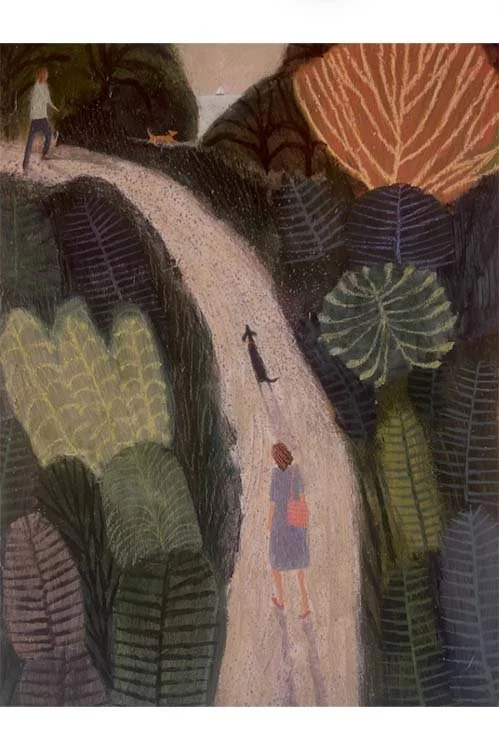 Image 2 of 3
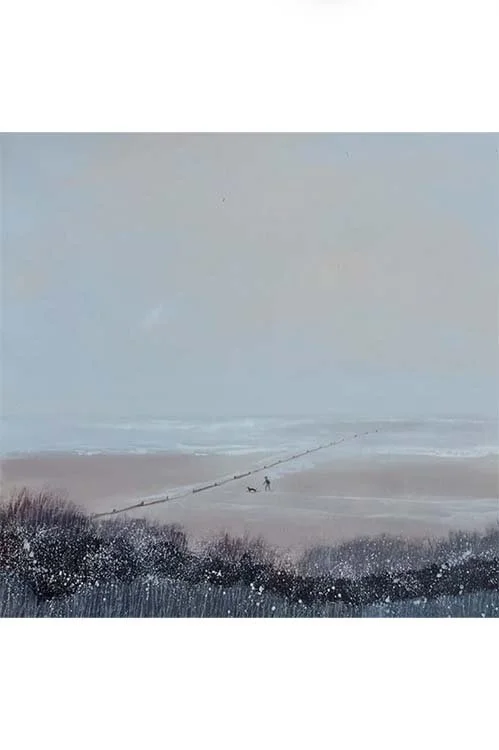 Image 3 of 3
Imagination, Memory and a Sense of Place (Online Workshop) Fall 2026 w/ Barbara Peirson
December 2 to December 16 (Wednesdays), 10:00 AM to 1:00 PM, Eastern Time
**All sessions are live and will be recorded, students do not have to be present. All recordings will be available to students for 3 months after the final session, after 3 months the recording will be deleted.
Please check your email spam/junk folder for your Zoom invite. Our business hours are 10:00 AM through 5:00 PM. All course information and email correspondence will be sent during business hours. If students purchase a course, workshop, demo or recording outside business hours or during the weekend the course information or recording will be sent the following business day.
Workshop Description
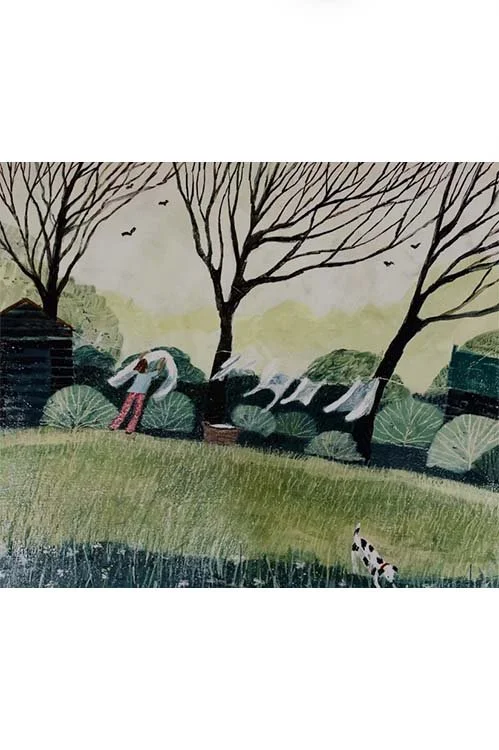
"Although essentially a painter of landscapes, it is perhaps because of her roots in the theatre that a sense of implicit narrative pervades Barbara Peirson's work, even though that narrative remains elusive."
In this series of three workshops, Barbara will share approaches to creating paintings that evoke a sense of story through the combination of figures and landscapes. Participants will work primarily with acrylics and other water-based media to develop either individual paintings or a connected series of works.
The course is suitable for beginners as well as more experienced painters who would like to loosen their approach and rediscover the fresh perspective of a beginner's mind.
The sessions will be light-hearted, experimental and playful. Through a range of imaginative exercises, participants will draw upon memory and imagination to generate ideas and visual material, recording their discoveries in sketchbooks that will serve as the foundation for paintings.
Using old photographs and treasured objects as prompts, we will explore personal memories and combine them with sketches made from observation. These elements will be transformed into original and meaningful works of art. Along the way, participants will experiment with a variety of drawing and painting materials and discover strategies for creating evocative images from everyday subjects.
Workshop Outline
Session 1: Memory, Imagination and Gathering Ideas
Introduction to the course and examples of narrative landscape painting.
Exploring memory through photographs, childhood objects and personal stories.
Sketchbook exercises using drawing, collage and quick painting studies.
Developing a visual vocabulary of places, figures and remembered details.
Generating a range of ideas and compositions for future paintings.
Outcome: A collection of sketches, notes and visual references to inspire personal work.
Session 2: Figures, Place and Narrative
Combining figures and landscapes to suggest a story.
Working from observation, memory and imagination.
Experimenting with composition, scale and spatial relationships.
Exploring atmosphere, mood and ambiguity in images.
Beginning one or more paintings based on ideas developed in Session 1.
Outcome: Initial paintings that bring together personal memories, places and narrative elements.
Session 3: Developing and Resolving the Work
Reviewing work in progress and sharing ideas.
Refining composition, colour and surface.
Exploring ways to strengthen narrative while retaining openness and mystery.
Continuing to experiment with materials and techniques.
Completing or advancing paintings and reflecting on the creative process.
Outcome: A finished painting or series of developed studies, together with strategies for continuing the work beyond the course.
Workshop Materials
We will use mainly acrylic paints and other water based materials. But we will also use whatever is available to hand - old house paint, felt pens, children’s markers, discarded cardboard, old books and magazine pages. Gather together ingredients that appeal to you and even ones that you think would be useless!
Recommended:
Pencils - soft ones eg: 5B are good
Pencil sharpener
Sketch book/s - to your liking
Cartridge paper - eg a block of A1 or A2 size
Cardboard from sturdy cardboard boxes
Water based wax crayons - I use Caran d’Ache Neocolour II
Acrylic paints - 5 basic colours of any brand: A good basic set is :System 3 Magenta, Yellow, Cyan, Black and Titanium White. I use White, Paynes Grey, Turquoise, Orange and Yellow Ochre as my go-to.
A selection of brushes ranging in size and quality - acrylic paint can easily ruin brushes, so the cheaper the better. Old and apparently useless brushes can be very good as well as some new finer ones - don’t spend too much at this stage.
Rags
A few pieces of Ply board or MDF cut to useable size eg: 30 x 32 cms
Baking parchment wrapped around board for a palette
Suggested other materials
Masking tape
Charcoal
Fixative
Gloss medium
Pva glue
Glue stick
Old photographs
left over water based house paint
Housepaint Tester pots
Acrylic Ink(s)
cocktail sticks or wooden barbecue skewers
Old tooth brushes
Rags
Sponges
Oil pastels
Acrylic pens
Water spray bottle
Hair dryer
Old books
Magazines
Old pens
Coloured pencils
Fluid acrylic paint eg: Golden : Acrylic Fluid Paint:
December 2 to December 16 (Wednesdays), 10:00 AM to 1:00 PM, Eastern Time
**All sessions are live and will be recorded, students do not have to be present. All recordings will be available to students for 3 months after the final session, after 3 months the recording will be deleted.
Please check your email spam/junk folder for your Zoom invite. Our business hours are 10:00 AM through 5:00 PM. All course information and email correspondence will be sent during business hours. If students purchase a course, workshop, demo or recording outside business hours or during the weekend the course information or recording will be sent the following business day.
Workshop Description
"Although essentially a painter of landscapes, it is perhaps because of her roots in the theatre that a sense of implicit narrative pervades Barbara Peirson's work, even though that narrative remains elusive."
In this series of three workshops, Barbara will share approaches to creating paintings that evoke a sense of story through the combination of figures and landscapes. Participants will work primarily with acrylics and other water-based media to develop either individual paintings or a connected series of works.
The course is suitable for beginners as well as more experienced painters who would like to loosen their approach and rediscover the fresh perspective of a beginner's mind.
The sessions will be light-hearted, experimental and playful. Through a range of imaginative exercises, participants will draw upon memory and imagination to generate ideas and visual material, recording their discoveries in sketchbooks that will serve as the foundation for paintings.
Using old photographs and treasured objects as prompts, we will explore personal memories and combine them with sketches made from observation. These elements will be transformed into original and meaningful works of art. Along the way, participants will experiment with a variety of drawing and painting materials and discover strategies for creating evocative images from everyday subjects.
Workshop Outline
Session 1: Memory, Imagination and Gathering Ideas
Introduction to the course and examples of narrative landscape painting.
Exploring memory through photographs, childhood objects and personal stories.
Sketchbook exercises using drawing, collage and quick painting studies.
Developing a visual vocabulary of places, figures and remembered details.
Generating a range of ideas and compositions for future paintings.
Outcome: A collection of sketches, notes and visual references to inspire personal work.
Session 2: Figures, Place and Narrative
Combining figures and landscapes to suggest a story.
Working from observation, memory and imagination.
Experimenting with composition, scale and spatial relationships.
Exploring atmosphere, mood and ambiguity in images.
Beginning one or more paintings based on ideas developed in Session 1.
Outcome: Initial paintings that bring together personal memories, places and narrative elements.
Session 3: Developing and Resolving the Work
Reviewing work in progress and sharing ideas.
Refining composition, colour and surface.
Exploring ways to strengthen narrative while retaining openness and mystery.
Continuing to experiment with materials and techniques.
Completing or advancing paintings and reflecting on the creative process.
Outcome: A finished painting or series of developed studies, together with strategies for continuing the work beyond the course.
Workshop Materials
We will use mainly acrylic paints and other water based materials. But we will also use whatever is available to hand - old house paint, felt pens, children’s markers, discarded cardboard, old books and magazine pages. Gather together ingredients that appeal to you and even ones that you think would be useless!
Recommended:
Pencils - soft ones eg: 5B are good
Pencil sharpener
Sketch book/s - to your liking
Cartridge paper - eg a block of A1 or A2 size
Cardboard from sturdy cardboard boxes
Water based wax crayons - I use Caran d’Ache Neocolour II
Acrylic paints - 5 basic colours of any brand: A good basic set is :System 3 Magenta, Yellow, Cyan, Black and Titanium White. I use White, Paynes Grey, Turquoise, Orange and Yellow Ochre as my go-to.
A selection of brushes ranging in size and quality - acrylic paint can easily ruin brushes, so the cheaper the better. Old and apparently useless brushes can be very good as well as some new finer ones - don’t spend too much at this stage.
Rags
A few pieces of Ply board or MDF cut to useable size eg: 30 x 32 cms
Baking parchment wrapped around board for a palette
Suggested other materials
Masking tape
Charcoal
Fixative
Gloss medium
Pva glue
Glue stick
Old photographs
left over water based house paint
Housepaint Tester pots
Acrylic Ink(s)
cocktail sticks or wooden barbecue skewers
Old tooth brushes
Rags
Sponges
Oil pastels
Acrylic pens
Water spray bottle
Hair dryer
Old books
Magazines
Old pens
Coloured pencils
Fluid acrylic paint eg: Golden : Acrylic Fluid Paint: