October 15 to November 12 (Thursdays), 11:00 AM to 2:00 PM, Eastern Time
**All sessions are live and will be recorded, students do not have to be present. All recordings will be available to students for 3 months after the final session, after 3 months the recording will be deleted.
Please check your email spam/junk folder for your Zoom invite. Our business hours are 10:00 AM through 5:00 PM. All course information and email correspondence will be sent during business hours. If students purchase a course, workshop, demo or recording outside business hours or during the weekend the course information or recording will be sent the following business day.
DEMO: https://youtu.be/Q6dBiWCcuJg
Course Description
This still life class is a hands-on introduction to color—designed for painters who want to understand how color actually works. We'll start with value as the foundation, then layer in one new aspect of color each week: hue, intensity (chroma), and temperature—as we inch our way into color. Each session includes guided color mixing, color charts, and short creative studies using simple, limited palettes to isolate and explore each concept.
Instead of matching every color in your subject, you'll focus on how colors relate on the canvas—learning to trust your eye and your judgment. This approach shifts your attention from copying toward making color choices that truly work.
While we’ll end with a full-color painting, the focus is on understanding color’s component parts and learning clear, simple ways to practice your color skills long after the class ends.
Course Outline
Each week includes guided painting studies, color mixing exercises, and color charts focused on the theme of the week. Students will build a repeatable habit of identifying core colors, mixing variations, and transferring those decisions onto their canvas.
Week 1:
Color-Value ranges.
We’ll start by painting a simple still life using a limited palette of monochromatic color. Students will create value ranges in a single color and then use those to paint studies of their chosen subject matter.
Focus: Painting with light and dark variations of individual hues.
Week 2:
Mixing a Monochromatic Palette from Observation.
Students will choose one saturated color from their still life setup and build a full value range using just that hue. We’ll mix a simplified palette based on observation and work through a small alla prima painting — exploring how color shifts across light and shadow while maintaining a consistent hue.
Focus: Mixing a single color from observation and building a range of value.
Week 3:
Working with Intensity.
This week is all about chroma. Students will mix high- and low-intensity variations of selected colors and observe the impact. We’ll use color charts and quick studies to practice muting colors intentionally, paying special attention to how intensity is perceived within different hue families at different values.
Focus: Understanding how value and intensity interact—and how subtle shifts affect perception.
Week 4:
Observing and mixing temperature.
Students will create color charts and studies exploring warm and cool variations of individual colors observed in their still life. We'll examine how subtle temperature shifts affect light, form, and overall harmony in a painting.
Focus: Understanding how temperature can shift within a single hue — across a range of values.
Week 5:
Full-Color Painting: Building from Core Color Relationships.
In our final week, students will create a full-color painting using everything they've practiced. The goal is to build a painting that feels cohesive and intentional—not by copying colors exactly, but by observing how colors relate to each other on the canvas.
Focus: Bringing together value, hue, intensity, and temperature in a single painting.
Course Materials
All demos and instruction will be in oil.
If you work in another medium (acrylic, gouache, etc.), feel free to adapt the exercises.
Oil paint
You’ll need the three primary colors and white. You’re welcome to bring additional colors to experiment with, but at minimum, you’ll need one yellow, one red, one blue, and white
If you’re not sure what to get, I recommend:
Yellow: Cadmium Lemon or Cadmium Yellow Light
Blue: Ultramarine Blue or Phthalo Blue
Red: Pyrrole Red or Cadmium Red
titanium white
Mediums
one fat medium: walnut, safflower, or refined linseed oil
one lean medium: solvent based, like Gamsol
Brushes
For beginners, I recommend hog bristle brushes. Bring a few flats and filberts, sizes 4–10. You can use synthetic brushes if you’re comfortable with them.
Palette & Tools
Palette knife (one or two) for mixing
Palette (glass, wood, or disposable palette pad)
Palette box to store your paint (like a masterson box)
Paper towels or rags
Solvent jar for brush cleaning (e.g., Gamsol — odorless mineral spirits)
Cups or containers for holding medium
Value card — You can use your own or purchase one of mine
Surfaces
You’ll need supports for both full paintings and weekly studies. You may need more or less than what’s listed here, depending on how much work you choose to do.
Atleast one 9x12” or 12x16” canvas or panel per class for painting studies — nothing fancy, but something you like to paint on
1-2 scrap sheets per class for color charts (canvas sheets or Arches oil paper).
Reference Materials
I’ll provide still life photo references each week, but you’re welcome to paint any subject matter that interests you as long as it’s not overly complex. It’s strongly encouraged that you work from life if possible.
October 15 to November 12 (Thursdays), 11:00 AM to 2:00 PM, Eastern Time
**All sessions are live and will be recorded, students do not have to be present. All recordings will be available to students for 3 months after the final session, after 3 months the recording will be deleted.
Please check your email spam/junk folder for your Zoom invite. Our business hours are 10:00 AM through 5:00 PM. All course information and email correspondence will be sent during business hours. If students purchase a course, workshop, demo or recording outside business hours or during the weekend the course information or recording will be sent the following business day.
DEMO: https://youtu.be/Q6dBiWCcuJg
Course Description
This still life class is a hands-on introduction to color—designed for painters who want to understand how color actually works. We'll start with value as the foundation, then layer in one new aspect of color each week: hue, intensity (chroma), and temperature—as we inch our way into color. Each session includes guided color mixing, color charts, and short creative studies using simple, limited palettes to isolate and explore each concept.
Instead of matching every color in your subject, you'll focus on how colors relate on the canvas—learning to trust your eye and your judgment. This approach shifts your attention from copying toward making color choices that truly work.
While we’ll end with a full-color painting, the focus is on understanding color’s component parts and learning clear, simple ways to practice your color skills long after the class ends.
Course Outline
Each week includes guided painting studies, color mixing exercises, and color charts focused on the theme of the week. Students will build a repeatable habit of identifying core colors, mixing variations, and transferring those decisions onto their canvas.
Week 1:
Color-Value ranges.
We’ll start by painting a simple still life using a limited palette of monochromatic color. Students will create value ranges in a single color and then use those to paint studies of their chosen subject matter.
Focus: Painting with light and dark variations of individual hues.
Week 2:
Mixing a Monochromatic Palette from Observation.
Students will choose one saturated color from their still life setup and build a full value range using just that hue. We’ll mix a simplified palette based on observation and work through a small alla prima painting — exploring how color shifts across light and shadow while maintaining a consistent hue.
Focus: Mixing a single color from observation and building a range of value.
Week 3:
Working with Intensity.
This week is all about chroma. Students will mix high- and low-intensity variations of selected colors and observe the impact. We’ll use color charts and quick studies to practice muting colors intentionally, paying special attention to how intensity is perceived within different hue families at different values.
Focus: Understanding how value and intensity interact—and how subtle shifts affect perception.
Week 4:
Observing and mixing temperature.
Students will create color charts and studies exploring warm and cool variations of individual colors observed in their still life. We'll examine how subtle temperature shifts affect light, form, and overall harmony in a painting.
Focus: Understanding how temperature can shift within a single hue — across a range of values.
Week 5:
Full-Color Painting: Building from Core Color Relationships.
In our final week, students will create a full-color painting using everything they've practiced. The goal is to build a painting that feels cohesive and intentional—not by copying colors exactly, but by observing how colors relate to each other on the canvas.
Focus: Bringing together value, hue, intensity, and temperature in a single painting.
Course Materials
All demos and instruction will be in oil.
If you work in another medium (acrylic, gouache, etc.), feel free to adapt the exercises.
Oil paint
You’ll need the three primary colors and white. You’re welcome to bring additional colors to experiment with, but at minimum, you’ll need one yellow, one red, one blue, and white
If you’re not sure what to get, I recommend:
Yellow: Cadmium Lemon or Cadmium Yellow Light
Blue: Ultramarine Blue or Phthalo Blue
Red: Pyrrole Red or Cadmium Red
titanium white
Mediums
one fat medium: walnut, safflower, or refined linseed oil
one lean medium: solvent based, like Gamsol
Brushes
For beginners, I recommend hog bristle brushes. Bring a few flats and filberts, sizes 4–10. You can use synthetic brushes if you’re comfortable with them.
Palette & Tools
Palette knife (one or two) for mixing
Palette (glass, wood, or disposable palette pad)
Palette box to store your paint (like a masterson box)
Paper towels or rags
Solvent jar for brush cleaning (e.g., Gamsol — odorless mineral spirits)
Cups or containers for holding medium
Value card — You can use your own or purchase one of mine
Surfaces
You’ll need supports for both full paintings and weekly studies. You may need more or less than what’s listed here, depending on how much work you choose to do.
Atleast one 9x12” or 12x16” canvas or panel per class for painting studies — nothing fancy, but something you like to paint on
1-2 scrap sheets per class for color charts (canvas sheets or Arches oil paper).
Reference Materials
I’ll provide still life photo references each week, but you’re welcome to paint any subject matter that interests you as long as it’s not overly complex. It’s strongly encouraged that you work from life if possible.

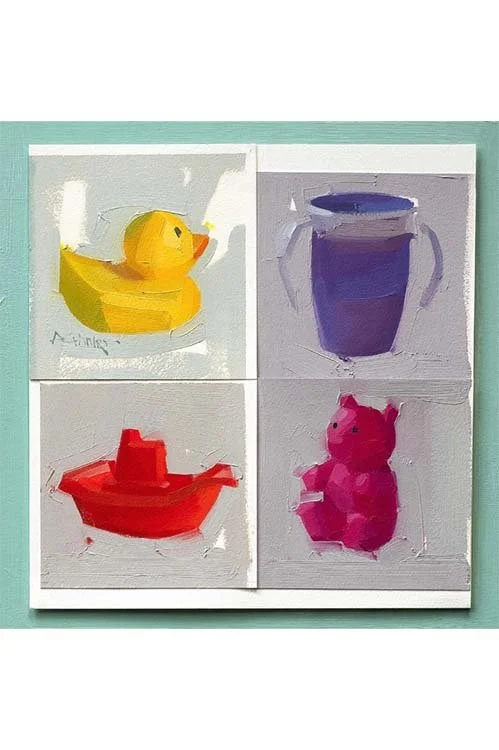 Image 1 of 15
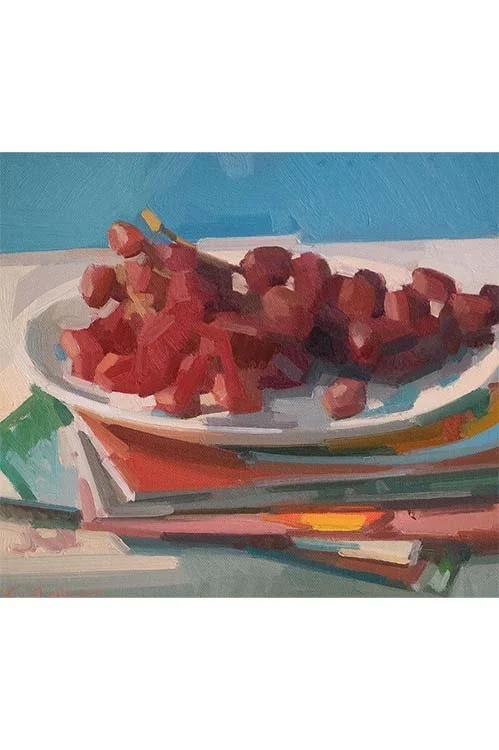 Image 2 of 15
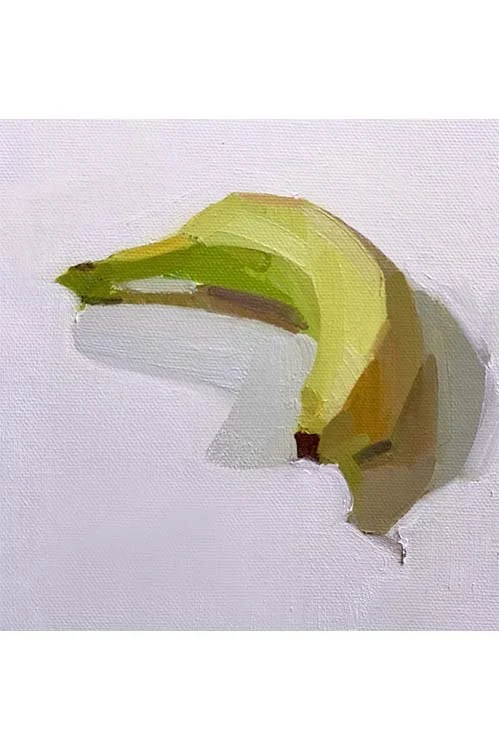 Image 3 of 15
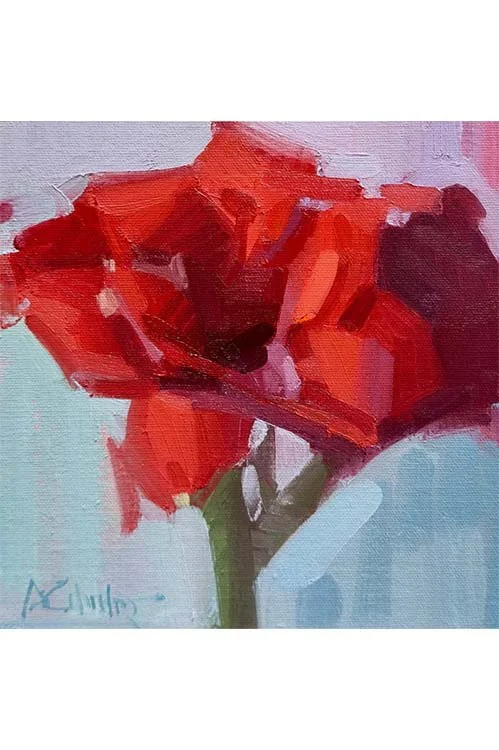 Image 4 of 15
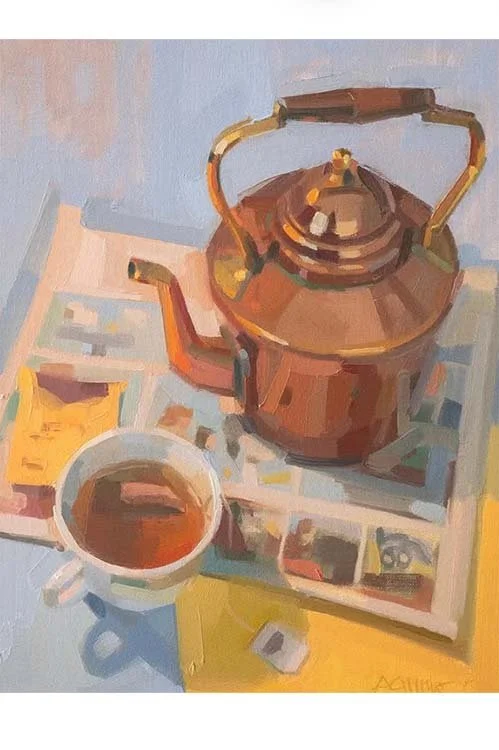 Image 5 of 15
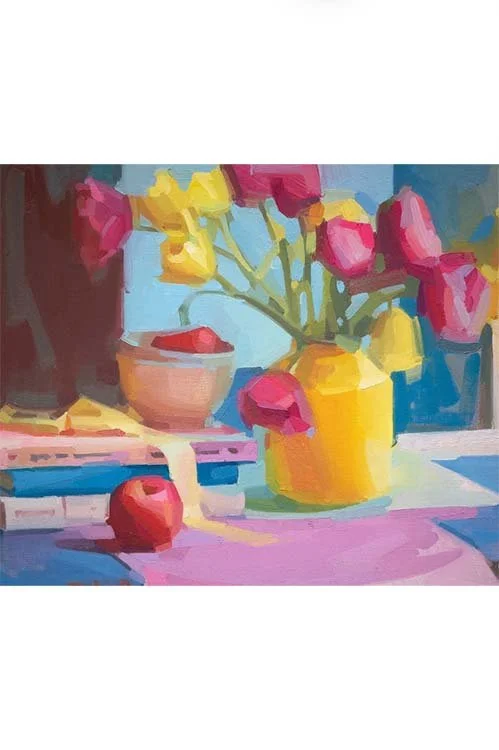 Image 6 of 15
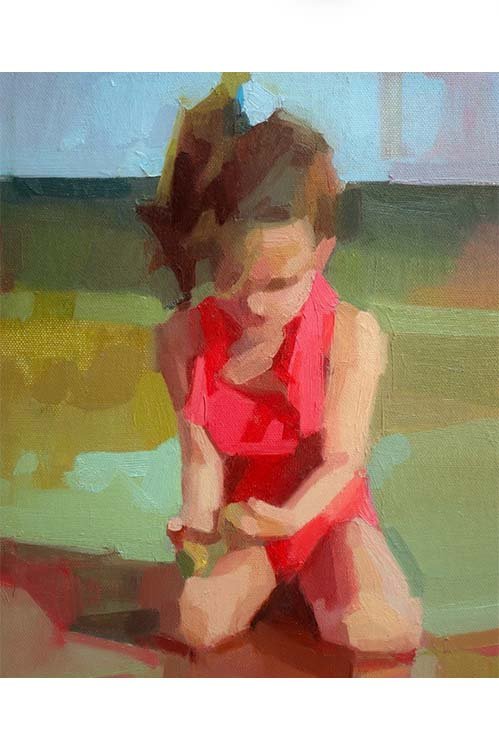 Image 7 of 15
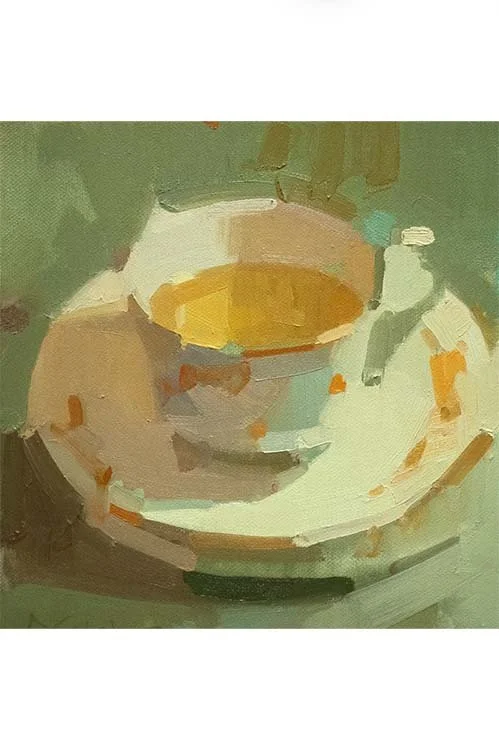 Image 8 of 15
 Image 9 of 15
 Image 10 of 15
 Image 11 of 15
 Image 12 of 15
 Image 13 of 15
 Image 14 of 15
 Image 15 of 15