
 Image 1 of 1
**All sessions are live and will be recorded, students do not have to be present. All recordings will be available to students for 3 months after the final session, after 3 months the recording will be deleted.
Please check your email spam/junk folder for your Zoom invite. Our business hours are 10:00 AM through 5:00 PM. All course information and email correspondence will be sent during business hours. If students purchase a course, workshop, demo or recording outside business hours or during the weekend the course information or recording will be sent the following business day.
DEMO:
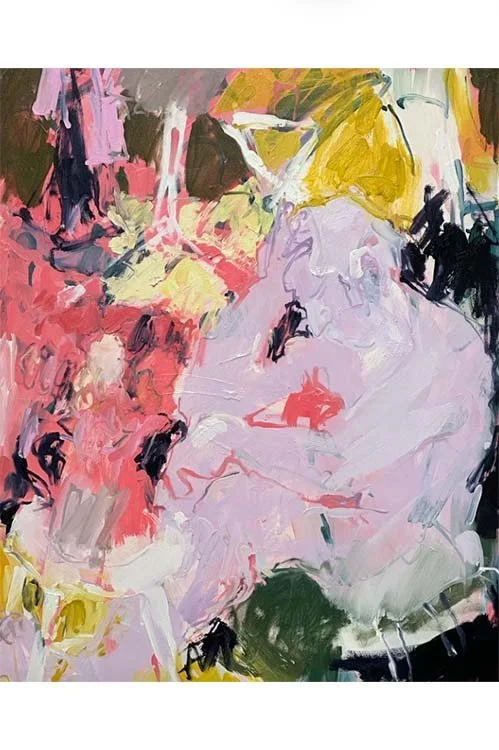
During this workshop Charlotte will show you how to embrace oil painting’s natural unpredictability and enjoy moving between observation and abstraction. Through drawing, collage making and painting you’ll explore playful ways of developing your ideas, while learning about composition, colour mixing and paint application.
Week 1
We’ll discuss how observational drawing provides a springboard for further work, with examples, demos and suggested exercises to loosen up. We’ll look at editing, selecting and choosing drawings to take further.
Week 2
After reviewing homework we’ll discuss ways forward, looking at colour palettes, collage making and diving in with paint. There will be several demos and students will be encouraged to work alongside, choosing whatever developmental methods they feel most excited by.
Week 3
We’ll review progress and discuss breaking free and creating happy accidents. With a short demo and ideas for how to loosen up a tight painting. Finishing with suggestions for further work.
Oil paints in the following colours:
Cobalt Blue
Ultramarine Blue
Magenta or Rose Madder
Cadmium Red
Cadmium Yellow
Lemon Yellow
Titanium White
Zinc White
Veridian, Yellow Ochre, Pathalo Blue are useful additions
Thinners (zest it, turps, or similar)
Linseed oil
You may want to try a tiny bit of damar varnish to add to the above but it’s mot essential
Surface to paint on: canvas, oil painting paper, primed cardboard, primed panel or any other surface that can take the paint. You may want several to experiment with.
Newsprint and rags (I use old socks)
Mix of brushes in varying sizes
Something to use to mix paint on/in. I use old microwave meal containers and lids - lots of them. You may prefer a flat surface or traditional palette. It’s good to have space to mix a lot of paint.
Jars
Scrap paper to use for collage (I will talk you through how to make this)
Wall paper paste or PVA glue
Scissors
Drawing materials - everything and anything you enjoy drawing with. I use Posca pens, graphite, charcoal, water colour crayons, woody crayons, children’s paint sticks, ink, brush pens, soft pastels and oil pastels. You don’t need all of these!
**All sessions are live and will be recorded, students do not have to be present. All recordings will be available to students for 3 months after the final session, after 3 months the recording will be deleted.
Please check your email spam/junk folder for your Zoom invite. Our business hours are 10:00 AM through 5:00 PM. All course information and email correspondence will be sent during business hours. If students purchase a course, workshop, demo or recording outside business hours or during the weekend the course information or recording will be sent the following business day.
DEMO:
During this workshop Charlotte will show you how to embrace oil painting’s natural unpredictability and enjoy moving between observation and abstraction. Through drawing, collage making and painting you’ll explore playful ways of developing your ideas, while learning about composition, colour mixing and paint application.
Week 1
We’ll discuss how observational drawing provides a springboard for further work, with examples, demos and suggested exercises to loosen up. We’ll look at editing, selecting and choosing drawings to take further.
Week 2
After reviewing homework we’ll discuss ways forward, looking at colour palettes, collage making and diving in with paint. There will be several demos and students will be encouraged to work alongside, choosing whatever developmental methods they feel most excited by.
Week 3
We’ll review progress and discuss breaking free and creating happy accidents. With a short demo and ideas for how to loosen up a tight painting. Finishing with suggestions for further work.
Oil paints in the following colours:
Cobalt Blue
Ultramarine Blue
Magenta or Rose Madder
Cadmium Red
Cadmium Yellow
Lemon Yellow
Titanium White
Zinc White
Veridian, Yellow Ochre, Pathalo Blue are useful additions
Thinners (zest it, turps, or similar)
Linseed oil
You may want to try a tiny bit of damar varnish to add to the above but it’s mot essential
Surface to paint on: canvas, oil painting paper, primed cardboard, primed panel or any other surface that can take the paint. You may want several to experiment with.
Newsprint and rags (I use old socks)
Mix of brushes in varying sizes
Something to use to mix paint on/in. I use old microwave meal containers and lids - lots of them. You may prefer a flat surface or traditional palette. It’s good to have space to mix a lot of paint.
Jars
Scrap paper to use for collage (I will talk you through how to make this)
Wall paper paste or PVA glue
Scissors
Drawing materials - everything and anything you enjoy drawing with. I use Posca pens, graphite, charcoal, water colour crayons, woody crayons, children’s paint sticks, ink, brush pens, soft pastels and oil pastels. You don’t need all of these!