Sale Price:
$229.50
Original Price:
$255.00
October 7 to October 21 (Thursdays), 1:00 PM to 4:00 PM, Eastern Time
**All sessions are live and will be recorded, students do not have to be present. All recordings will be available to students for 3 months after the final session, after 3 months the recording will be deleted.
Please check your email spam/junk folder for your Zoom invite. Our business hours are 10:00 AM through 5:00 PM. All course information and email correspondence will be sent during business hours. If students purchase a course, workshop, demo or recording outside business hours or during the weekend the course information or recording will be sent the following business day.
DEMO: https://youtu.be/O5XbNJno94E
Workshop Description
This workshop is about painting without knowing beforehand where it will take you. For many people the unpredictable and fluid nature of watercolors is challenging. In this course we are aiming to embrace just that confidently, and let ourselves be inspired by the textures and washes. Never wait for inspiration but find it as you go, and be surprised by what shows up.
Over the course of 3 weeks we will practice controlled, playful chaos and experiment with different techniques and approaches to make the most of the unpredictability. We will learn how to set up our painting to create possibilities and how to build up our layers as we go without making it feel cluttered and random.
Each class there will be exercises and prompts to get us started and loosen up, and live demos for each exercise to watch and paint along. There will be plenty of creative freedom for the students’ own ideas, subject matter and personal inspiration.
There will be space for questions and, if desired, constructive feedback.
Workshop Outline
Week 1 – Introduction
Welcome and introduction
About my process
Slide show
Wet on wet
How to do a base layer that creates opportunity: tips, tricks and techniques.
What to look for if you don’t know what it is you’re painting yet.
Live demo
Reflecting on your own work
Q and A
Week 2 – Layering and building up your painting
Layering, negative painting and creating depth.
Color choice and working with limited pallettes.
Live demo
Q and A
Week 3 – Composition and balance
Composition.
Chaos, but make it balanced.
Knowing when to stop.
Integrating the techniques and classes of the last weeks in a final exercise.
Live demo
Q and A
Workshop Materials
Paints
I use mostly Daniel Smith, but a basic pallette of a decent brand is fine. (I also use and like the more affordable White Nights and Winsor and Newton Cotman paints.)
Paper
I use 300 grs/ 140 lbs Arches cold pressed watercolor paper.
Feel free to use a different brand, but I do recommend at least 300 grs cotton paper. I’ve used Hahnemuler and Fabriano Artistico too and liked them as well.
If you want to use rough grain paper, you can, that does give nice textures! But I do not recommend hot pressed paper for this class.
Brushes
Use what you have. Round brushes of different sizes and one or two flat ones will do.
Pens
White gel pen (I use Uniball Signo)
Some fineliners (I use Steadtler)
October 7 to October 21 (Thursdays), 1:00 PM to 4:00 PM, Eastern Time
**All sessions are live and will be recorded, students do not have to be present. All recordings will be available to students for 3 months after the final session, after 3 months the recording will be deleted.
Please check your email spam/junk folder for your Zoom invite. Our business hours are 10:00 AM through 5:00 PM. All course information and email correspondence will be sent during business hours. If students purchase a course, workshop, demo or recording outside business hours or during the weekend the course information or recording will be sent the following business day.
DEMO: https://youtu.be/O5XbNJno94E
Workshop Description
This workshop is about painting without knowing beforehand where it will take you. For many people the unpredictable and fluid nature of watercolors is challenging. In this course we are aiming to embrace just that confidently, and let ourselves be inspired by the textures and washes. Never wait for inspiration but find it as you go, and be surprised by what shows up.
Over the course of 3 weeks we will practice controlled, playful chaos and experiment with different techniques and approaches to make the most of the unpredictability. We will learn how to set up our painting to create possibilities and how to build up our layers as we go without making it feel cluttered and random.
Each class there will be exercises and prompts to get us started and loosen up, and live demos for each exercise to watch and paint along. There will be plenty of creative freedom for the students’ own ideas, subject matter and personal inspiration.
There will be space for questions and, if desired, constructive feedback.
Workshop Outline
Week 1 – Introduction
Welcome and introduction
About my process
Slide show
Wet on wet
How to do a base layer that creates opportunity: tips, tricks and techniques.
What to look for if you don’t know what it is you’re painting yet.
Live demo
Reflecting on your own work
Q and A
Week 2 – Layering and building up your painting
Layering, negative painting and creating depth.
Color choice and working with limited pallettes.
Live demo
Q and A
Week 3 – Composition and balance
Composition.
Chaos, but make it balanced.
Knowing when to stop.
Integrating the techniques and classes of the last weeks in a final exercise.
Live demo
Q and A
Workshop Materials
Paints
I use mostly Daniel Smith, but a basic pallette of a decent brand is fine. (I also use and like the more affordable White Nights and Winsor and Newton Cotman paints.)
Paper
I use 300 grs/ 140 lbs Arches cold pressed watercolor paper.
Feel free to use a different brand, but I do recommend at least 300 grs cotton paper. I’ve used Hahnemuler and Fabriano Artistico too and liked them as well.
If you want to use rough grain paper, you can, that does give nice textures! But I do not recommend hot pressed paper for this class.
Brushes
Use what you have. Round brushes of different sizes and one or two flat ones will do.
Pens
White gel pen (I use Uniball Signo)
Some fineliners (I use Steadtler)

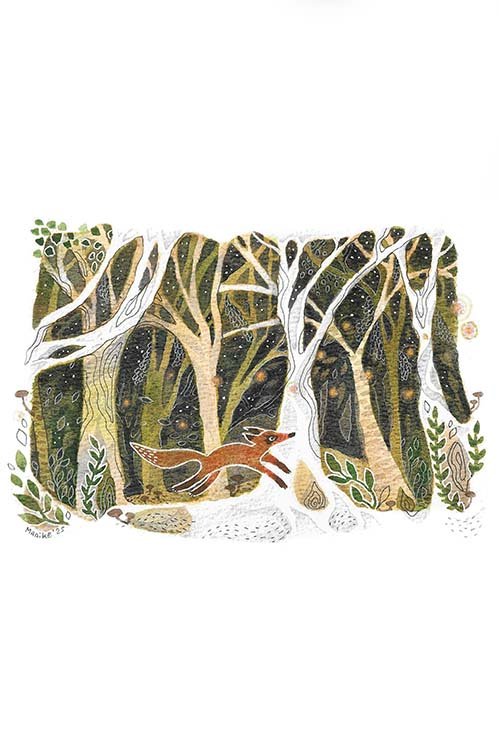 Image 1 of 14
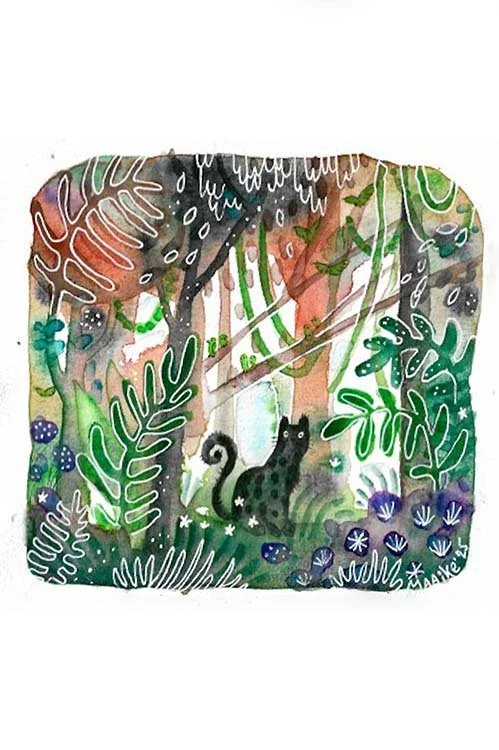 Image 2 of 14
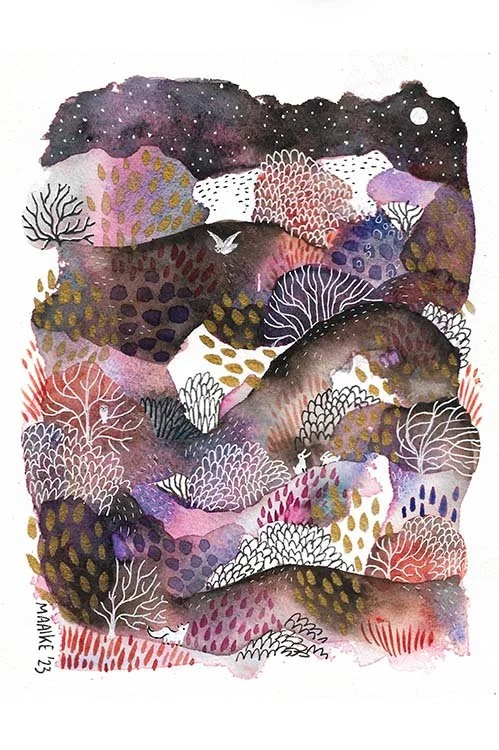 Image 3 of 14
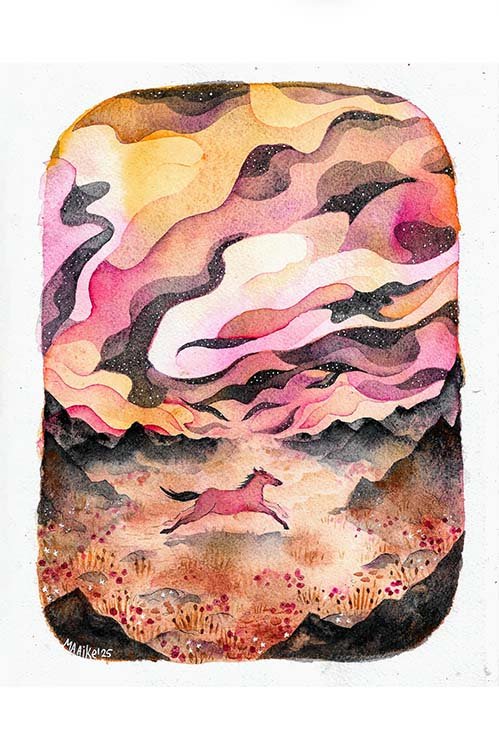 Image 4 of 14
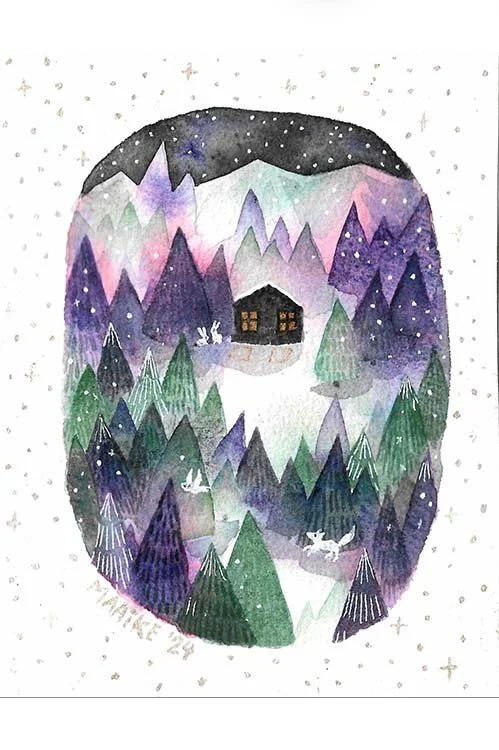 Image 5 of 14
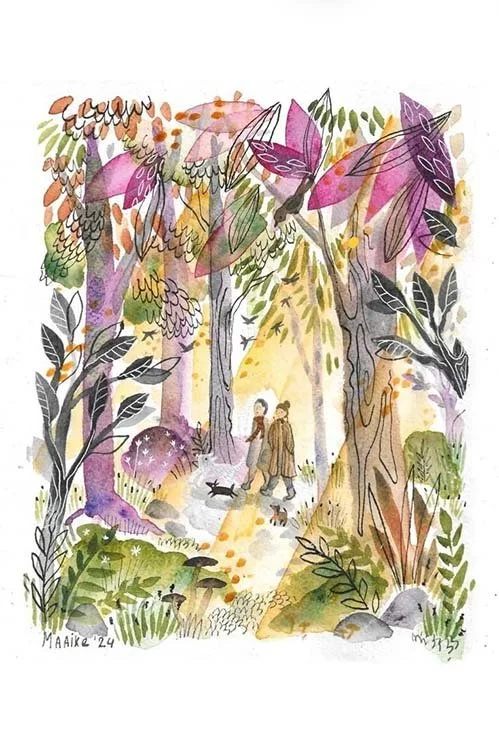 Image 6 of 14
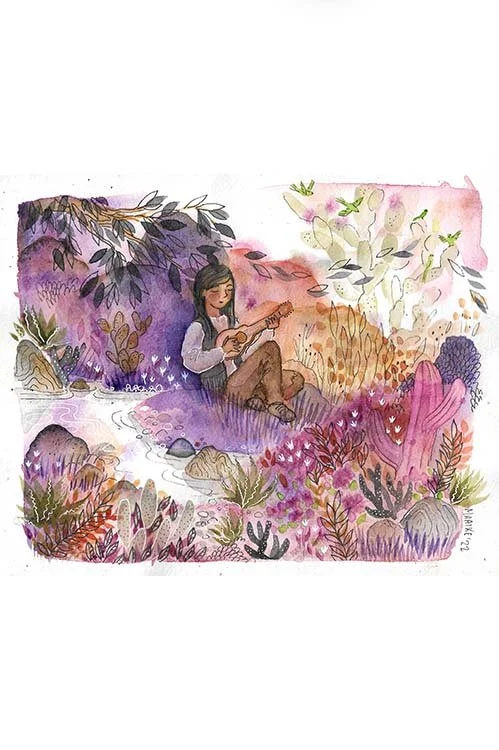 Image 7 of 14
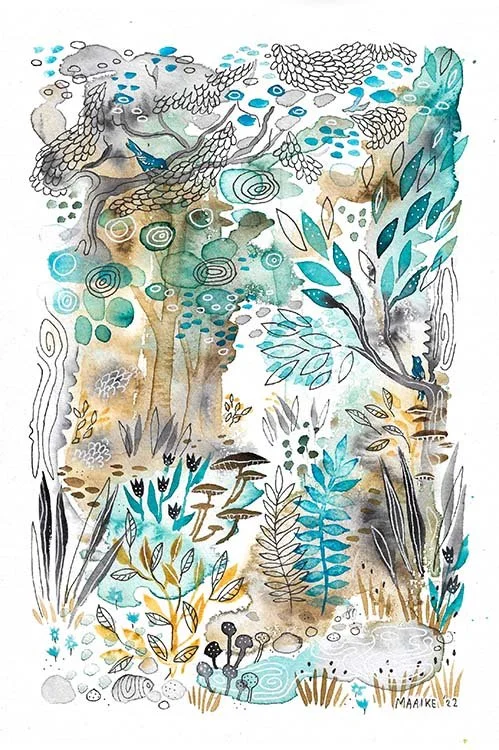 Image 8 of 14
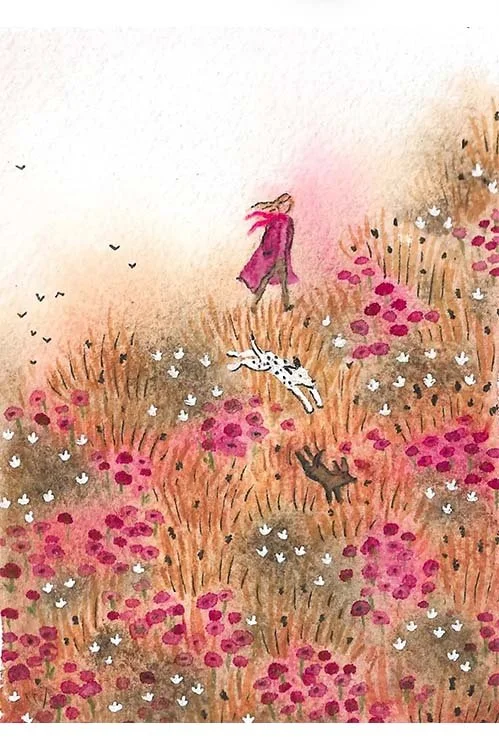 Image 9 of 14
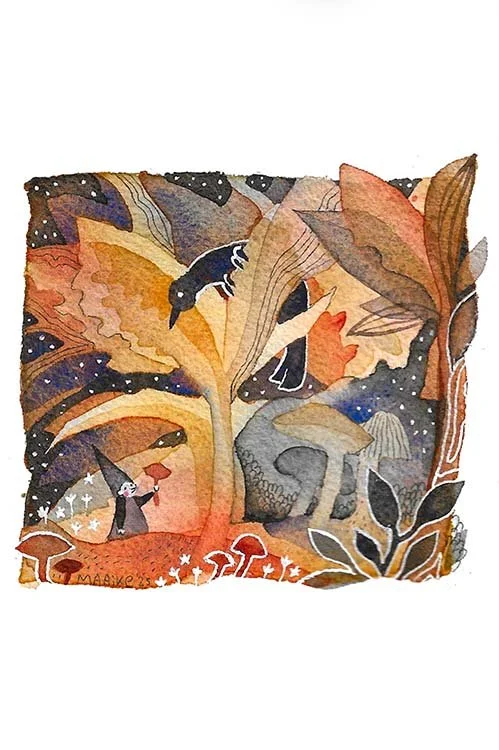 Image 10 of 14
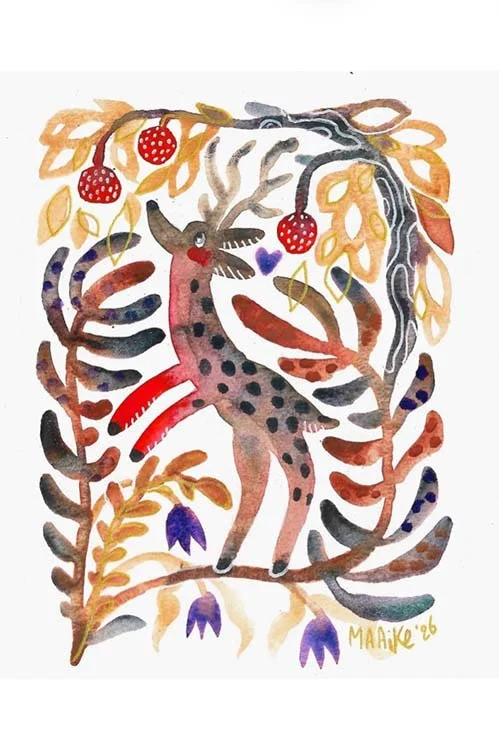 Image 11 of 14
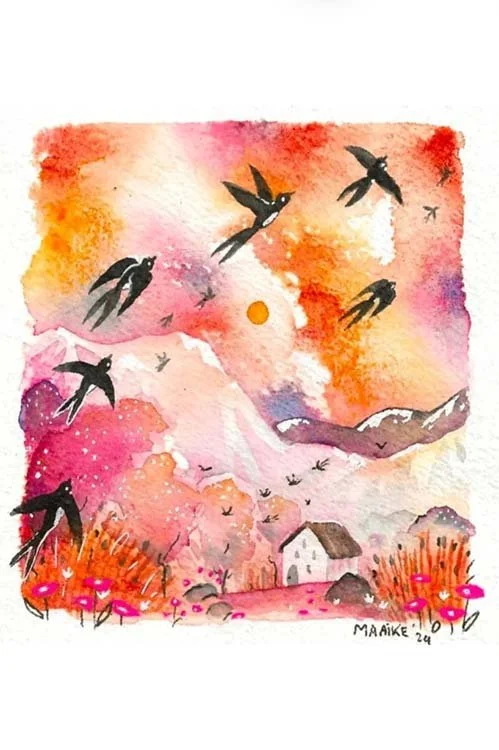 Image 12 of 14
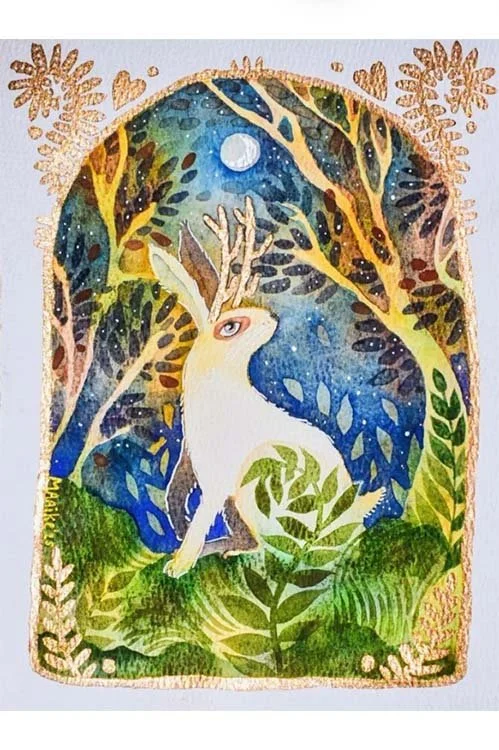 Image 13 of 14
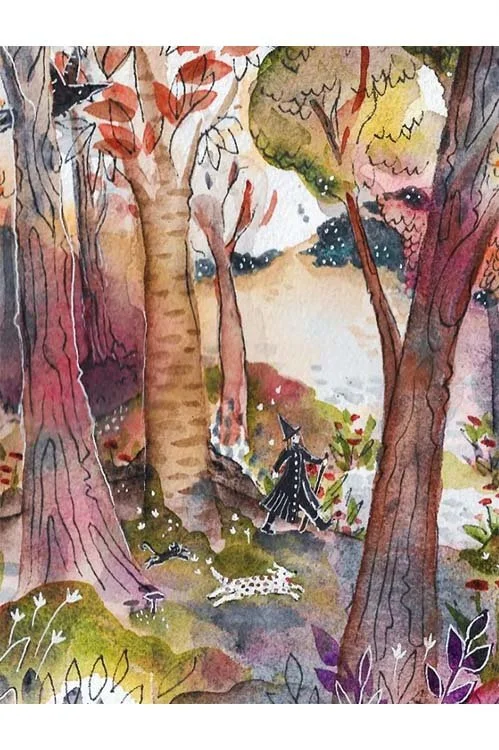 Image 14 of 14