November 2 to November 30 (Mondays), 2:00 PM to 4:30 PM, Eastern Time
**All sessions are live and will be recorded, students do not have to be present. All recordings will be available to students for 3 months after the final session, after 3 months the recording will be deleted.
Please check your email spam/junk folder for your Zoom invite. Our business hours are 10:00 AM through 5:00 PM. All course information and email correspondence will be sent during business hours. If students purchase a course, workshop, demo or recording outside business hours or during the weekend the course information or recording will be sent the following business day.
DEMO: https://youtu.be/ZHCXeodmnho
Course Description
This course aims to demonstrate the importance of schematic construction in figurative painting. We will explore ways to summarize a complex image by transforming it into a simpler composition of pictorial structures. Schematizing and simplifying painting produces more interesting results than attempting to copy reality. We will see how we can forgo details, replacing them with new expressive solutions. Furthermore, we will study how the masters have used these schematic approaches in their work.
Course Outline
Week 1:
Introductory video on the course topic. We will view images of some master painters, studying how these artists have schematized and transformed reality into a pictorial reality. Images of my own work are also included.
First demonstration session.
Questions and answers.
Explanation of how to proceed with posting on Padlet.
Week 2:
Student exercise feedback, second demonstration session.
Questions and answers.
Week 3:
Student exercise feedback, third demonstration session.
Questions and answers.
Week 4:
Student exercise feedback, fourth demonstration session.
Week 5:
Student exercise feedback, fifth and final demonstration session.
Course Materials
This can be paper, cardboard, wood, or fabric.
Everything should be primed with gesso.
If using fabric, the weave should not be too coarse.
Small sizes, close to A4, are recommended.
TECHNIQUE
Oil paint is recommended, but gouache or acrylic are also acceptable.
COLORS
Guidelines for the color palette I use.
(You can also use your usual colors)
Titanium White
Primaries: Cadmium Red, Cadmium Yellow, and Cyan Blue.
It's also a good idea to have light and dark colors, saturated and unsaturated colors,
and cool and warm colors.
For example:
Burnt Umber and Burnt Sienna.
Ultramarine Blue and Magenta (a cool red).
And some green... I use Titanium Green Light and Blue-Green.
It's important to understand that each color has a cool or warm undertone. Depending on this dominant color, we may or may not be able to achieve the desired tone.
For example, you can't achieve intense oranges with lemon yellow (cool dominant).
Although all colors can be used on the palette.
BRUSHES
Having suitable brushes in good condition is essential.
It's advisable to have a variety in terms of size, shape, and stiffness.
Flat brushes are very useful and highly recommended.
I use both flat and round brushes.
It's recommended to have:
SoT, flat brushes.
They can be synthe2c or animal hair.
Rather small sizes: bristles between 0.5 and 1 cm wide.
Some soT, round brushes.
Small sizes: bristles between 0.2 and 0.5 cm wide.
Some s2ffer bristle or synthe2c brushes.
A synthetic or bristle palette knife. 2 cm bristle width.
OTHER
Pale?e. It's important that the canvas isn't too small. 30 x 40 cm is recommended (standard size).
Thinner: Use the thinner you typically use in your area.
Glass jar for the thinner.
A pale?e knife that isn't too rigid.
Toilet paper roll for cleaning brushes.
SoT pencil (HB or 2B).
Spring-clamp plas2c clips are very useful for gripping or holding the canvas.
Optional: Quick-drying medium to accelerate drying.
I use Talens Oil Medium diluted 50% with thinner.
November 2 to November 30 (Mondays), 2:00 PM to 4:30 PM, Eastern Time
**All sessions are live and will be recorded, students do not have to be present. All recordings will be available to students for 3 months after the final session, after 3 months the recording will be deleted.
Please check your email spam/junk folder for your Zoom invite. Our business hours are 10:00 AM through 5:00 PM. All course information and email correspondence will be sent during business hours. If students purchase a course, workshop, demo or recording outside business hours or during the weekend the course information or recording will be sent the following business day.
DEMO: https://youtu.be/ZHCXeodmnho
Course Description
This course aims to demonstrate the importance of schematic construction in figurative painting. We will explore ways to summarize a complex image by transforming it into a simpler composition of pictorial structures. Schematizing and simplifying painting produces more interesting results than attempting to copy reality. We will see how we can forgo details, replacing them with new expressive solutions. Furthermore, we will study how the masters have used these schematic approaches in their work.
Course Outline
Week 1:
Introductory video on the course topic. We will view images of some master painters, studying how these artists have schematized and transformed reality into a pictorial reality. Images of my own work are also included.
First demonstration session.
Questions and answers.
Explanation of how to proceed with posting on Padlet.
Week 2:
Student exercise feedback, second demonstration session.
Questions and answers.
Week 3:
Student exercise feedback, third demonstration session.
Questions and answers.
Week 4:
Student exercise feedback, fourth demonstration session.
Week 5:
Student exercise feedback, fifth and final demonstration session.
Course Materials
This can be paper, cardboard, wood, or fabric.
Everything should be primed with gesso.
If using fabric, the weave should not be too coarse.
Small sizes, close to A4, are recommended.
TECHNIQUE
Oil paint is recommended, but gouache or acrylic are also acceptable.
COLORS
Guidelines for the color palette I use.
(You can also use your usual colors)
Titanium White
Primaries: Cadmium Red, Cadmium Yellow, and Cyan Blue.
It's also a good idea to have light and dark colors, saturated and unsaturated colors,
and cool and warm colors.
For example:
Burnt Umber and Burnt Sienna.
Ultramarine Blue and Magenta (a cool red).
And some green... I use Titanium Green Light and Blue-Green.
It's important to understand that each color has a cool or warm undertone. Depending on this dominant color, we may or may not be able to achieve the desired tone.
For example, you can't achieve intense oranges with lemon yellow (cool dominant).
Although all colors can be used on the palette.
BRUSHES
Having suitable brushes in good condition is essential.
It's advisable to have a variety in terms of size, shape, and stiffness.
Flat brushes are very useful and highly recommended.
I use both flat and round brushes.
It's recommended to have:
SoT, flat brushes.
They can be synthe2c or animal hair.
Rather small sizes: bristles between 0.5 and 1 cm wide.
Some soT, round brushes.
Small sizes: bristles between 0.2 and 0.5 cm wide.
Some s2ffer bristle or synthe2c brushes.
A synthetic or bristle palette knife. 2 cm bristle width.
OTHER
Pale?e. It's important that the canvas isn't too small. 30 x 40 cm is recommended (standard size).
Thinner: Use the thinner you typically use in your area.
Glass jar for the thinner.
A pale?e knife that isn't too rigid.
Toilet paper roll for cleaning brushes.
SoT pencil (HB or 2B).
Spring-clamp plas2c clips are very useful for gripping or holding the canvas.
Optional: Quick-drying medium to accelerate drying.
I use Talens Oil Medium diluted 50% with thinner.

 Image 1 of 10
 Image 2 of 10
 Image 3 of 10
 Image 4 of 10
 Image 5 of 10
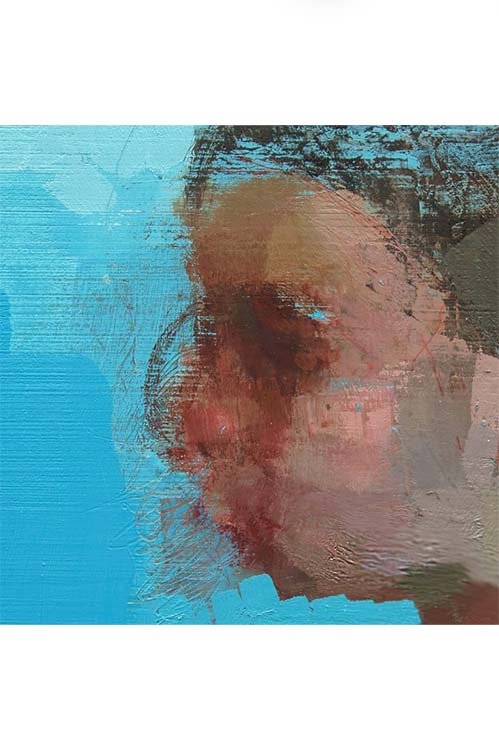 Image 6 of 10
 Image 7 of 10
 Image 8 of 10
 Image 9 of 10
 Image 10 of 10