
 Image 1 of 5
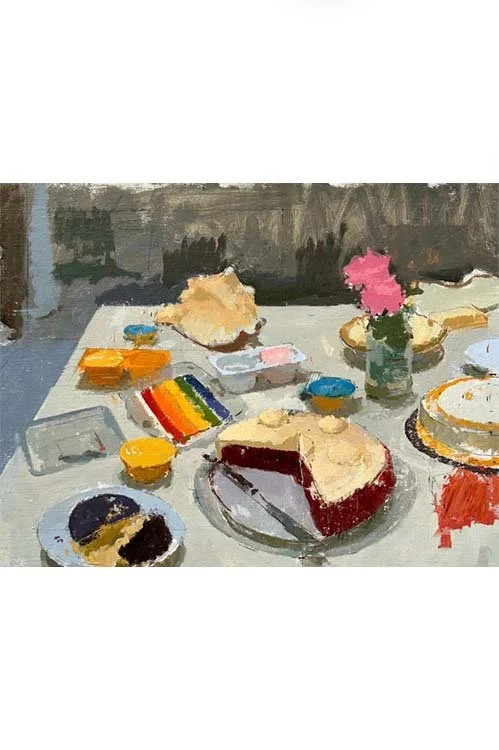 Image 2 of 5
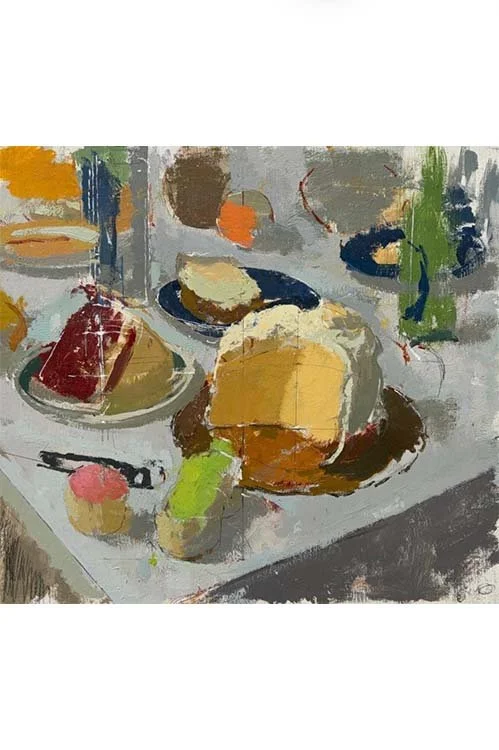 Image 3 of 5
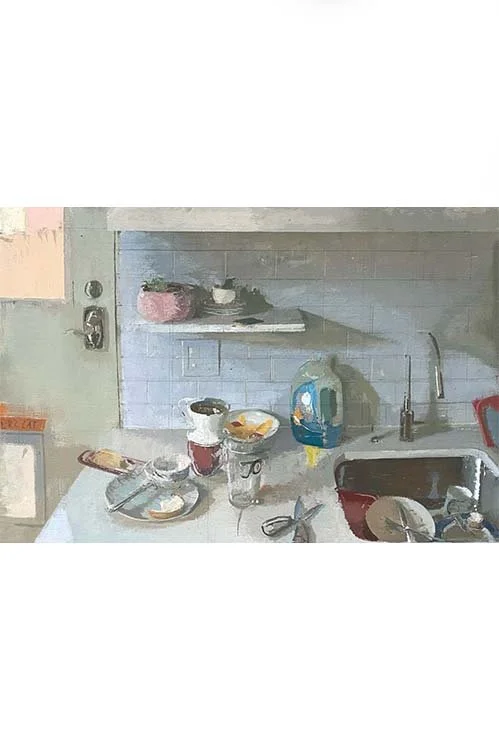 Image 4 of 5
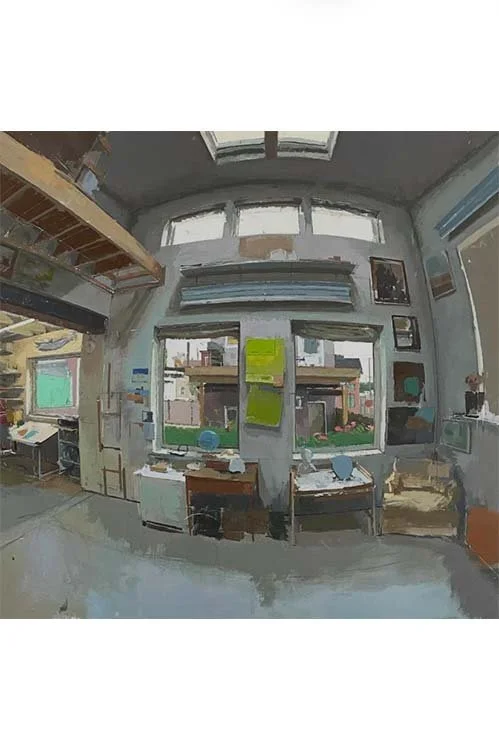 Image 5 of 5
**All sessions are live and will be recorded, students do not have to be present. All recordings will be available to students for 3 months after the final session, after 3 months the recording will be deleted.
Please check your email spam/junk folder for your Zoom invite. Our business hours are 10:00 AM through 5:00 PM. All course information and email correspondence will be sent during business hours. If students purchase a course, workshop, demo or recording outside business hours or during the weekend the course information or recording will be sent the following business day.
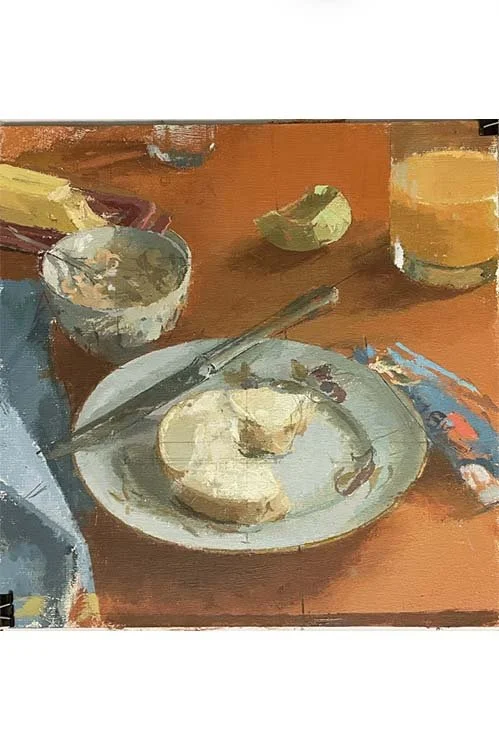
This course will focus on the problem of creating still-life paintings that incorporate the larger spatial context in which the still-life is set. Students will make paintings from observation with an emphasis on light, color, structure and pictorial design. We will start by addressing the problem of finding a subject and the practical and formal problems of setting up a still-life. We will discuss how to organize and simplify complex information, how to create a unified sense of light throughout a picture and how to interpret color and tone relationships. We will also cover aspects of drawing that will help in the creation of a convincing sense of space.
Week 1 -
Getting started
Setting up a still-life
Drawing and laying out the composition
Week 2 -
Blocking in the painting
How to organize color to make space and form
How to organize color to describe the movement of light through the setup as a whole
Week 3 -
Developing a block-in into a painting
Introducing more information and developing areas of interest
Expanding on and enriching the sense of form, space and light
Orchestrating and re-simplifying the events in a painting
Week 4 -
Continue work on paintings
Moving toward completion without losing the excitement of the process
Paints:
There is no need for you to purchase any new colors or if you don’t want to. All of the ideas will work within the framework and limitations of any given set of colors. That being said, if you want a baseline set to work with I recommend the following:
-White
-Yellow, prismatic (cadmium yellow (or hue) permanent yellow)
-Red, prismatic (same as above)
-Ultramarine Blue
-Alizarin Crimson
You can use, oil paint, acrylic paint, gouache or pastel. Everything important that we will be talking about will apply across any of these media. However, I have the most experience working with oil, some experience with acrylic, very little experience with gouache and no experience with pastel so take that into account when choosing your medium.
Painting surfaces:
Painting surface for oil painting: I like a very dry surface like paper or a canvas or board primed with a chalk based gesso, not acrylic gesso. I find it VERY difficult to paint on acrylic primed panels or boards as the paint slips and slides all over the surface. An easy, and relatively cheap alternative to acrylic primed panels is Arches Oil Paper. This is paper that you can paint directly on without any priming or treatment. You can also prime a normal piece of heavier paper or mat-board with a light coat of shellac or PVA size.
Painting surface for acrylic painting: Since acrylic paint dries so fast, you don’t have to fight against the paint slipping all over the canvas, therefore, almost any surface will do for our purposes if you’re working in acrylic.
**All sessions are live and will be recorded, students do not have to be present. All recordings will be available to students for 3 months after the final session, after 3 months the recording will be deleted.
Please check your email spam/junk folder for your Zoom invite. Our business hours are 10:00 AM through 5:00 PM. All course information and email correspondence will be sent during business hours. If students purchase a course, workshop, demo or recording outside business hours or during the weekend the course information or recording will be sent the following business day.
This course will focus on the problem of creating still-life paintings that incorporate the larger spatial context in which the still-life is set. Students will make paintings from observation with an emphasis on light, color, structure and pictorial design. We will start by addressing the problem of finding a subject and the practical and formal problems of setting up a still-life. We will discuss how to organize and simplify complex information, how to create a unified sense of light throughout a picture and how to interpret color and tone relationships. We will also cover aspects of drawing that will help in the creation of a convincing sense of space.
Week 1 -
Getting started
Setting up a still-life
Drawing and laying out the composition
Week 2 -
Blocking in the painting
How to organize color to make space and form
How to organize color to describe the movement of light through the setup as a whole
Week 3 -
Developing a block-in into a painting
Introducing more information and developing areas of interest
Expanding on and enriching the sense of form, space and light
Orchestrating and re-simplifying the events in a painting
Week 4 -
Continue work on paintings
Moving toward completion without losing the excitement of the process
Paints:
There is no need for you to purchase any new colors or if you don’t want to. All of the ideas will work within the framework and limitations of any given set of colors. That being said, if you want a baseline set to work with I recommend the following:
-White
-Yellow, prismatic (cadmium yellow (or hue) permanent yellow)
-Red, prismatic (same as above)
-Ultramarine Blue
-Alizarin Crimson
You can use, oil paint, acrylic paint, gouache or pastel. Everything important that we will be talking about will apply across any of these media. However, I have the most experience working with oil, some experience with acrylic, very little experience with gouache and no experience with pastel so take that into account when choosing your medium.
Painting surfaces:
Painting surface for oil painting: I like a very dry surface like paper or a canvas or board primed with a chalk based gesso, not acrylic gesso. I find it VERY difficult to paint on acrylic primed panels or boards as the paint slips and slides all over the surface. An easy, and relatively cheap alternative to acrylic primed panels is Arches Oil Paper. This is paper that you can paint directly on without any priming or treatment. You can also prime a normal piece of heavier paper or mat-board with a light coat of shellac or PVA size.
Painting surface for acrylic painting: Since acrylic paint dries so fast, you don’t have to fight against the paint slipping all over the canvas, therefore, almost any surface will do for our purposes if you’re working in acrylic.