November 4 to November 18 (Wednesdays), 10:00 AM to 1:00 PM, Eastern Time
**All sessions are live and will be recorded, students do not have to be present. All recordings will be available to students for 3 months after the final session, after 3 months the recording will be deleted.
Please check your email spam/junk folder for your Zoom invite. Our business hours are 10:00 AM through 5:00 PM. All course information and email correspondence will be sent during business hours. If students purchase a course, workshop, demo or recording outside business hours or during the weekend the course information or recording will be sent the following business day.
Workshop Description
Still life is a subject I return to regularly, often using the everyday objects I find around my studio as starting points for painting. Its apparent simplicity is precisely what makes it so rich. The stillness of the subject invites careful observation and sustained looking, allowing the artist to investigate every aspect of painting and drawing without distraction.
Throughout this workshop we will explore the many ways artists respond to the world around them, considering the relationship between representation and abstraction in order to deepen our understanding of what makes a painting both powerful and memorable. Together we will investigate how ordinary objects can become poetic images through observation, experimentation and invention.
Workshop Outline
Week One – Looking Closely
The first week will focus on observation and discovery.
Students will select a group of everyday objects and produce a series of exploratory drawings, accompanied by written and visual notes. These studies will investigate the individual qualities of each object, considering aspects such as scale, weight, density, shape, surface, opacity and transparency.
Alongside these practical studies, we will examine examples from art history, making copies of selected works and discussing the decisions made by different artists. These exercises will help us recognise that paintings generally exist somewhere between two broad approaches: illusion and abstraction. Rather than seeing these as opposing ideas, we will explore how they can work together to create compelling and expressive images.
The aim of the first week is to build confidence through careful observation while encouraging students to take creative risks from the very beginning.
Week Two – Developing the Picture
The second week shifts from observation towards invention.
We will explore how paintings move beyond description to become mysterious, evocative and emotionally resonant. Whether working representationally or abstractly, students will be encouraged to push their ideas further, discovering how small changes in colour, structure and composition can transform an image.
Artists such as Georges Braque and Milton Avery will act as guides as we consider how painters simplify, invent and reinterpret the world around them.
A central discussion throughout the week will ask why some paintings succeed whilst others remain unresolved. Together we will investigate how artists develop ideas, moving from simplicity into complexity and back again with confidence and clarity.
Drawing will continue to play a vital role throughout the course. Students will repeatedly move between drawing and painting, using line to understand form and allowing form to generate new possibilities for line. The aim is to develop greater visual literacy while helping each student discover their own unique visual shorthand.
Week Three – Finding Your Language
The final week is devoted to developing an individual visual language.
Students will explore concepts such as the illustrative, the graphic and the painterly, considering how these different approaches shape the emotional and visual character of a painting.
Technique will be discussed not simply as a method, but as a process of solving visual problems. Each student will be encouraged to articulate their intentions, reflect critically on their work and develop a vocabulary for discussing both their ideas and their making.
Rather than separating formal or academic approaches from more intuitive and idiosyncratic methods, we will consider how both can exist alongside one another. Technique is ultimately invention, and every artist develops their own way of resolving visual questions.
Throughout the course, Luke will encourage experimentation, curiosity and a willingness to embrace uncertainty as an essential part of the creative process.
A Final Thought
One of the greatest gifts of still life is that it never moves. It patiently waits, allowing the artist unlimited time to observe, question, experiment and play. Without the pressure of a changing subject, still life becomes a space for investigation—a place where ideas can be tested, paintings can evolve and an authentic visual language can begin to emerge.
Workshop Materials List
4b, 6b Pencil, Graphite Stick
Scissors
Photographs
Secondary Information
Scrap paper
Gouache Paint
Brushes
Grey Card
November 4 to November 18 (Wednesdays), 10:00 AM to 1:00 PM, Eastern Time
**All sessions are live and will be recorded, students do not have to be present. All recordings will be available to students for 3 months after the final session, after 3 months the recording will be deleted.
Please check your email spam/junk folder for your Zoom invite. Our business hours are 10:00 AM through 5:00 PM. All course information and email correspondence will be sent during business hours. If students purchase a course, workshop, demo or recording outside business hours or during the weekend the course information or recording will be sent the following business day.
Workshop Description
Still life is a subject I return to regularly, often using the everyday objects I find around my studio as starting points for painting. Its apparent simplicity is precisely what makes it so rich. The stillness of the subject invites careful observation and sustained looking, allowing the artist to investigate every aspect of painting and drawing without distraction.
Throughout this workshop we will explore the many ways artists respond to the world around them, considering the relationship between representation and abstraction in order to deepen our understanding of what makes a painting both powerful and memorable. Together we will investigate how ordinary objects can become poetic images through observation, experimentation and invention.
Workshop Outline
Week One – Looking Closely
The first week will focus on observation and discovery.
Students will select a group of everyday objects and produce a series of exploratory drawings, accompanied by written and visual notes. These studies will investigate the individual qualities of each object, considering aspects such as scale, weight, density, shape, surface, opacity and transparency.
Alongside these practical studies, we will examine examples from art history, making copies of selected works and discussing the decisions made by different artists. These exercises will help us recognise that paintings generally exist somewhere between two broad approaches: illusion and abstraction. Rather than seeing these as opposing ideas, we will explore how they can work together to create compelling and expressive images.
The aim of the first week is to build confidence through careful observation while encouraging students to take creative risks from the very beginning.
Week Two – Developing the Picture
The second week shifts from observation towards invention.
We will explore how paintings move beyond description to become mysterious, evocative and emotionally resonant. Whether working representationally or abstractly, students will be encouraged to push their ideas further, discovering how small changes in colour, structure and composition can transform an image.
Artists such as Georges Braque and Milton Avery will act as guides as we consider how painters simplify, invent and reinterpret the world around them.
A central discussion throughout the week will ask why some paintings succeed whilst others remain unresolved. Together we will investigate how artists develop ideas, moving from simplicity into complexity and back again with confidence and clarity.
Drawing will continue to play a vital role throughout the course. Students will repeatedly move between drawing and painting, using line to understand form and allowing form to generate new possibilities for line. The aim is to develop greater visual literacy while helping each student discover their own unique visual shorthand.
Week Three – Finding Your Language
The final week is devoted to developing an individual visual language.
Students will explore concepts such as the illustrative, the graphic and the painterly, considering how these different approaches shape the emotional and visual character of a painting.
Technique will be discussed not simply as a method, but as a process of solving visual problems. Each student will be encouraged to articulate their intentions, reflect critically on their work and develop a vocabulary for discussing both their ideas and their making.
Rather than separating formal or academic approaches from more intuitive and idiosyncratic methods, we will consider how both can exist alongside one another. Technique is ultimately invention, and every artist develops their own way of resolving visual questions.
Throughout the course, Luke will encourage experimentation, curiosity and a willingness to embrace uncertainty as an essential part of the creative process.
A Final Thought
One of the greatest gifts of still life is that it never moves. It patiently waits, allowing the artist unlimited time to observe, question, experiment and play. Without the pressure of a changing subject, still life becomes a space for investigation—a place where ideas can be tested, paintings can evolve and an authentic visual language can begin to emerge.
Workshop Materials List
4b, 6b Pencil, Graphite Stick
Scissors
Photographs
Secondary Information
Scrap paper
Gouache Paint
Brushes
Grey Card

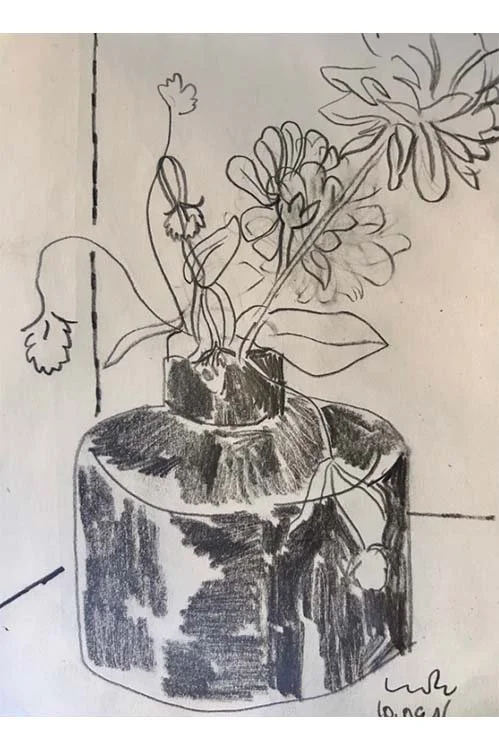 Image 1 of 7
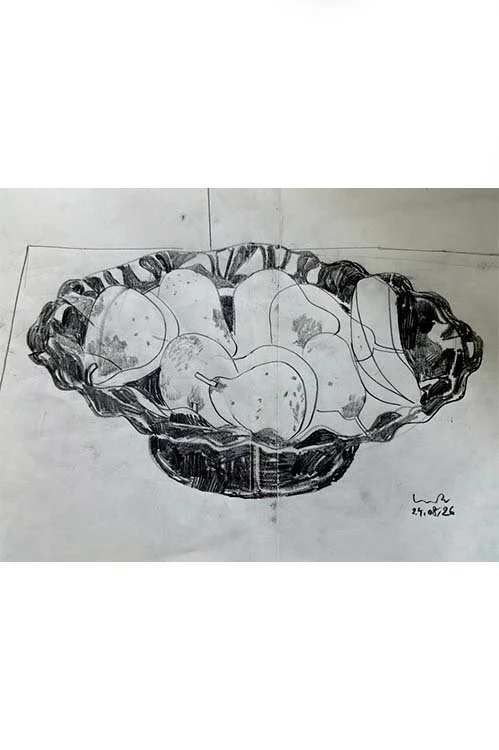 Image 2 of 7
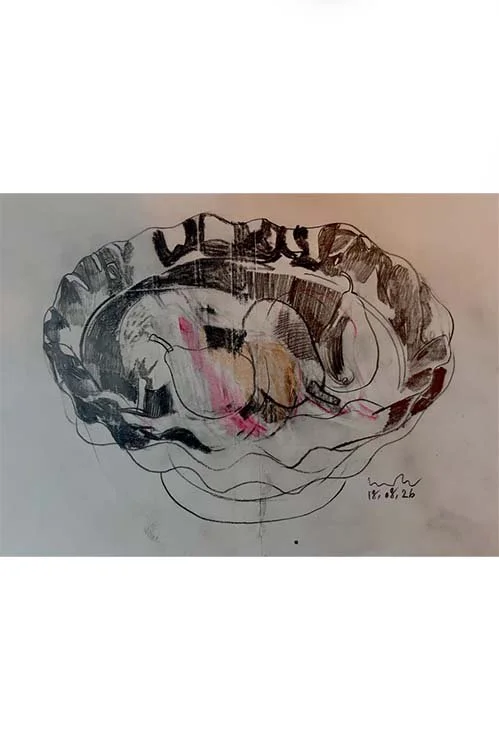 Image 3 of 7
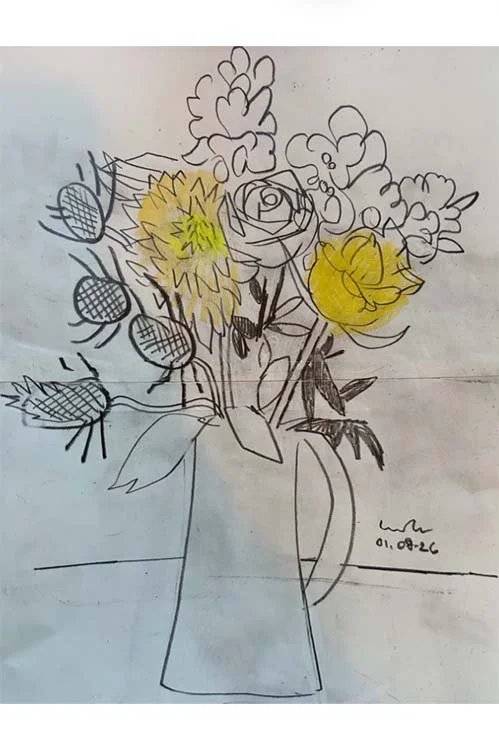 Image 4 of 7
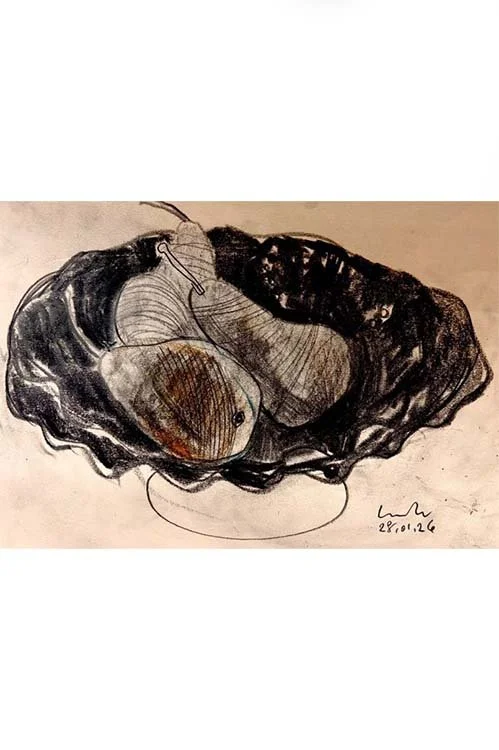 Image 5 of 7
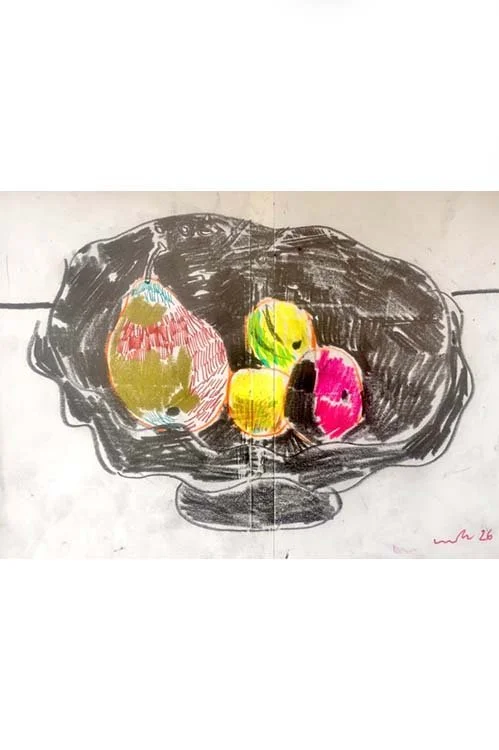 Image 6 of 7
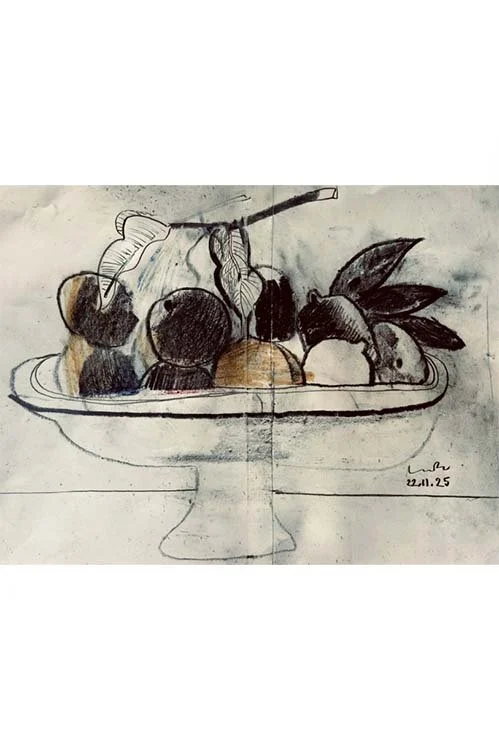 Image 7 of 7