November 5 to November 19 (Thursdays), 4:00 PM to 7:00 PM Eastern Time
**All sessions are live and will be recorded, students do not have to be present. All recordings will be available to students for 3 months after the final session, after 3 months the recording will be deleted.
Please check your email spam/junk folder for your Zoom invite. Our business hours are 10:00 AM through 5:00 PM. All course information and email correspondence will be sent during business hours. If students purchase a course, workshop, demo or recording outside business hours or during the weekend the course information or recording will be sent the following business day.
DEMO: https://youtu.be/lVrxYMrd9Qk
Workshop Description
Step outside and finally see like an experienced painter—then paint faster, simpler, and with greater confidence.
In three focused weeks, award-winning plein air painter John Lasater (Plein Air Painters of America) will help you develop the “painter’s eye”—the practiced way of seeing that lets seasoned artists turn complex outdoor scenes into confident, luminous studies in a short time. You’ll learn the exact mental habits and decision-making process professionals use the moment they set up their easel.
No live outdoor demos. Just clear studio demonstrations, practical assignments, and personal critiques that build the seeing habits of decisive plein air work.
Workshop Outline
Week 1: Cultivate the Painter’s Eye – Develop Intention
Feed your vision with great historical art so you begin to see the world the way master painters do. Learn to arrive at a location with a clear idea already in mind instead of being overwhelmed by everything in front of you.
Know Art History and internalize great art (train your eye by studying what you love).
Have An Idea—the specific aspect of the landscape or mood you want to capture (try naming the painting first).
Design the Idea (strong composition rooted in design principles and historical study).
Experienced painters don’t just paint what they see—they generally decide what the painting is about before the brush hits the panel.
Week 2: Train the Painter’s Eye – Simplify Your Seeing
Develop the professional habit of seeing big, essential shapes and values instead of getting lost in details. This is the core skill that keeps plein air painters from feeling overwhelmed.
Learn Outdoor Values (the big separation between sky and land, John Carlson’s principles).
Squint for Simpler Shapes and massing.
Turn overwhelming scenes into powerful, manageable forms.
Professionals don’t panic at complexity anymore because they’ve trained their eye to see the essential structure first. You’ll start building that same calm, decisive vision.
Week 3: Trust the Painter’s Eye – Apply Decisively
Paint quickly and accurately while staying in the flow. Spot the key color relationships, create hierarchy and emphasis, and learn when to stop judging so you can keep your energy high and complete multiple strong studies in one session.
Identifying Key Color Conjunctions.
Color Hierarchy and Emphasis.
Delay Judgement—stay loose and productive.
Cameras can help reduce pressure so you focus on capturing the idea rather than overworking one piece. The goal is to come home with several fresh, honest studies instead of one tired painting.
Workshop Materials
(None of my recommended supplies are required for class time, so invest only as you wish. I assume you already have an easel and basic plein air gear like panel carriers, paper towels, etc.)
Oil Paints:
I recommend Rembrandt Oils because they flow beautifully off the brush with minimal medium. You can purchase my full set or simplify to: Titanium White, Cadmium Yellow Light, Cadmium Red Light, Quinacridone Rose, Ultramarine Deep, and Viridian. Use discount code LASATER for 40% off:
https://royal-talens-north-america.myshopify.com/collections/john-lasater?sort_by=price-descending
Brushes:
Long-haired synthetics are my favorite. A mix of filberts, flats, and rounds. They offer excellent opacity and flow.
Surfaces:
Centurion Acrylic-Primed Linen Panels or Raymar Claessens Linen Panels. Oil paper is also excellent for plein air. Best sizes: 8x10" to 12x16".
November 5 to November 19 (Thursdays), 4:00 PM to 7:00 PM Eastern Time
**All sessions are live and will be recorded, students do not have to be present. All recordings will be available to students for 3 months after the final session, after 3 months the recording will be deleted.
Please check your email spam/junk folder for your Zoom invite. Our business hours are 10:00 AM through 5:00 PM. All course information and email correspondence will be sent during business hours. If students purchase a course, workshop, demo or recording outside business hours or during the weekend the course information or recording will be sent the following business day.
DEMO: https://youtu.be/lVrxYMrd9Qk
Workshop Description
Step outside and finally see like an experienced painter—then paint faster, simpler, and with greater confidence.
In three focused weeks, award-winning plein air painter John Lasater (Plein Air Painters of America) will help you develop the “painter’s eye”—the practiced way of seeing that lets seasoned artists turn complex outdoor scenes into confident, luminous studies in a short time. You’ll learn the exact mental habits and decision-making process professionals use the moment they set up their easel.
No live outdoor demos. Just clear studio demonstrations, practical assignments, and personal critiques that build the seeing habits of decisive plein air work.
Workshop Outline
Week 1: Cultivate the Painter’s Eye – Develop Intention
Feed your vision with great historical art so you begin to see the world the way master painters do. Learn to arrive at a location with a clear idea already in mind instead of being overwhelmed by everything in front of you.
Know Art History and internalize great art (train your eye by studying what you love).
Have An Idea—the specific aspect of the landscape or mood you want to capture (try naming the painting first).
Design the Idea (strong composition rooted in design principles and historical study).
Experienced painters don’t just paint what they see—they generally decide what the painting is about before the brush hits the panel.
Week 2: Train the Painter’s Eye – Simplify Your Seeing
Develop the professional habit of seeing big, essential shapes and values instead of getting lost in details. This is the core skill that keeps plein air painters from feeling overwhelmed.
Learn Outdoor Values (the big separation between sky and land, John Carlson’s principles).
Squint for Simpler Shapes and massing.
Turn overwhelming scenes into powerful, manageable forms.
Professionals don’t panic at complexity anymore because they’ve trained their eye to see the essential structure first. You’ll start building that same calm, decisive vision.
Week 3: Trust the Painter’s Eye – Apply Decisively
Paint quickly and accurately while staying in the flow. Spot the key color relationships, create hierarchy and emphasis, and learn when to stop judging so you can keep your energy high and complete multiple strong studies in one session.
Identifying Key Color Conjunctions.
Color Hierarchy and Emphasis.
Delay Judgement—stay loose and productive.
Cameras can help reduce pressure so you focus on capturing the idea rather than overworking one piece. The goal is to come home with several fresh, honest studies instead of one tired painting.
Workshop Materials
(None of my recommended supplies are required for class time, so invest only as you wish. I assume you already have an easel and basic plein air gear like panel carriers, paper towels, etc.)
Oil Paints:
I recommend Rembrandt Oils because they flow beautifully off the brush with minimal medium. You can purchase my full set or simplify to: Titanium White, Cadmium Yellow Light, Cadmium Red Light, Quinacridone Rose, Ultramarine Deep, and Viridian. Use discount code LASATER for 40% off:
https://royal-talens-north-america.myshopify.com/collections/john-lasater?sort_by=price-descending
Brushes:
Long-haired synthetics are my favorite. A mix of filberts, flats, and rounds. They offer excellent opacity and flow.
Surfaces:
Centurion Acrylic-Primed Linen Panels or Raymar Claessens Linen Panels. Oil paper is also excellent for plein air. Best sizes: 8x10" to 12x16".

 Image 1 of 7
 Image 2 of 7
 Image 3 of 7
 Image 4 of 7
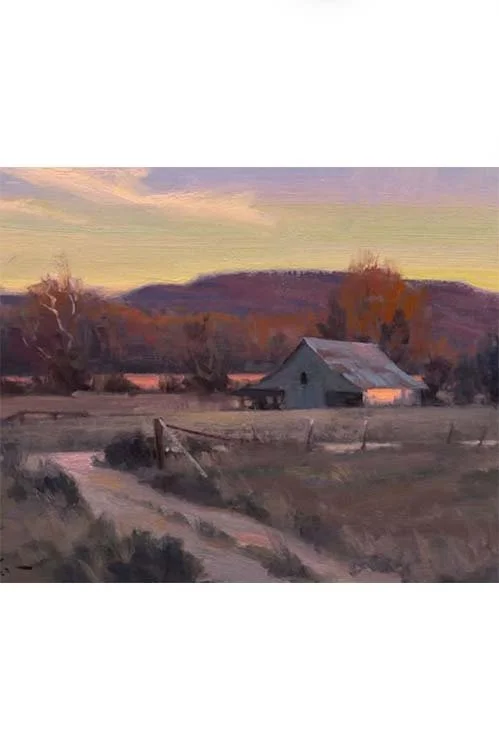 Image 5 of 7
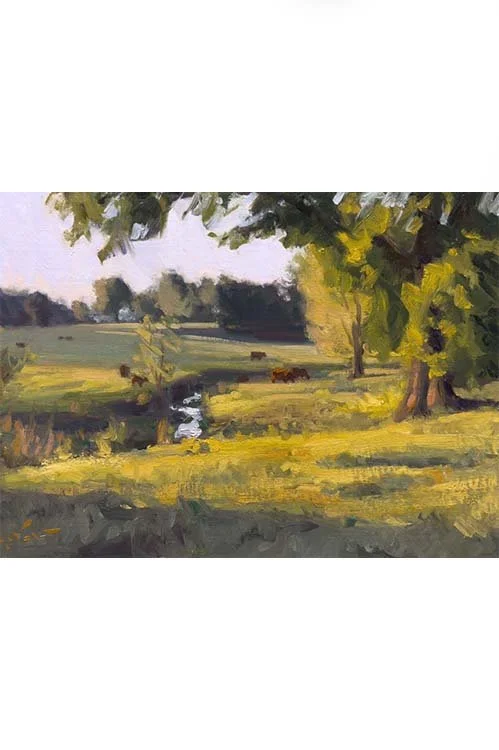 Image 6 of 7
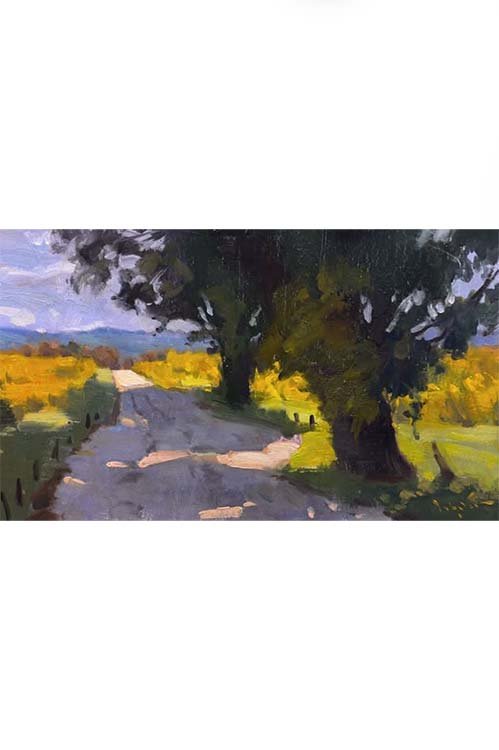 Image 7 of 7