March 20 to April 17 (Fridays), 2:00 PM to 4:30 PM, Eastern Time
**All sessions are live and will be recorded, students do not have to be present. All recordings will be available to students for 3 months after the final session, after 3 months the recording will be deleted.
Please check your email spam/junk folder for your Zoom invite. Our business hours are 10:00 AM through 5:00 PM. All course information and email correspondence will be sent during business hours. If students purchase a course, workshop, demo or recording outside business hours or during the weekend the course information or recording will be sent the following business day.
DEMO: https://youtu.be/xJ4I9Kna4eg
Course Description
I will start with sharing how I see design in the scene and compose the shapes, and values to define the focal point. I will discuss how every inch of the painting plays a role in weaving the visual story The photo reference that I use for demo would be available to the students prior to the week’s session.
Students are welcome to comment or ask questions, they may paint along or paint after the class.
Course Outline
Week 1
Using the still life in the foreground, figures in middle and some architectural elements in the background to bring a strong composition in a painting. The flow is created by emphasis on coordinating angles, shapes and directions of strokes
Week 2
Creating a mood in a harbor scene with vertical backdrop of a marine building and horizontal layers of boats with a contrast of temperature and value
Week 3
Creating a composition from a reference of a beach scene by placing vertical figures against the horizontal lines of shore, with visual harmony created by repeating colors
Week 4
From this momentary scene of a single figure in urban surroundings, the focus will be on the movement against static
Week 5
How to create a flow in a painting when subject is pure landscape with no figures
Course Materials List
I am very flexible in the brush sizes and color choices for the students. They can use the material they are comfortable with. However, some prefer a supply list, so here are my suggestions:
Colors
Essentially, 3 warm primary colors: Ultramarine blue, Cad. Red, Cad or Chrome yellow
Cooler primaries: Cerulean Blue, Alizarin Crimson, Lemon Cad Yellow
Raw Umber, Burnt Sienna, or red oxide, transparent orange, Cad Orange, Indian Yellow
Brushes
I use flat or long flat, sizes, 8,6,4
Fine liner for details, Size 0 or 1
Palette knife and silicone or rubber scrapper (sometimes even silicone baking spatula works fine
Solvent, Oil or Liquin
I do use Solvent most of the time, and sometimes Liquin (mostly for darks) and linseed, walnut where I need to thin the paints
Photo references will be shared before we meet for the class. This would give us all a chance to study and plan our painting. In my demo I will share my approach to design, and how I plan to pave a path for the viewer’s eye. I will start by simplifying shapes and organizing values, making marks for the darkest emphasis and the lightest accents. The class with end with some critique and discussion on the resulting painting I do expect the students to paint from the same reference that was used in demo, and share the image of your painting. Looking forward to seeing your painting expression.
March 20 to April 17 (Fridays), 2:00 PM to 4:30 PM, Eastern Time
**All sessions are live and will be recorded, students do not have to be present. All recordings will be available to students for 3 months after the final session, after 3 months the recording will be deleted.
Please check your email spam/junk folder for your Zoom invite. Our business hours are 10:00 AM through 5:00 PM. All course information and email correspondence will be sent during business hours. If students purchase a course, workshop, demo or recording outside business hours or during the weekend the course information or recording will be sent the following business day.
DEMO: https://youtu.be/xJ4I9Kna4eg
Course Description
I will start with sharing how I see design in the scene and compose the shapes, and values to define the focal point. I will discuss how every inch of the painting plays a role in weaving the visual story The photo reference that I use for demo would be available to the students prior to the week’s session.
Students are welcome to comment or ask questions, they may paint along or paint after the class.
Course Outline
Week 1
Using the still life in the foreground, figures in middle and some architectural elements in the background to bring a strong composition in a painting. The flow is created by emphasis on coordinating angles, shapes and directions of strokes
Week 2
Creating a mood in a harbor scene with vertical backdrop of a marine building and horizontal layers of boats with a contrast of temperature and value
Week 3
Creating a composition from a reference of a beach scene by placing vertical figures against the horizontal lines of shore, with visual harmony created by repeating colors
Week 4
From this momentary scene of a single figure in urban surroundings, the focus will be on the movement against static
Week 5
How to create a flow in a painting when subject is pure landscape with no figures
Course Materials List
I am very flexible in the brush sizes and color choices for the students. They can use the material they are comfortable with. However, some prefer a supply list, so here are my suggestions:
Colors
Essentially, 3 warm primary colors: Ultramarine blue, Cad. Red, Cad or Chrome yellow
Cooler primaries: Cerulean Blue, Alizarin Crimson, Lemon Cad Yellow
Raw Umber, Burnt Sienna, or red oxide, transparent orange, Cad Orange, Indian Yellow
Brushes
I use flat or long flat, sizes, 8,6,4
Fine liner for details, Size 0 or 1
Palette knife and silicone or rubber scrapper (sometimes even silicone baking spatula works fine
Solvent, Oil or Liquin
I do use Solvent most of the time, and sometimes Liquin (mostly for darks) and linseed, walnut where I need to thin the paints
Photo references will be shared before we meet for the class. This would give us all a chance to study and plan our painting. In my demo I will share my approach to design, and how I plan to pave a path for the viewer’s eye. I will start by simplifying shapes and organizing values, making marks for the darkest emphasis and the lightest accents. The class with end with some critique and discussion on the resulting painting I do expect the students to paint from the same reference that was used in demo, and share the image of your painting. Looking forward to seeing your painting expression.

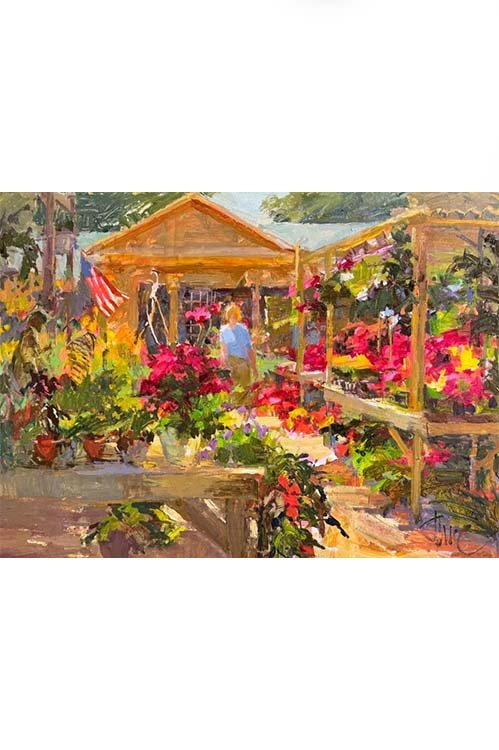 Image 1 of 6
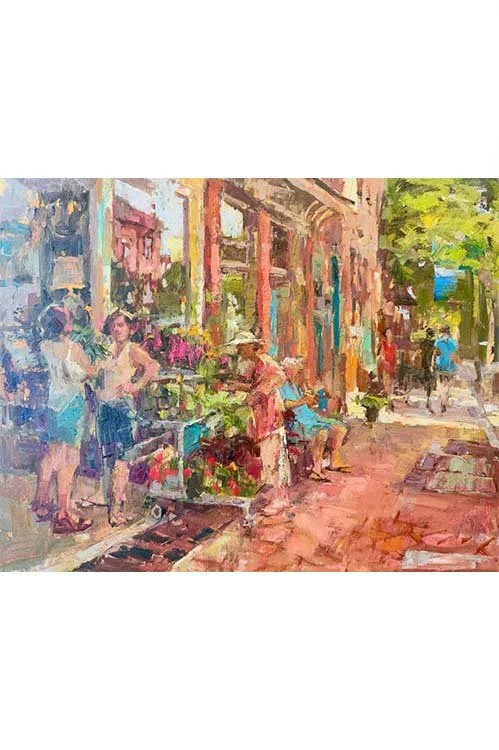 Image 2 of 6
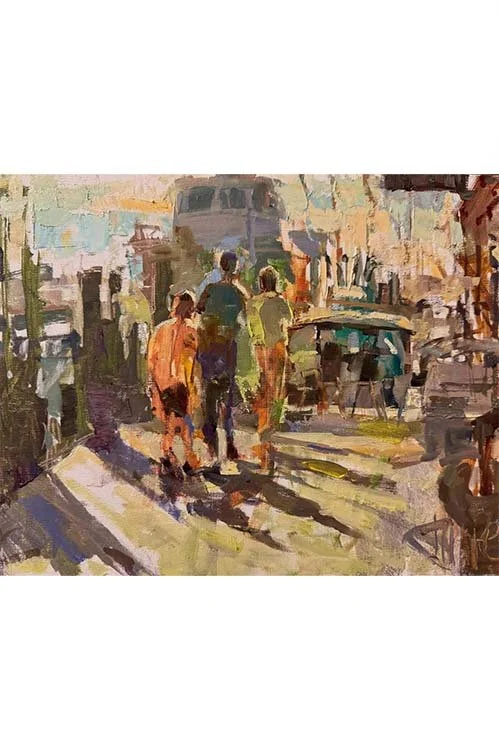 Image 3 of 6
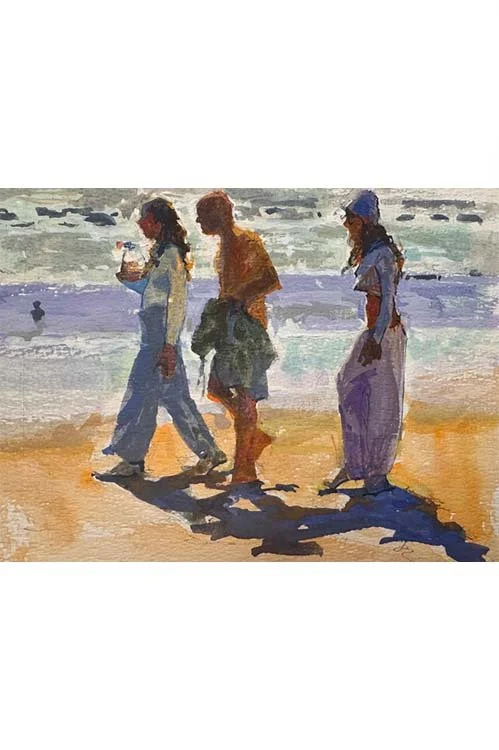 Image 4 of 6
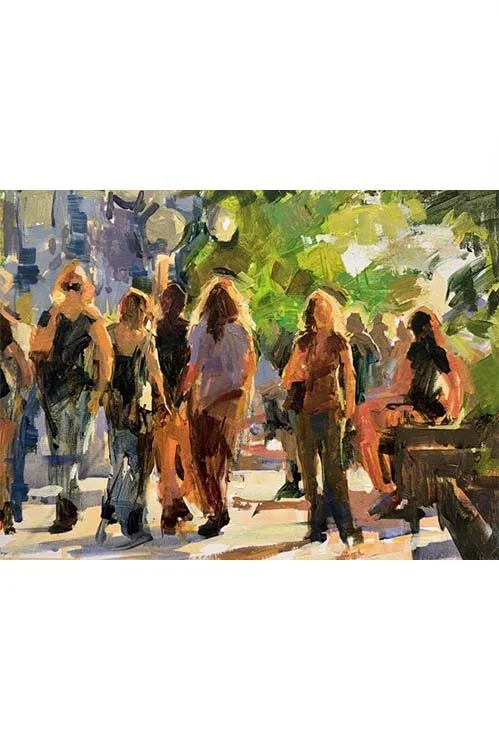 Image 5 of 6
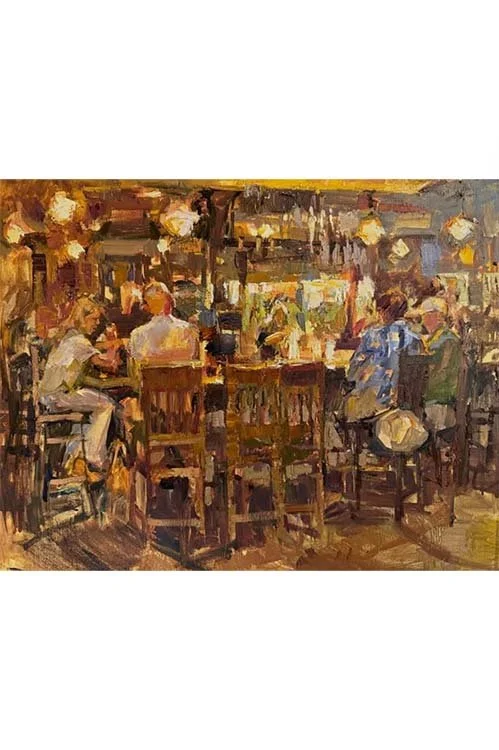 Image 6 of 6