April 23 to May 7 (Thursdays), 4:00 PM to 7:00 PM, Eastern Time
**All sessions are live and will be recorded, students do not have to be present. All recordings will be available to students for 3 months after the final session, after 3 months the recording will be deleted.
Please check your email spam/junk folder for your Zoom invite.
DEMO: https://youtu.be/d5YQ4BGO3oM
Workshop Description
Step outside and finally paint faster, smarter, and with joy.
In three focused weeks, award-winning plein air painter John Lasater (Plein Air Painters of America) will walk you through the same streamlined process he relies on to make confident, luminous studies in 1–2 hours on location—so you can head outdoors and do it too.
No live outdoor demos. Just clear studio demonstrations, doable assignments, and personal critiques that build the habits of fast, decisive plein air work.
Workshop Outline
Week 1: Identify the Intention
Feed your eyes with great historical art, know what you want, and workout a strong design before you ever lift a brush. Would a cellist start out writing songs without knowing great songs already? An artist doesn’t get ideas without the desire to mimic what they’ve loved.
• Know Art History and internalize great art.
• Have An Idea—the aspect of the landscape you want to capture. (Maybe try naming the painting first)
• Design the Idea (This is based in study of design and history)
Week 2: Simplify Your Seeing
Train your eye to notice outdoor values, and turn overwhelming scenes into simple, powerful shapes. You might choose a subject and then be afraid of the big task ahead of you. Know that professionals don’t necessarily have this reaction any longer, so also know that a big key is learning to see the essential things.
• Learn Outdoor Values (Big Separation Between Sky and Land, John Carlson graphic)
• Squint for Simpler Shapes
Week 3: Apply with Joy
Paint quickly while staying accurate—spot key color junctions, create color hierarchy and emphasis, and delay judgement so you can keep your energy high for multiple pieces.
Ultimately, we want to conserve some energy to capture as many ideas as possible. That’s a GREAT day when we can! Doesn’t mean we hurry at the expense of good observation, but cameras certainly help take some of the pressure off, and allow us to revisit in the studio.
• Identifying Key Color Conjunctions
• Color Hierarchy and Emphasis
• Delay Judgement
Workshop Materials
[None of my recommended supplies are for the actual class time, so it’s really up to you whether or not you invest in all this. I’m assuming you have an easel, and know the kind of extras you’ll need for plein air painting (panel carriers, paper towels, trash bag, jar of spirits, etc.)]
Oil Paints:
I recommend Rembrandt Oils because they flow very quickly off the brush without medium. You can get my whole set on the link below, or simplify it to just Titanium White, Cadmium Yellow Light, Cadmium Red Light, Quinacridone Rose, Ultramarine Deep, and Viridian. You get 40% off if you enter LASATER as the discount code: https://royal-talens-north-america.myshopify.com/collections/john-lasater?sort_by=price-descending
Brushes:
My fave is long haired synthetics like Rosemary & Co’s Ivory line or Synthetic Hog Bristle options at Hobby Lobby even. Get a variety of filberts, flats, and rounds. Other instructors will swear by hog bristle brushes (which I used for many years), but synthetics are better for opacity and flow.
Surfaces:
You can’t go wrong with Centurion Acrylic-Primed Linen Panels, or a more expensive option like Classens Linen Panels from Raymar. Oil Paper is another exciting option. I know that Rembrandt makes it, and many others I’m sure. Best plein air sizes are 8x10 inches up to 12x16 inches.
April 23 to May 7 (Thursdays), 4:00 PM to 7:00 PM, Eastern Time
**All sessions are live and will be recorded, students do not have to be present. All recordings will be available to students for 3 months after the final session, after 3 months the recording will be deleted.
Please check your email spam/junk folder for your Zoom invite.
DEMO: https://youtu.be/d5YQ4BGO3oM
Workshop Description
Step outside and finally paint faster, smarter, and with joy.
In three focused weeks, award-winning plein air painter John Lasater (Plein Air Painters of America) will walk you through the same streamlined process he relies on to make confident, luminous studies in 1–2 hours on location—so you can head outdoors and do it too.
No live outdoor demos. Just clear studio demonstrations, doable assignments, and personal critiques that build the habits of fast, decisive plein air work.
Workshop Outline
Week 1: Identify the Intention
Feed your eyes with great historical art, know what you want, and workout a strong design before you ever lift a brush. Would a cellist start out writing songs without knowing great songs already? An artist doesn’t get ideas without the desire to mimic what they’ve loved.
• Know Art History and internalize great art.
• Have An Idea—the aspect of the landscape you want to capture. (Maybe try naming the painting first)
• Design the Idea (This is based in study of design and history)
Week 2: Simplify Your Seeing
Train your eye to notice outdoor values, and turn overwhelming scenes into simple, powerful shapes. You might choose a subject and then be afraid of the big task ahead of you. Know that professionals don’t necessarily have this reaction any longer, so also know that a big key is learning to see the essential things.
• Learn Outdoor Values (Big Separation Between Sky and Land, John Carlson graphic)
• Squint for Simpler Shapes
Week 3: Apply with Joy
Paint quickly while staying accurate—spot key color junctions, create color hierarchy and emphasis, and delay judgement so you can keep your energy high for multiple pieces.
Ultimately, we want to conserve some energy to capture as many ideas as possible. That’s a GREAT day when we can! Doesn’t mean we hurry at the expense of good observation, but cameras certainly help take some of the pressure off, and allow us to revisit in the studio.
• Identifying Key Color Conjunctions
• Color Hierarchy and Emphasis
• Delay Judgement
Workshop Materials
[None of my recommended supplies are for the actual class time, so it’s really up to you whether or not you invest in all this. I’m assuming you have an easel, and know the kind of extras you’ll need for plein air painting (panel carriers, paper towels, trash bag, jar of spirits, etc.)]
Oil Paints:
I recommend Rembrandt Oils because they flow very quickly off the brush without medium. You can get my whole set on the link below, or simplify it to just Titanium White, Cadmium Yellow Light, Cadmium Red Light, Quinacridone Rose, Ultramarine Deep, and Viridian. You get 40% off if you enter LASATER as the discount code: https://royal-talens-north-america.myshopify.com/collections/john-lasater?sort_by=price-descending
Brushes:
My fave is long haired synthetics like Rosemary & Co’s Ivory line or Synthetic Hog Bristle options at Hobby Lobby even. Get a variety of filberts, flats, and rounds. Other instructors will swear by hog bristle brushes (which I used for many years), but synthetics are better for opacity and flow.
Surfaces:
You can’t go wrong with Centurion Acrylic-Primed Linen Panels, or a more expensive option like Classens Linen Panels from Raymar. Oil Paper is another exciting option. I know that Rembrandt makes it, and many others I’m sure. Best plein air sizes are 8x10 inches up to 12x16 inches.

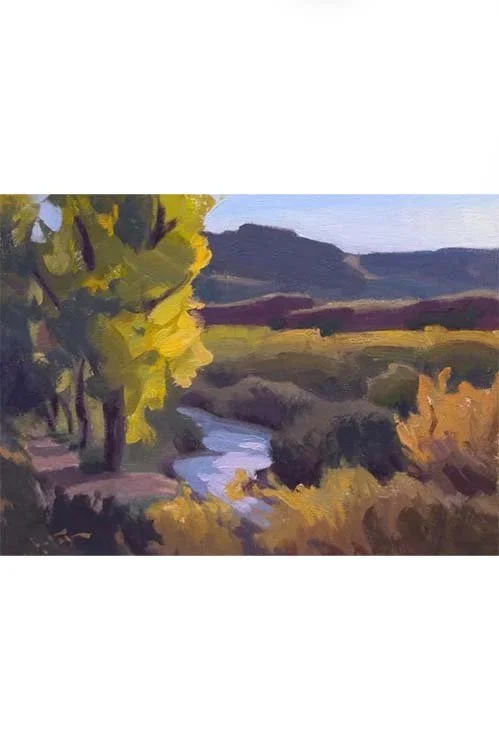 Image 1 of 9
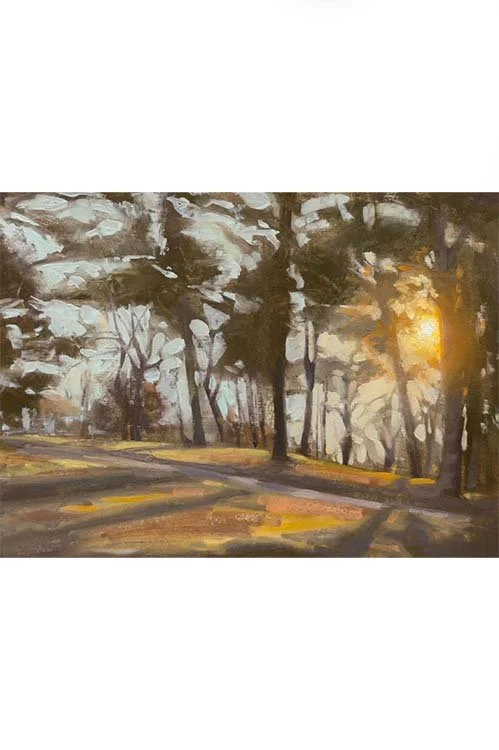 Image 2 of 9
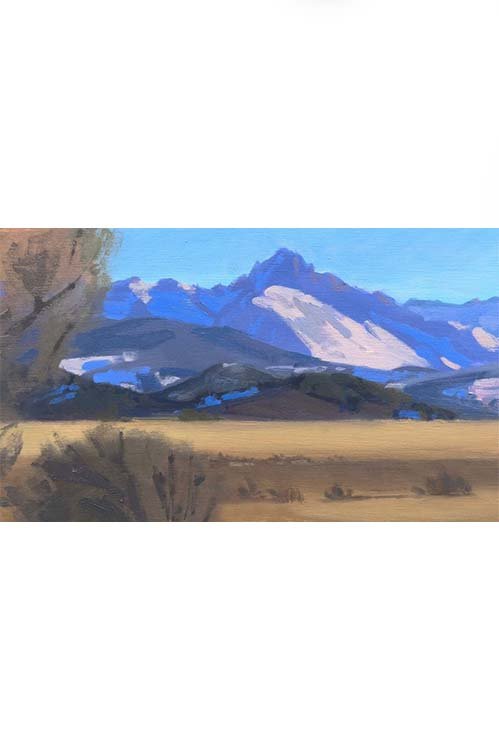 Image 3 of 9
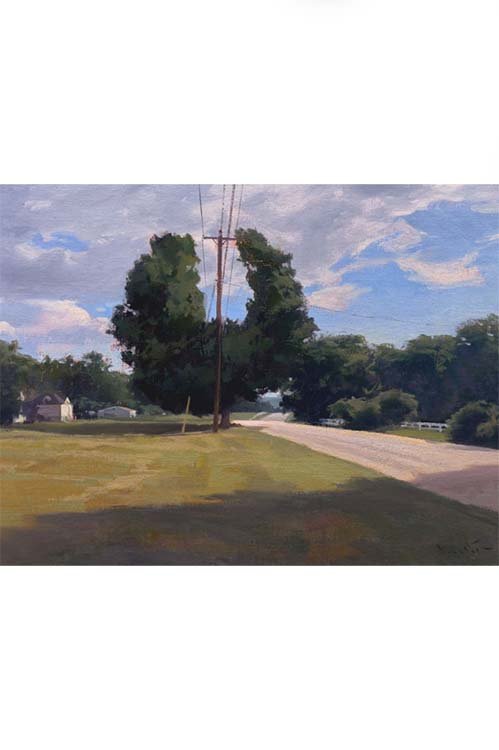 Image 4 of 9
 Image 5 of 9
 Image 6 of 9
 Image 7 of 9
 Image 8 of 9
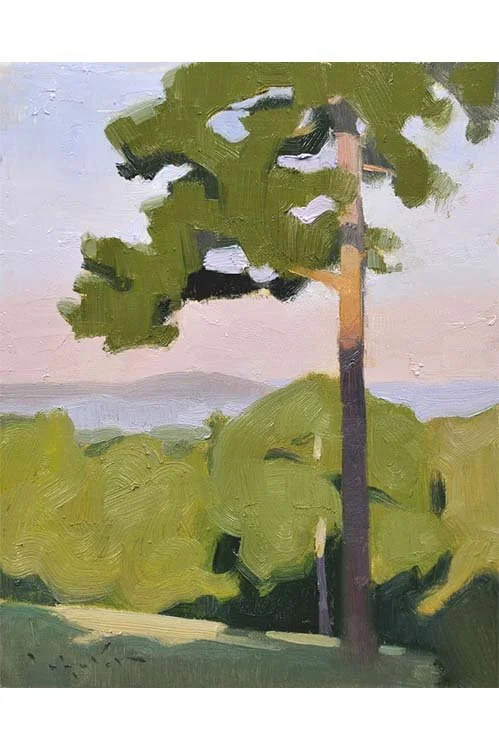 Image 9 of 9