June 16 to July 7 (Tuesdays), 10:00 AM to 12:30 PM, Eastern Time
**All sessions are live and will be recorded, students do not have to be present. All recordings will be available to students for 3 months after the final session, after 3 months the recording will be deleted.
Please check your email spam/junk folder for your Zoom invite.
DEMO: https://youtu.be/KxW-gk5eDVU
Course Description
This course invites painters to work directly from life rather than from assumptions or formulas. Using simple, tangible subjects—such as fruit or flowers—students learn to slow down, truly look, and respond to what is actually in front of them.
Working within the alla prima (Italian for “first-attempt”) tradition, we will complete one painting per session. Students will be guided to organize their paintings decisively from the start. Rather than correcting through excessive removal or revision, the emphasis is on committing to informed decisions and allowing the painting to build through the accumulation of clear, purposeful strokes.
The course emphasizes seeing the whole before the parts—establishing large relationships, proportion, and spatial order before attending to refinement. Color, pigment characteristics, and color mixing are addressed throughout as essential tools for clarity and expression.
This class is ideal for painters who want their work to feel more confident, cohesive, and alive—and who are ready to trust their eyes, enjoy the process, and paint with greater clarity.
Course Outline
Class 1 — Seeing & the First Statement
Intro lecture to Alla Prima Tradition, slides
Demo
Establishing the whole: proportion, placement, and major relationships
Organizing the painting clearly from the start
Emphasis on observation over assumption
Color and palette discussion, also brushes, tools, etc…
Group Q and A
Class 2 -
Critique of homework
Demo
Slides analyzing brushwork
Working with a focused, limited palette
Color harmony
Mixing with intention rather than chasing exact matches
Transitioning from earth-based beginnings to more prismatic color
Photographing every 15 minutes while you paint
Group Q and A
Class 3 -
Critique of homework
Demo, importance of edges
Slide presentation and analysis of paintings (brushwork, composition, intent)
Group Q and A
Class 4 -
Homework critique
Demo
Group Q and A, discussion, wrap up
Course Materials
Palette, preferably 18x24 (the larger the better-disposable is good)
Palette knife- I recommend one elongated with rounded rather than angular corners
Gamsol or Turpenoid (in blue and white can). (Turpenoid Natural is a brush conditioner, not a solvent.
Paper towels- Viva or Bounty
Linseed oil (AND stand oil if you want to try it – it creates lush, rich brushmarks). I am not promoting liquin or other alkyds for this class as they tend to level out or smooth brushwork.
A selection of brushes-soft to lay down paint, firm or bristle to scrub paint.
(Suggestions- silver brand ruby satin filberts and flats(#3,6,8), silver white flats (#6)
Dick blick megabrush flat white synthetic
White painting ground-
Suggestions:
Arches oil paper
Raymar panel
Canvas if you are more comfortable, but please not the ultra cheap ones. They are often made with gesso that contains plastic and as a result have a very slippery surface which can be difficult to deal with. Painting is hard enough without additional challenges. You want a surface that has a bit of absorbency/drag.
Surfaces should be white and on the smaller side 10x8, 8x8, 8x6 are nice sizes. 12x9 if you feel comfortable with that much space. I would recommend starting smaller, building confidence, then working your way larger.
Paints
I don’t want you to have to go out and buy a new “wardrobe” of paint colors. I will divide this into an A group we consider necessary and a B group if you want to add in some new colors so that you widen your color options.
A Group
Titanium white
Transparent Yellow Oxide
Cadmium Yellow LIGHT
Ultramarine Blue
Alizarin Crimson
Permanent Rose
Cerulean Blue
Cadmium Red LIGHT
Naples Yellow LIGHT
B Group
Yellow Ochre
Viridian
Cadmium Yellow
Transparent Orange Oxide
Lemon Yellow
Blue Black
Indian Yellow
Transparent Orange Mixture (Gamblin)
Zinc white
June 16 to July 7 (Tuesdays), 10:00 AM to 12:30 PM, Eastern Time
**All sessions are live and will be recorded, students do not have to be present. All recordings will be available to students for 3 months after the final session, after 3 months the recording will be deleted.
Please check your email spam/junk folder for your Zoom invite.
DEMO: https://youtu.be/KxW-gk5eDVU
Course Description
This course invites painters to work directly from life rather than from assumptions or formulas. Using simple, tangible subjects—such as fruit or flowers—students learn to slow down, truly look, and respond to what is actually in front of them.
Working within the alla prima (Italian for “first-attempt”) tradition, we will complete one painting per session. Students will be guided to organize their paintings decisively from the start. Rather than correcting through excessive removal or revision, the emphasis is on committing to informed decisions and allowing the painting to build through the accumulation of clear, purposeful strokes.
The course emphasizes seeing the whole before the parts—establishing large relationships, proportion, and spatial order before attending to refinement. Color, pigment characteristics, and color mixing are addressed throughout as essential tools for clarity and expression.
This class is ideal for painters who want their work to feel more confident, cohesive, and alive—and who are ready to trust their eyes, enjoy the process, and paint with greater clarity.
Course Outline
Class 1 — Seeing & the First Statement
Intro lecture to Alla Prima Tradition, slides
Demo
Establishing the whole: proportion, placement, and major relationships
Organizing the painting clearly from the start
Emphasis on observation over assumption
Color and palette discussion, also brushes, tools, etc…
Group Q and A
Class 2 -
Critique of homework
Demo
Slides analyzing brushwork
Working with a focused, limited palette
Color harmony
Mixing with intention rather than chasing exact matches
Transitioning from earth-based beginnings to more prismatic color
Photographing every 15 minutes while you paint
Group Q and A
Class 3 -
Critique of homework
Demo, importance of edges
Slide presentation and analysis of paintings (brushwork, composition, intent)
Group Q and A
Class 4 -
Homework critique
Demo
Group Q and A, discussion, wrap up
Course Materials
Palette, preferably 18x24 (the larger the better-disposable is good)
Palette knife- I recommend one elongated with rounded rather than angular corners
Gamsol or Turpenoid (in blue and white can). (Turpenoid Natural is a brush conditioner, not a solvent.
Paper towels- Viva or Bounty
Linseed oil (AND stand oil if you want to try it – it creates lush, rich brushmarks). I am not promoting liquin or other alkyds for this class as they tend to level out or smooth brushwork.
A selection of brushes-soft to lay down paint, firm or bristle to scrub paint.
(Suggestions- silver brand ruby satin filberts and flats(#3,6,8), silver white flats (#6)
Dick blick megabrush flat white synthetic
White painting ground-
Suggestions:
Arches oil paper
Raymar panel
Canvas if you are more comfortable, but please not the ultra cheap ones. They are often made with gesso that contains plastic and as a result have a very slippery surface which can be difficult to deal with. Painting is hard enough without additional challenges. You want a surface that has a bit of absorbency/drag.
Surfaces should be white and on the smaller side 10x8, 8x8, 8x6 are nice sizes. 12x9 if you feel comfortable with that much space. I would recommend starting smaller, building confidence, then working your way larger.
Paints
I don’t want you to have to go out and buy a new “wardrobe” of paint colors. I will divide this into an A group we consider necessary and a B group if you want to add in some new colors so that you widen your color options.
A Group
Titanium white
Transparent Yellow Oxide
Cadmium Yellow LIGHT
Ultramarine Blue
Alizarin Crimson
Permanent Rose
Cerulean Blue
Cadmium Red LIGHT
Naples Yellow LIGHT
B Group
Yellow Ochre
Viridian
Cadmium Yellow
Transparent Orange Oxide
Lemon Yellow
Blue Black
Indian Yellow
Transparent Orange Mixture (Gamblin)
Zinc white

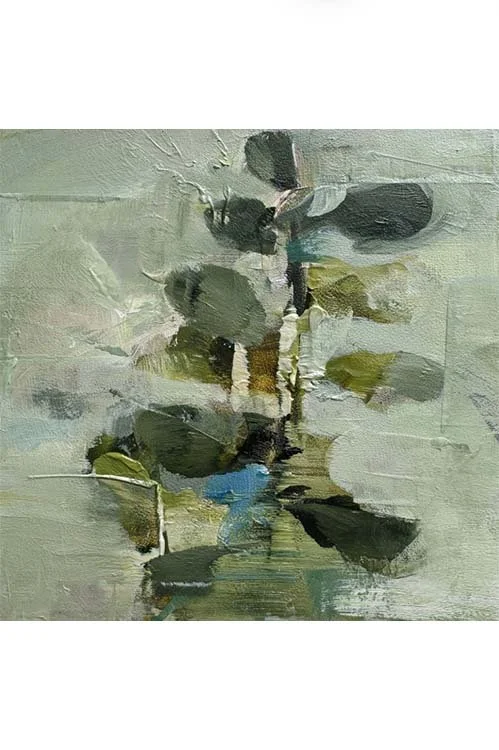 Image 1 of 10
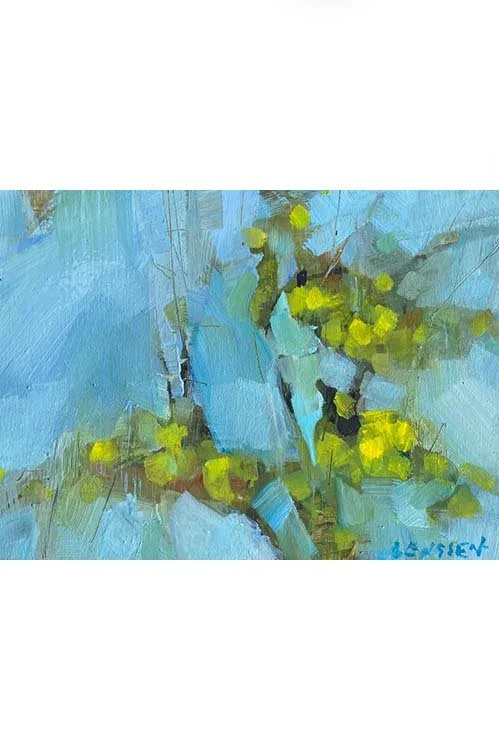 Image 2 of 10
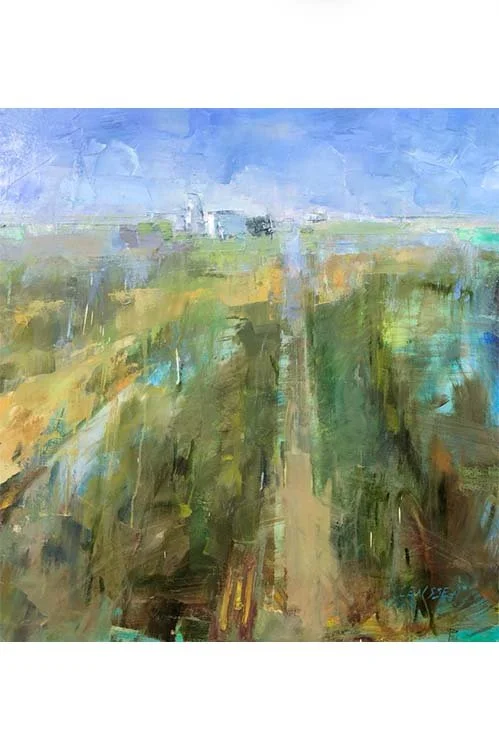 Image 3 of 10
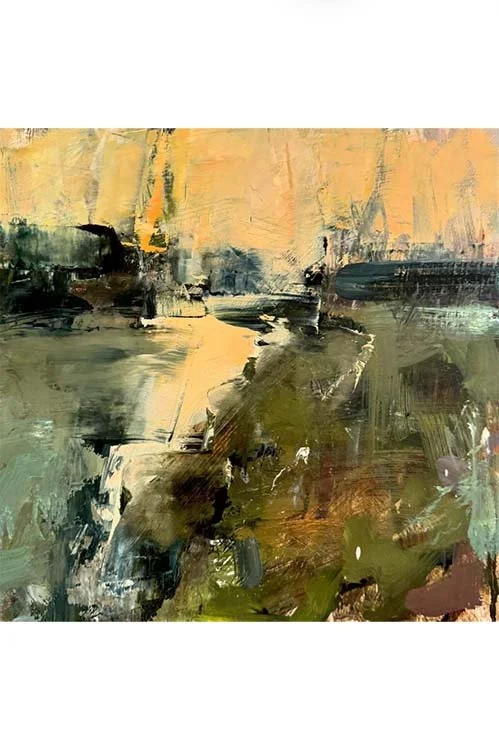 Image 4 of 10
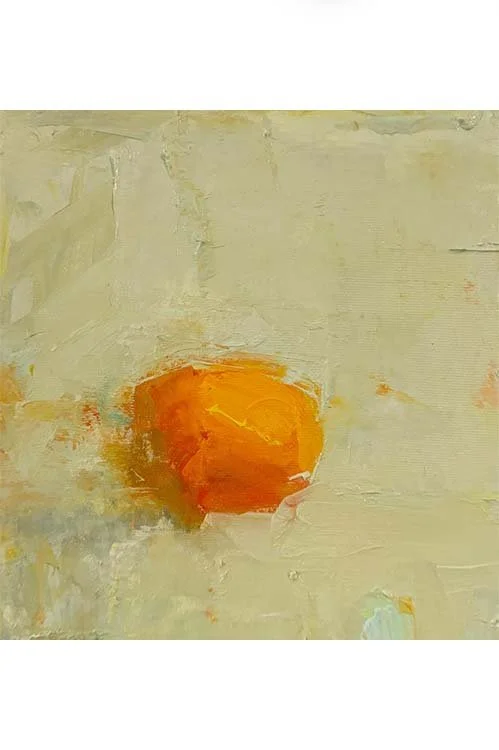 Image 5 of 10
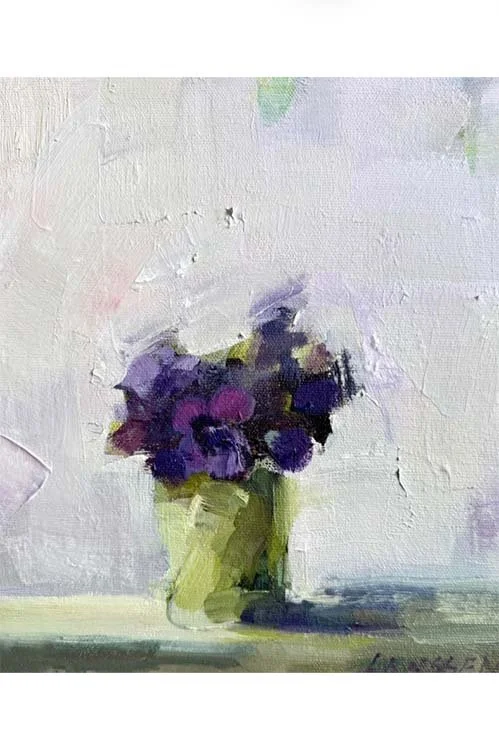 Image 6 of 10
 Image 7 of 10
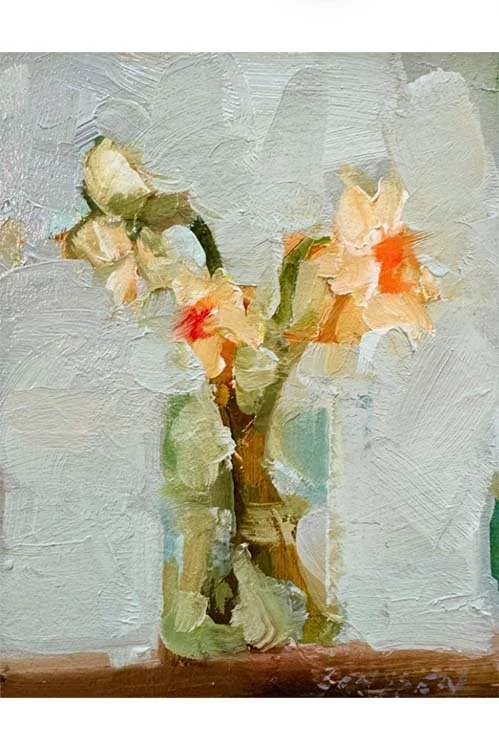 Image 8 of 10
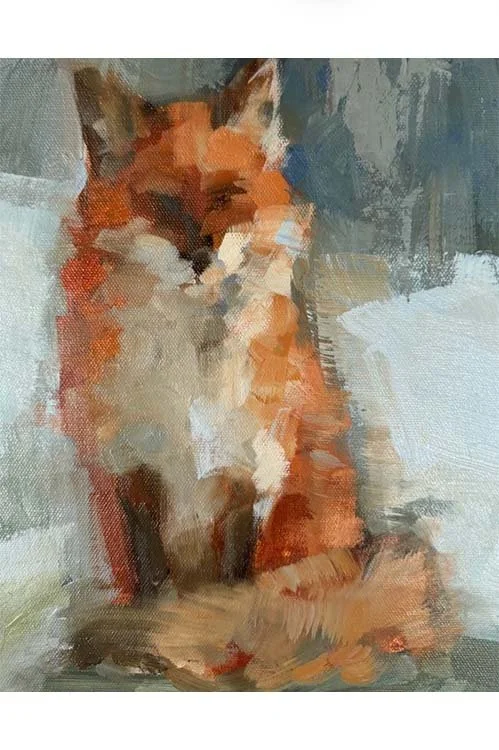 Image 9 of 10
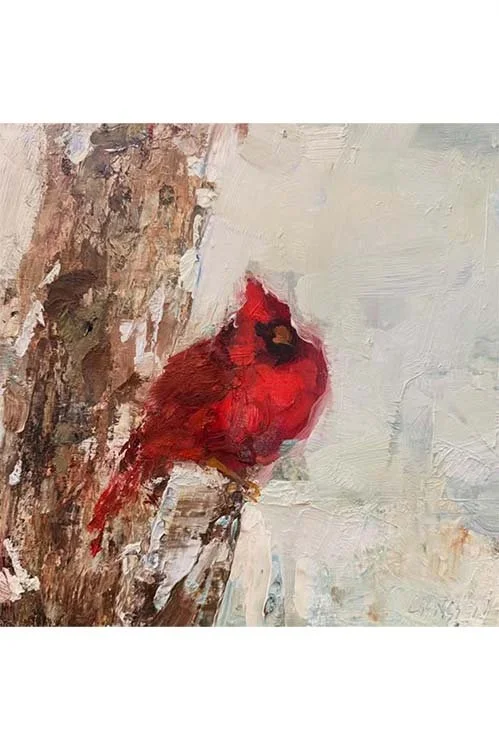 Image 10 of 10