July 10 to July 24 (Fridays), 1:00 PM to 4:00 PM, Eastern Time
**All sessions are live and will be recorded, students do not have to be present. All recordings will be available to students for 3 months after the final session, after 3 months the recording will be deleted.
Please check your email spam/junk folder for your Zoom invite. Our business hours are 10:00 AM through 5:00 PM. All course information and email correspondence will be sent during business hours. If students purchase a course, workshop, demo or recording outside business hours or during the weekend the course information or recording will be sent the following business day.
Workshop Description
Discover the power of simplified color and bold observation in this three-week gouache figure-painting intensive inspired by the teaching methods of Charles Hawthorne. Known for his emphasis on “seeing the big color note” and working from life in direct, decisive strokes, Hawthorne encouraged painters to develop sensitivity to value, temperature, and overall color relationships before getting lost in detail.
Through short poses and limited-time exercises, you’ll learn to build paintings from major color masses, accurately judge warm/cool shifts, and keep brushwork fresh and intentional. Demonstrations and lectures will clarify essential gouache handling, opacity vs. transparency, palette organization, and strategies for maintaining clean, luminous color.
Workshop Outline
Week 1: Hawthorne’s Color Spots & Massing
Focus: Seeing the figure as large color notes; simplifying value and temperature.
Introduction to Hawthorne’s “color spot” method.
Limited palette studies
Week 2: Collage as a Tool for Seeing
Focus: Collage as a way to target shape design, value grouping, and color relationships.
Week 3: Integrated Gouache Study: Painting with Collage Mindset
Focus: Longer figure study applying lessons from collage. Starting with strong shapes, simplified masses, then developing the form through clear and controlled color steps.
Workshop Materials
Gouache Paints
colors listed are for Windsor and Newton water soluble Designers gouache:
Permanent White (titanium white)
Primary Yellow
Permanent yellow deep
Flame red
Primary Red or Spectrum red
Ultramarine Blue
Primary blue/pthalo blue
Optional secondary colors
-Viridian hue
-Brilliant violet
-Orange lake deep
Note: Professional-grade gouache (Holbein, Winsor & Newton, M. Graham) is strongly recommended for color clarity and opacity.
Windsor and Newton has some cheaper lines, stick with their Designer gouache tubes for opacity!
The cheaper gouaches will be more transparent and it can be annoying
Brushes:
Look for brushes designed for ACRYLIC paint, they should feel springy and somewhat ‘stiff’, not floppy, when you touch the bristles. Water color brushes are too soft for the gouache and don’t work very well.
This is a guide, feel free to only buy a few brushes, or use what you have and ask questions the first week
synthetic flats, it’s nice to have two of each size to alternate colors
2 at ½”
synthetic round brushes
2 at size 1-2 for detail
2 at size 4 - 6
Optional:
Some medium/(larger for us) rounds, size 6-8
a larger flat (¾"–1") for block-ins
Paper & Surfaces:
I prefer smooth or vellum bristol or even cardstock (140–300 lb)
9x12 or up to 11x17 or larger sheets cut down (most economical, apart from cardstock, probably)
Moleskine sketchbooks can also be fun for on the go studies!
Backing board + clips or tape
Assorted papers for collage, I will suggest ways to make or collect your own prior to our second week
Palette & Tools:
I like palette paper or a glass palette ruffle 9x12 or 11x14 ish
Water container
Paper towels
Pencil and eraser for light initial layout
Masking tape (optional)
Palette knife is helpful, Blick Painting Knife - Small Long Spade 50
Do not go too short in the blade, it makes then stiff, i often use a larger palette knife I have from oil painting
Clear Ruler
Scissors
Glue stick
Fine mist spray bottle, such as this one: Holbein Atomizer Bottle, larger ones for hair DO NOT WORK
You could repurpose a facial toner spray bottle
Optional paint storage container:
https://www.amazon.com/Airtight-Storage-Palette-16-Well-Watercolor
Or
https://www.amazon.com/dp/B099F3MZ4M/
I have both, and have liked the small one more recently, because it feels like less pressure
July 10 to July 24 (Fridays), 1:00 PM to 4:00 PM, Eastern Time
**All sessions are live and will be recorded, students do not have to be present. All recordings will be available to students for 3 months after the final session, after 3 months the recording will be deleted.
Please check your email spam/junk folder for your Zoom invite. Our business hours are 10:00 AM through 5:00 PM. All course information and email correspondence will be sent during business hours. If students purchase a course, workshop, demo or recording outside business hours or during the weekend the course information or recording will be sent the following business day.
Workshop Description
Discover the power of simplified color and bold observation in this three-week gouache figure-painting intensive inspired by the teaching methods of Charles Hawthorne. Known for his emphasis on “seeing the big color note” and working from life in direct, decisive strokes, Hawthorne encouraged painters to develop sensitivity to value, temperature, and overall color relationships before getting lost in detail.
Through short poses and limited-time exercises, you’ll learn to build paintings from major color masses, accurately judge warm/cool shifts, and keep brushwork fresh and intentional. Demonstrations and lectures will clarify essential gouache handling, opacity vs. transparency, palette organization, and strategies for maintaining clean, luminous color.
Workshop Outline
Week 1: Hawthorne’s Color Spots & Massing
Focus: Seeing the figure as large color notes; simplifying value and temperature.
Introduction to Hawthorne’s “color spot” method.
Limited palette studies
Week 2: Collage as a Tool for Seeing
Focus: Collage as a way to target shape design, value grouping, and color relationships.
Week 3: Integrated Gouache Study: Painting with Collage Mindset
Focus: Longer figure study applying lessons from collage. Starting with strong shapes, simplified masses, then developing the form through clear and controlled color steps.
Workshop Materials
Gouache Paints
colors listed are for Windsor and Newton water soluble Designers gouache:
Permanent White (titanium white)
Primary Yellow
Permanent yellow deep
Flame red
Primary Red or Spectrum red
Ultramarine Blue
Primary blue/pthalo blue
Optional secondary colors
-Viridian hue
-Brilliant violet
-Orange lake deep
Note: Professional-grade gouache (Holbein, Winsor & Newton, M. Graham) is strongly recommended for color clarity and opacity.
Windsor and Newton has some cheaper lines, stick with their Designer gouache tubes for opacity!
The cheaper gouaches will be more transparent and it can be annoying
Brushes:
Look for brushes designed for ACRYLIC paint, they should feel springy and somewhat ‘stiff’, not floppy, when you touch the bristles. Water color brushes are too soft for the gouache and don’t work very well.
This is a guide, feel free to only buy a few brushes, or use what you have and ask questions the first week
synthetic flats, it’s nice to have two of each size to alternate colors
2 at ½”
synthetic round brushes
2 at size 1-2 for detail
2 at size 4 - 6
Optional:
Some medium/(larger for us) rounds, size 6-8
a larger flat (¾"–1") for block-ins
Paper & Surfaces:
I prefer smooth or vellum bristol or even cardstock (140–300 lb)
9x12 or up to 11x17 or larger sheets cut down (most economical, apart from cardstock, probably)
Moleskine sketchbooks can also be fun for on the go studies!
Backing board + clips or tape
Assorted papers for collage, I will suggest ways to make or collect your own prior to our second week
Palette & Tools:
I like palette paper or a glass palette ruffle 9x12 or 11x14 ish
Water container
Paper towels
Pencil and eraser for light initial layout
Masking tape (optional)
Palette knife is helpful, Blick Painting Knife - Small Long Spade 50
Do not go too short in the blade, it makes then stiff, i often use a larger palette knife I have from oil painting
Clear Ruler
Scissors
Glue stick
Fine mist spray bottle, such as this one: Holbein Atomizer Bottle, larger ones for hair DO NOT WORK
You could repurpose a facial toner spray bottle
Optional paint storage container:
https://www.amazon.com/Airtight-Storage-Palette-16-Well-Watercolor
Or
https://www.amazon.com/dp/B099F3MZ4M/
I have both, and have liked the small one more recently, because it feels like less pressure

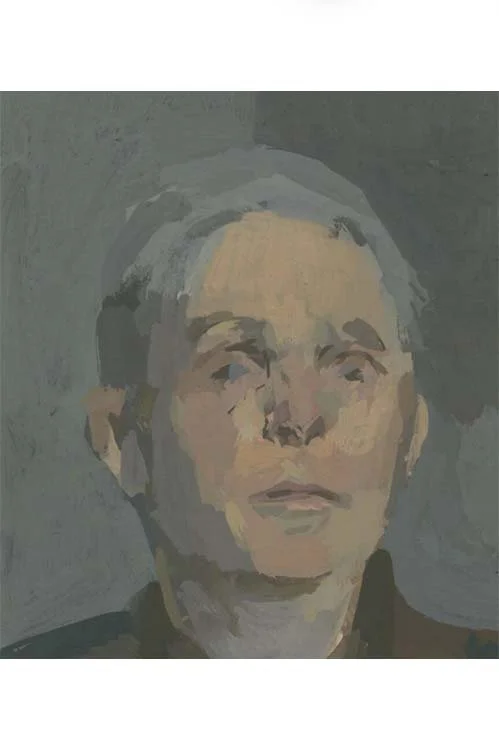 Image 1 of 7
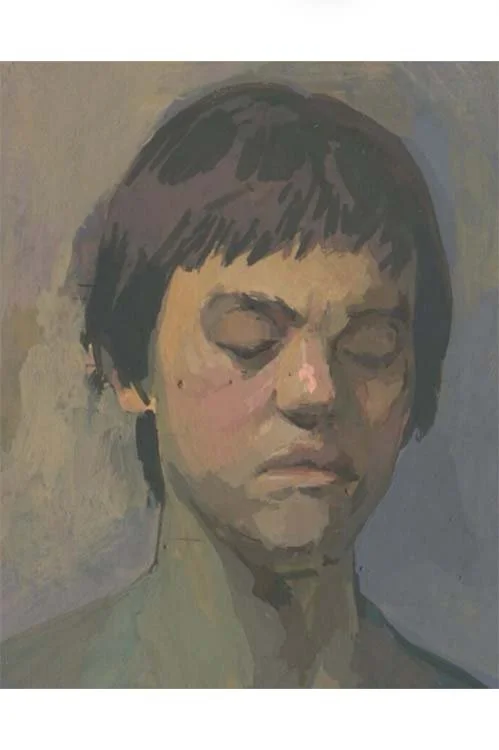 Image 2 of 7
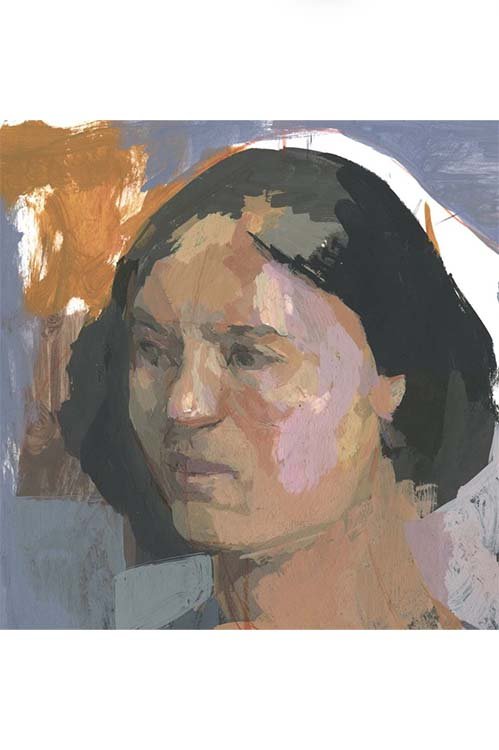 Image 3 of 7
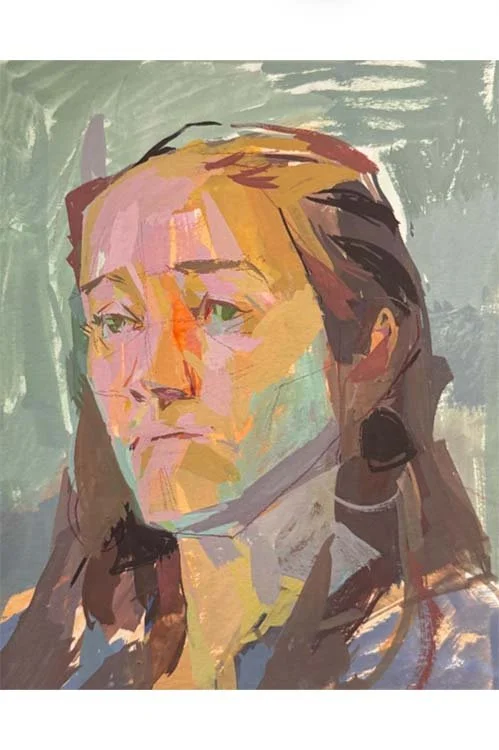 Image 4 of 7
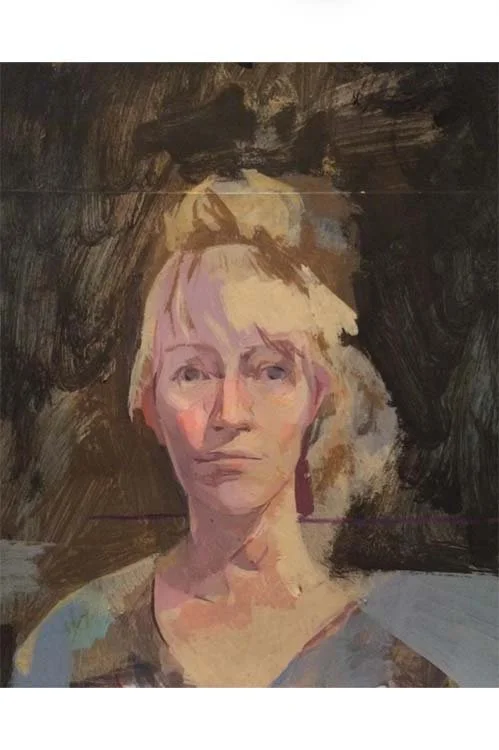 Image 5 of 7
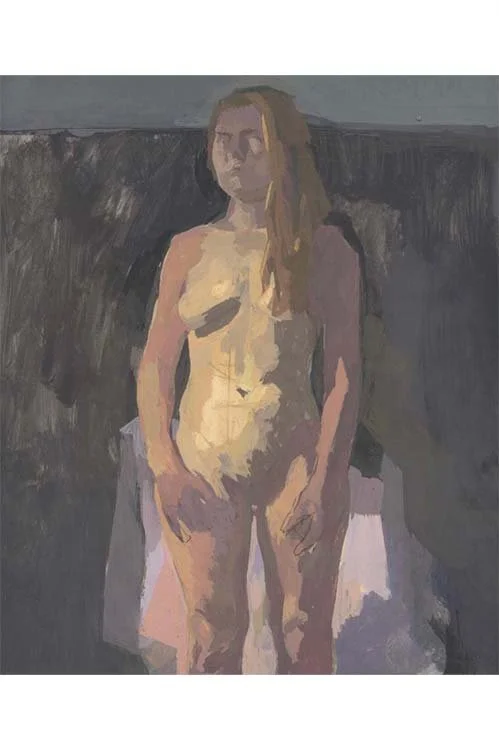 Image 6 of 7
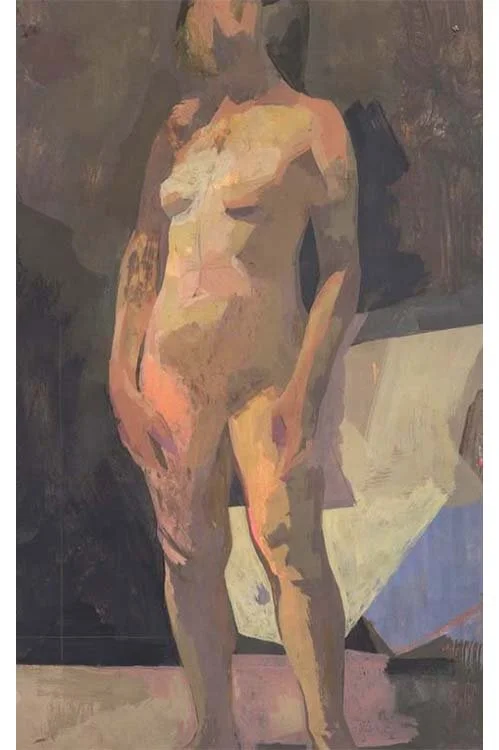 Image 7 of 7