
 Image 1 of 1
**All sessions are live and will be recorded, students do not have to be present. All recordings will be available to students for 3 months after the final session, after 3 months the recording will be deleted.
Please check your email spam/junk folder for your Zoom invite.
DEMO: https://youtu.be/IbF580ZLKIw
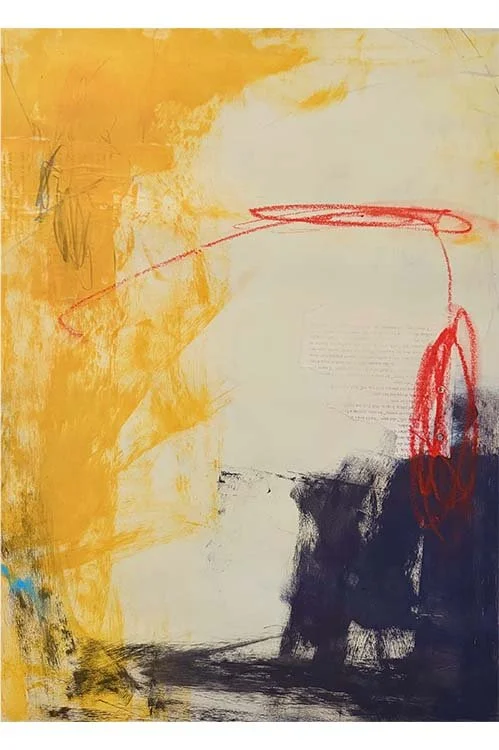
What attracts you to abstract expressionism? Creating abstraction can be challenging as it is less representational of a physical/external reference and can be more of an expression the internal.
In this 4-week class we’ll explore the inspiration and the conscious/unconscious emotions that may influence our creative process, as well as explore techniques for participants to consider when creating and developing their own unique style. Participants will integrate class techniques into homework projects that will be shared (optional) and discussed. The underlying theme of this class is to help foster a sense of curiosity and openness when the participant approaches their abstract work.
Each class will include both live and recorded demonstrations, guided homework projects, and organic discussions about process and what inspires our work.
Week 1 -
Inspiration and intentions
Explore mark-making
Demonstration
Homework
Week 2 -
Texture and depth
Adding and subtracting
Demonstration
Homework
Week 3 -
Color inspiration/exploration
Collage
Demonstration
Homework
Week 4 -
Your process, your path
Group sharing
Bristol or drawing paper in a size you feel most comfortable; recommended size: 14x17in, 16x20, or 18x24in (I use Strathmore Bristol and Canson Mul&media papers)
Newsprint or recycled paper for practice mark-making
Scrap pages from discarded magazines, books, newspaper, etc.
Glue stick or Mod Podge
Graphite: can be pencil, block, or stick (for variety of line/mark width)
Acrylic paint: black, red, blue, yellow, white; paint should thick and smooth, not pourable/liquid
(I use Liquitex, Blick Studio, and Studio Loft brands; these can be beginner level quality)
Oil pastel and/or crayons (I used Panda brand from Blick, but these do not need to be expensive and can be purchased in small sets or individually)
2-3 brushes in different sizes
Dense foam sponge or craft foam (non-porous), cut in squares to apply paint—see demo video for reference
**All sessions are live and will be recorded, students do not have to be present. All recordings will be available to students for 3 months after the final session, after 3 months the recording will be deleted.
Please check your email spam/junk folder for your Zoom invite.
DEMO: https://youtu.be/IbF580ZLKIw
What attracts you to abstract expressionism? Creating abstraction can be challenging as it is less representational of a physical/external reference and can be more of an expression the internal.
In this 4-week class we’ll explore the inspiration and the conscious/unconscious emotions that may influence our creative process, as well as explore techniques for participants to consider when creating and developing their own unique style. Participants will integrate class techniques into homework projects that will be shared (optional) and discussed. The underlying theme of this class is to help foster a sense of curiosity and openness when the participant approaches their abstract work.
Each class will include both live and recorded demonstrations, guided homework projects, and organic discussions about process and what inspires our work.
Week 1 -
Inspiration and intentions
Explore mark-making
Demonstration
Homework
Week 2 -
Texture and depth
Adding and subtracting
Demonstration
Homework
Week 3 -
Color inspiration/exploration
Collage
Demonstration
Homework
Week 4 -
Your process, your path
Group sharing
Bristol or drawing paper in a size you feel most comfortable; recommended size: 14x17in, 16x20, or 18x24in (I use Strathmore Bristol and Canson Mul&media papers)
Newsprint or recycled paper for practice mark-making
Scrap pages from discarded magazines, books, newspaper, etc.
Glue stick or Mod Podge
Graphite: can be pencil, block, or stick (for variety of line/mark width)
Acrylic paint: black, red, blue, yellow, white; paint should thick and smooth, not pourable/liquid
(I use Liquitex, Blick Studio, and Studio Loft brands; these can be beginner level quality)
Oil pastel and/or crayons (I used Panda brand from Blick, but these do not need to be expensive and can be purchased in small sets or individually)
2-3 brushes in different sizes
Dense foam sponge or craft foam (non-porous), cut in squares to apply paint—see demo video for reference