August 30 to September 27 (Sundays), 1:00 PM to 3:30 PM, Eastern Time
*All sessions are live and will be recorded, students do not have to be present. All recordings will be available to students for 3 months after the final session, after 3 months the recording will be deleted.
Please check your email spam/junk folder for your Zoom invite. Our business hours are 10:00 AM through 5:00 PM. All course information and email correspondence will be sent during business hours. If students purchase a course, workshop, demo or recording outside business hours or during the weekend the course information or recording will be sent the following business day.
DEMO: https://youtu.be/62bXNjAA5rQ
Course Description
This five-week course blends technical mastery with guided artistic exploration in watercolor. Designed for artists who want to strengthen their watercolor fundamentals while expanding into more personal, intuitive territory, the course moves fluidly between structure and experimentation.
We begin with the building blocks of strong painting, including value organization, clean washes, edge dynamics, and limited-palette strategies, in order to establish a dependable foundation.
From there, each week opens into a new mode of exploration: emotional color, atmospheric abstraction, alternative surfaces, mixed-media hybrids, and the search for personal visual language.
The workshop is subject-agnostic: portrait, figure, animal, landscape, still life, or invented imagery are all welcome, and are all subjects I delve into in my own work. What matters is learning how to think in watercolor. That is, how to make intentional choices, embrace unpredictability, and translate emotion and intuition into form.
Each class includes a lecture, demonstration, painting time, and supportive critique. You’ll receive personalized guidance tailored to your strengths, challenges, and intentions. I work alongside you to help clarify what you want to express and to give you the tools to express it fully.
By the end of the program, students will have a collection of studies and finished works, increased confidence in both traditional and contemporary approaches, and a clearer understanding of their own emerging artistic voice.
Course Outline
WEEK 1 - Value, Structure, and the Architecture of Watercolor
Essential foundations (4-value structure, edge control, clean washes, intentional brushwork).
Takeaway:
Students gain confidence in structure, which becomes the backbone of later experimentation.
WEEK 2 - Color as Emotion, Atmosphere, and Invention
Limited palettes, unexpected harmonies, emotional palettes, color shifts from memory vs. reference.
Takeaway:
Students begin developing a personal relationship with color and break out of the defaults of realism.
WEEK 3 - Edges, Atmosphere, Abstraction, and the Space Between Things
Softness, diffusion, atmosphere, controlled unpredictability, semi-abstraction.
Takeaway:
Students discover that abstraction can emerge naturally from careful observation and intentional looseness.
WEEK 4 - Surfaces, Layering, and Mixed-Media Hybridity
We will cover different watercolor papers, grounds, light mixed media (ink), texture and why and where you might want to use them. We will introduce new surfaces and materials as tools for expression, not gimmicks
Takeaway:
Students understand how materials can reinforce concept and mood.
WEEK 5 - Personal Language: Synthesizing Structure and Intuition
Bringing it all together through a personal project, students will receive assistance in identifying their own tendencies, preferences, and emerging visual signatures. The course concludes with a final group critique focused on naming individual strengths and outlining clear next steps for each artist.
Takeaway:
Students leave with one meaningful artwork and a clearer sense of who they are as painters.
Course Materials
Use the materials you’re most comfortable with. Every artist works differently, and it’s more valuable for you to build fluency with your own tools than to constantly switch to match each teacher’s preferences.
Brushes
Use what you already have. The most important thing is that you feel comfortable. I use all kinds of brushes, but my go-tos are a mix of rounds and flats in various sizes. I most often reach for synthetics, though I also enjoy working with natural-hair calligraphy brushes.
Paints
For demonstrations, I usually stick to the basic palette I have outlined below.. Most important is to have warm and cool versions of yellow, red, and blue, along with a few dark neutrals such as browns or indigo. I work with all pigment properties; transparency, opacity, and granulation so having a range of these characteristics available is important.
Basic Palette:
Brands Daniel Smith, Holbein, Rockwell, and Mijello
Gamboge or Cadmium Yellow Deep, Naples Yellow or Jaune Brilliant, Vermillion or Cad Red Light, Alizarin Crimson or Quin Fuschia (these are not comparable hues but similar in tonal value and temperature), Opera, Royal Blue, Cobalt Blue, Ultramarine, Indigo, Raw Sienna, Raw Umber, Burnt Sienna, Burnt Umber, Sepia, [occasional use Green Grey, Wisteria
PAPER
I prefer cellulose and cotton-cellulose blend papers. Winsor & Newton 25% cotton paper is a good, easily available option. Cold pressed and hot pressed. In this class, we will also use Yupo paper and watercolor ground (White color preferred. Daniel Smith or Golden brands).
August 30 to September 27 (Sundays), 1:00 PM to 3:30 PM, Eastern Time
*All sessions are live and will be recorded, students do not have to be present. All recordings will be available to students for 3 months after the final session, after 3 months the recording will be deleted.
Please check your email spam/junk folder for your Zoom invite. Our business hours are 10:00 AM through 5:00 PM. All course information and email correspondence will be sent during business hours. If students purchase a course, workshop, demo or recording outside business hours or during the weekend the course information or recording will be sent the following business day.
DEMO: https://youtu.be/62bXNjAA5rQ
Course Description
This five-week course blends technical mastery with guided artistic exploration in watercolor. Designed for artists who want to strengthen their watercolor fundamentals while expanding into more personal, intuitive territory, the course moves fluidly between structure and experimentation.
We begin with the building blocks of strong painting, including value organization, clean washes, edge dynamics, and limited-palette strategies, in order to establish a dependable foundation.
From there, each week opens into a new mode of exploration: emotional color, atmospheric abstraction, alternative surfaces, mixed-media hybrids, and the search for personal visual language.
The workshop is subject-agnostic: portrait, figure, animal, landscape, still life, or invented imagery are all welcome, and are all subjects I delve into in my own work. What matters is learning how to think in watercolor. That is, how to make intentional choices, embrace unpredictability, and translate emotion and intuition into form.
Each class includes a lecture, demonstration, painting time, and supportive critique. You’ll receive personalized guidance tailored to your strengths, challenges, and intentions. I work alongside you to help clarify what you want to express and to give you the tools to express it fully.
By the end of the program, students will have a collection of studies and finished works, increased confidence in both traditional and contemporary approaches, and a clearer understanding of their own emerging artistic voice.
Course Outline
WEEK 1 - Value, Structure, and the Architecture of Watercolor
Essential foundations (4-value structure, edge control, clean washes, intentional brushwork).
Takeaway:
Students gain confidence in structure, which becomes the backbone of later experimentation.
WEEK 2 - Color as Emotion, Atmosphere, and Invention
Limited palettes, unexpected harmonies, emotional palettes, color shifts from memory vs. reference.
Takeaway:
Students begin developing a personal relationship with color and break out of the defaults of realism.
WEEK 3 - Edges, Atmosphere, Abstraction, and the Space Between Things
Softness, diffusion, atmosphere, controlled unpredictability, semi-abstraction.
Takeaway:
Students discover that abstraction can emerge naturally from careful observation and intentional looseness.
WEEK 4 - Surfaces, Layering, and Mixed-Media Hybridity
We will cover different watercolor papers, grounds, light mixed media (ink), texture and why and where you might want to use them. We will introduce new surfaces and materials as tools for expression, not gimmicks
Takeaway:
Students understand how materials can reinforce concept and mood.
WEEK 5 - Personal Language: Synthesizing Structure and Intuition
Bringing it all together through a personal project, students will receive assistance in identifying their own tendencies, preferences, and emerging visual signatures. The course concludes with a final group critique focused on naming individual strengths and outlining clear next steps for each artist.
Takeaway:
Students leave with one meaningful artwork and a clearer sense of who they are as painters.
Course Materials
Use the materials you’re most comfortable with. Every artist works differently, and it’s more valuable for you to build fluency with your own tools than to constantly switch to match each teacher’s preferences.
Brushes
Use what you already have. The most important thing is that you feel comfortable. I use all kinds of brushes, but my go-tos are a mix of rounds and flats in various sizes. I most often reach for synthetics, though I also enjoy working with natural-hair calligraphy brushes.
Paints
For demonstrations, I usually stick to the basic palette I have outlined below.. Most important is to have warm and cool versions of yellow, red, and blue, along with a few dark neutrals such as browns or indigo. I work with all pigment properties; transparency, opacity, and granulation so having a range of these characteristics available is important.
Basic Palette:
Brands Daniel Smith, Holbein, Rockwell, and Mijello
Gamboge or Cadmium Yellow Deep, Naples Yellow or Jaune Brilliant, Vermillion or Cad Red Light, Alizarin Crimson or Quin Fuschia (these are not comparable hues but similar in tonal value and temperature), Opera, Royal Blue, Cobalt Blue, Ultramarine, Indigo, Raw Sienna, Raw Umber, Burnt Sienna, Burnt Umber, Sepia, [occasional use Green Grey, Wisteria
PAPER
I prefer cellulose and cotton-cellulose blend papers. Winsor & Newton 25% cotton paper is a good, easily available option. Cold pressed and hot pressed. In this class, we will also use Yupo paper and watercolor ground (White color preferred. Daniel Smith or Golden brands).

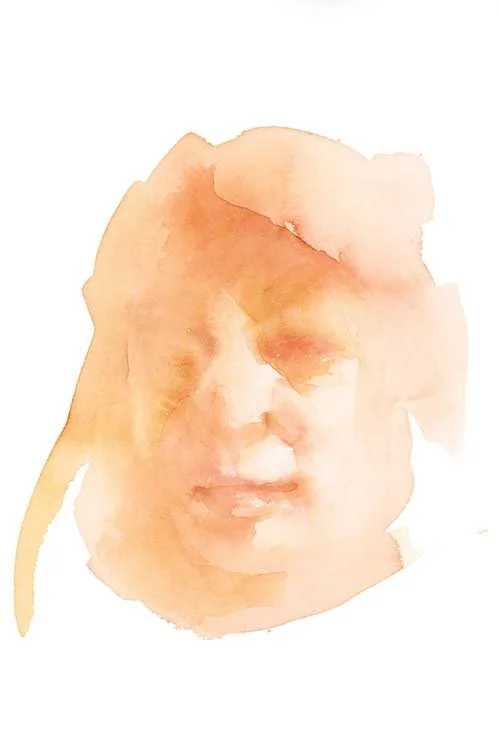 Image 1 of 16
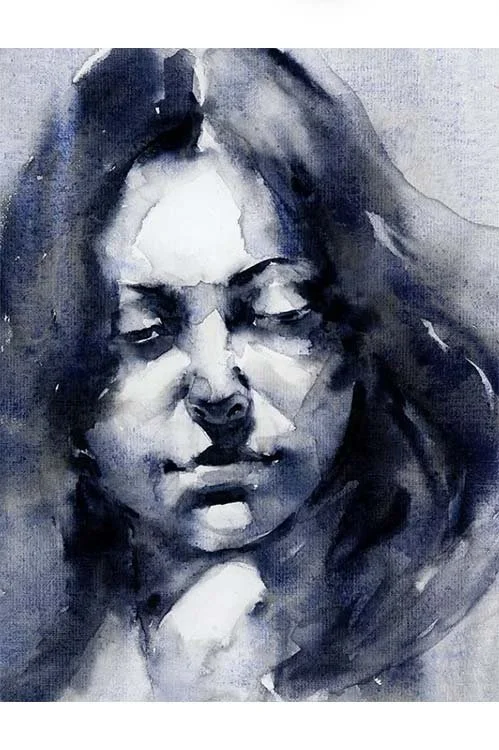 Image 2 of 16
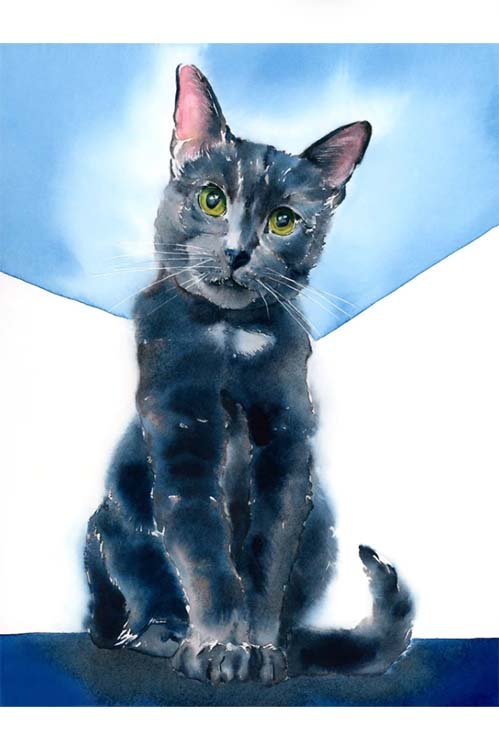 Image 3 of 16
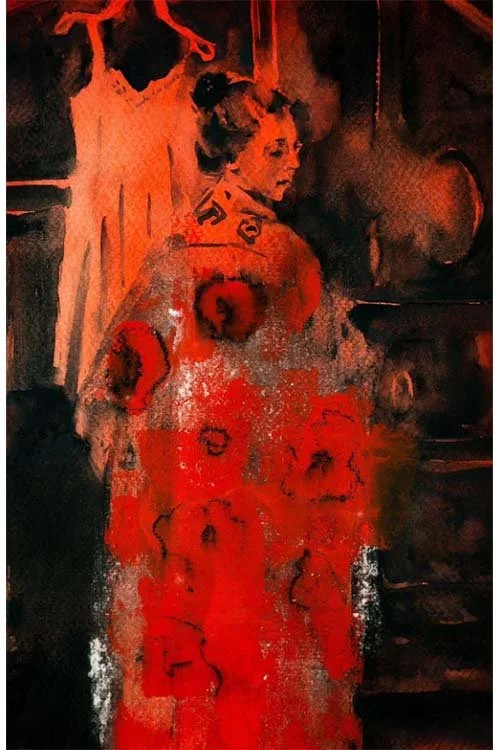 Image 4 of 16
 Image 5 of 16
 Image 6 of 16
 Image 7 of 16
 Image 8 of 16
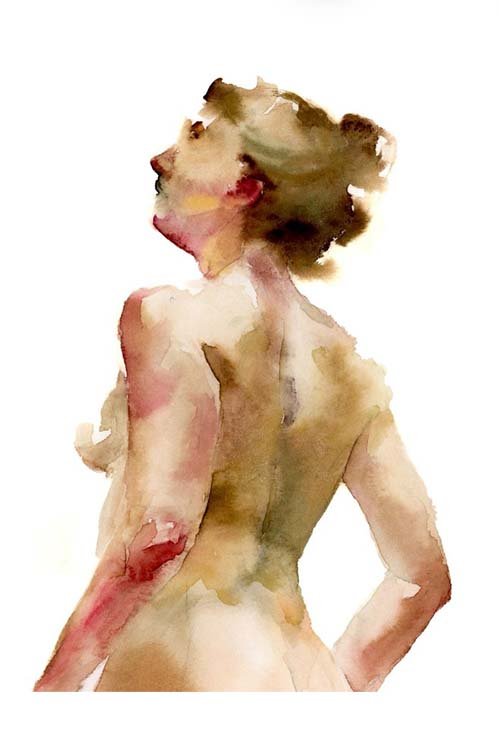 Image 9 of 16
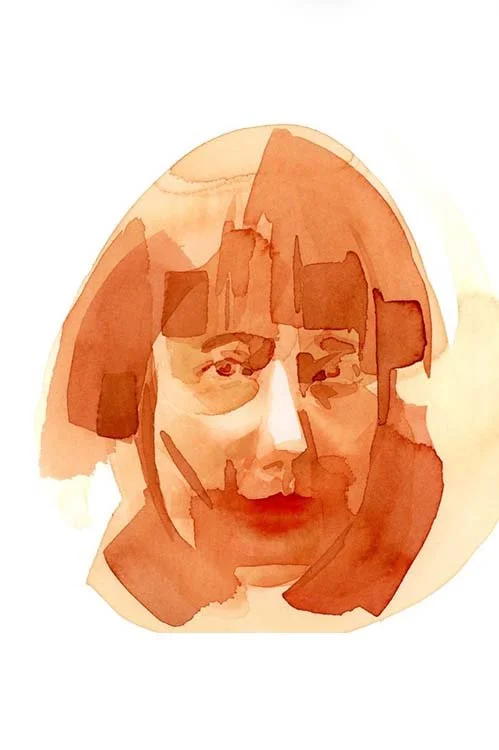 Image 10 of 16
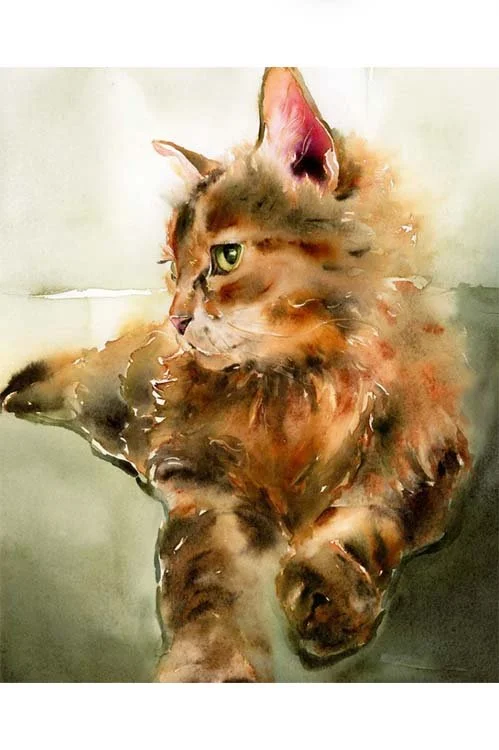 Image 11 of 16
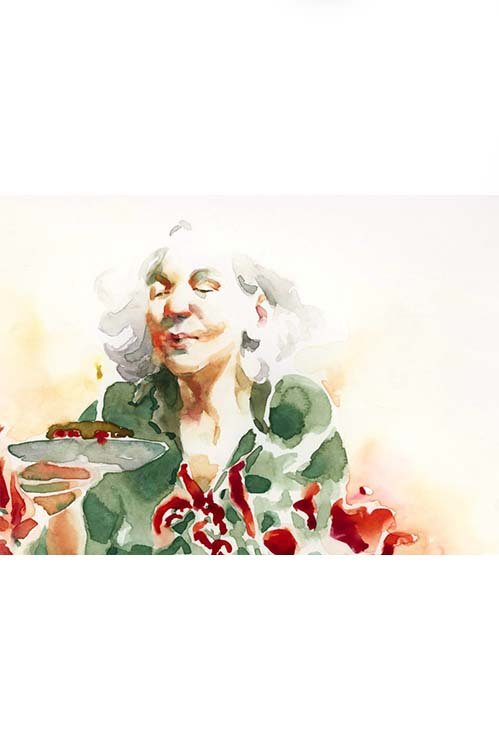 Image 12 of 16
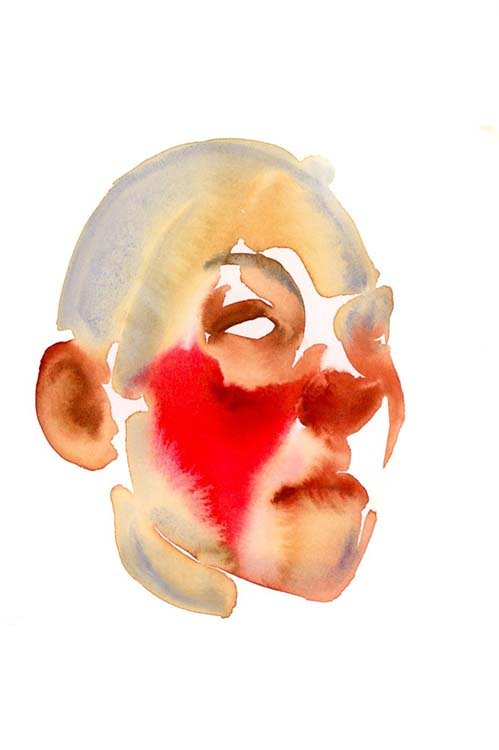 Image 13 of 16
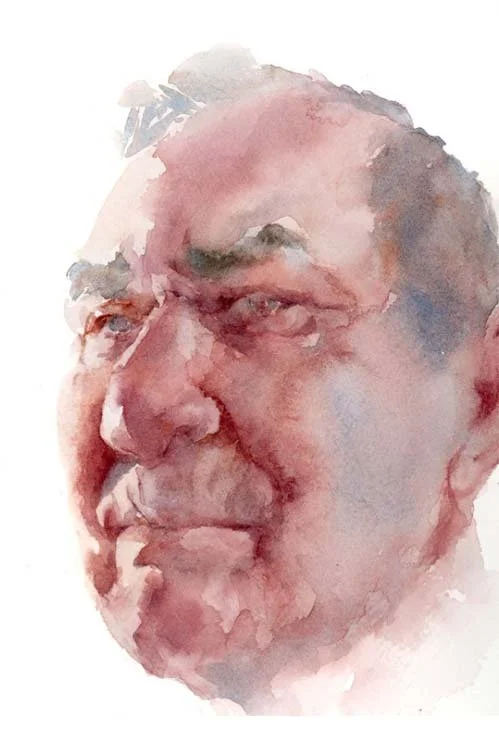 Image 14 of 16
 Image 15 of 16
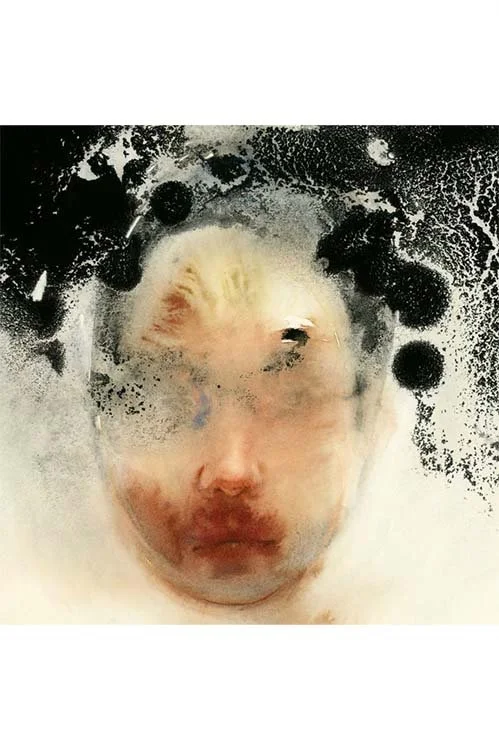 Image 16 of 16