
 Image 1 of 1
Further Adventures in Oil Paint (Online Course) Summer 2027 w/ Charlotte Houlihan
June 3 to June 24 (Thursdays), 10:00 AM to 12:30 PM Eastern Time
**All sessions are live and will be recorded, students do not have to be present. All recordings will be available to students for 3 months after the final session, after 3 months the recording will be deleted.
Please check your email spam/junk folder for your Zoom invite. Our business hours are 10:00 AM through 5:00 PM. All course information and email correspondence will be sent during business hours. If students purchase a course, workshop, demo or recording outside business hours or during the weekend the course information or recording will be sent the following business day.
Course Description
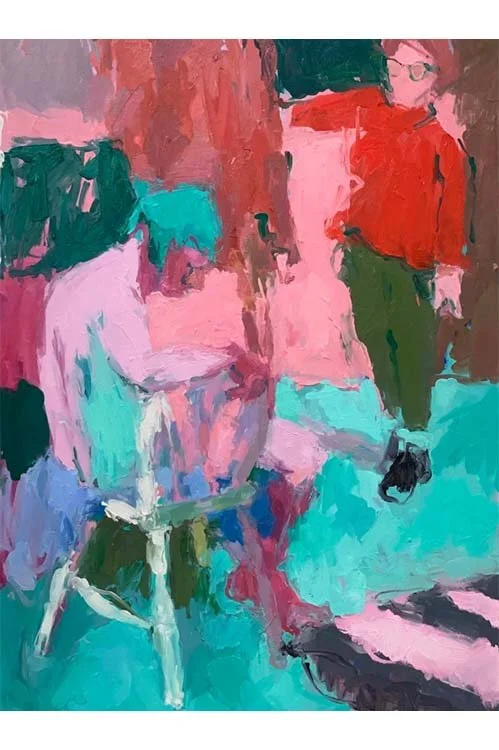
During this course Charlotte will show you how to embrace oil painting’s natural unpredictability and enjoy moving between observation and abstraction. Through drawing, collage making and painting you’ll explore playful ways of developing your ideas, while learning about composition, colour mixing and paint application. This course follows on from Charlotte’s previous workshop ‘Oil Painting: Embracing the Chaos’ and is appropriate for both new students and those wanting to build on what they learnt before. New students will learn about the intuitive processes we followed to enable them to develop a playful relationship with oil paint, while previous students will be encouraged to push themselves further - exploring more critically, with greater refinement, compositional consideration and smarter decisions.
Course Outline
Week 1
We’ll re-cap the previous course, discussing how we used observational drawing to provide a springboard for further work and how we then stretched our ideas using further drawing, collage making and painting. With fresh examples, demos and suggested methods of working students will learn about making drawings with intention and freedom.
Week 2
After reviewing homework we’ll discuss ways forward such as collage making, diving in with paint, basic mono printing, mixed media collage and experiments with colour palettes, stretching both new and previous students. There will be several demos and students will be encouraged to work alongside, choosing whatever developmental methods they feel most excited by.
Week 3
We’ll review progress and discuss breaking free and creating happy accidents. With demos and ideas for how to loosen up a tight painting and discussions about colour mixing. Finishing with suggestions for how to keep the spontaneity while you work for longer.
Week 4
With an additional week, this course will provide students with a chance to further develop their paintings, perhaps working on several at once and to consider questions such as “How do we know when it’s done?”
Course Materials List
Oil paints in the following colours:
Cobalt Blue
Ultramarine Blue
Magenta or Rose Madder
Cadmium Red
Cadmium Yellow
Lemon Yellow
Titanium White
Zinc White
Veridian, Yellow Ochre, Pathalo Blue are useful additions
Thinners (zest it, low odor solvent or similar)
Linseed oil
You may want to try a tiny bit of damar varnish to add to the above but it’s not essential
Surface to paint on: canvas, oil painting paper, primed cardboard, primed panel or any other surface that can take the paint. You may want several to experiment with.
Newsprint and rags (I use old socks)
Mix of brushes in varying sizes
Something to use to mix paint on/in. I use old microwave meal containers and lids - lots of them. You may prefer a flat surface or traditional palette. It’s good to have space to mix a lot of paint.
Jars
Scrap paper to use for collage (I will talk you through how to make this)
Wall paper paste or PVA glue
Scissors
Oil pastels (good quality is better because they are softer) or oil sticks (for mono printing)
Drawing materials - everything and anything you enjoy drawing with. I use Posca pens, graphite, charcoal, water colour crayons, woody crayons, children’s paint sticks, ink, brush pens, soft pastels and oil pastels. You don’t need all of these!