
 Image 1 of 5
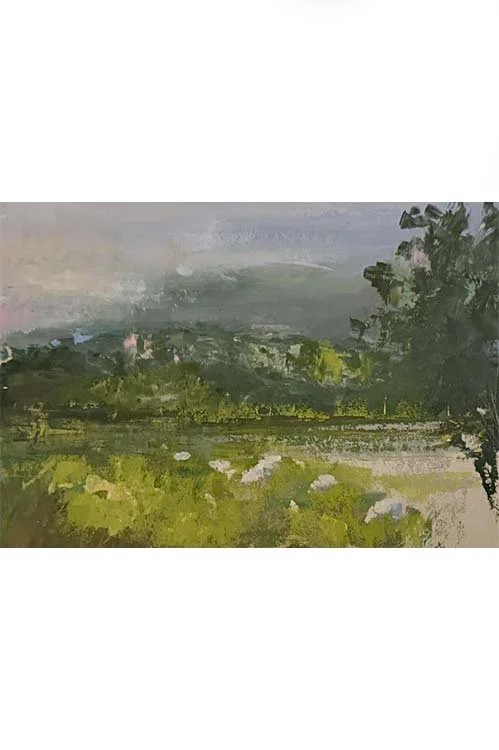 Image 2 of 5
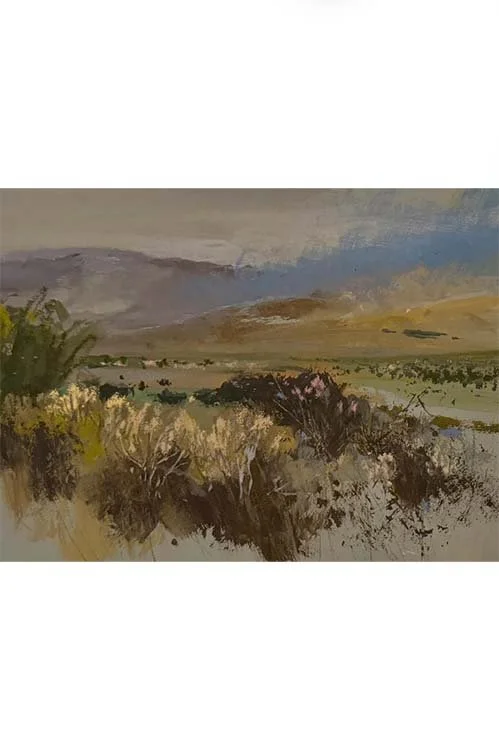 Image 3 of 5
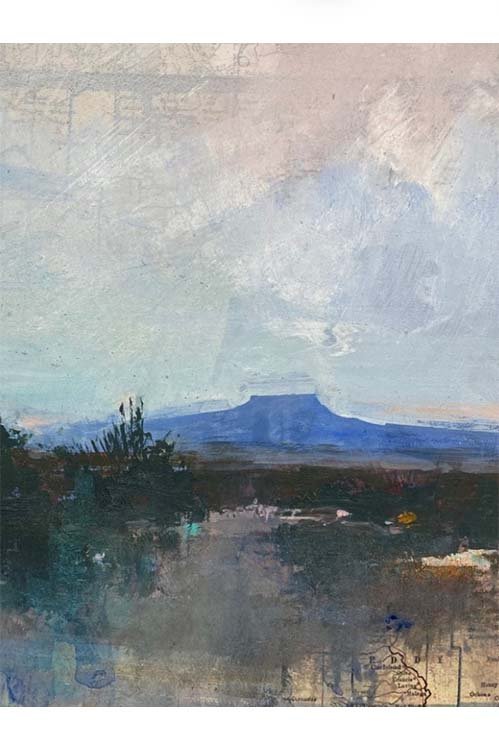 Image 4 of 5
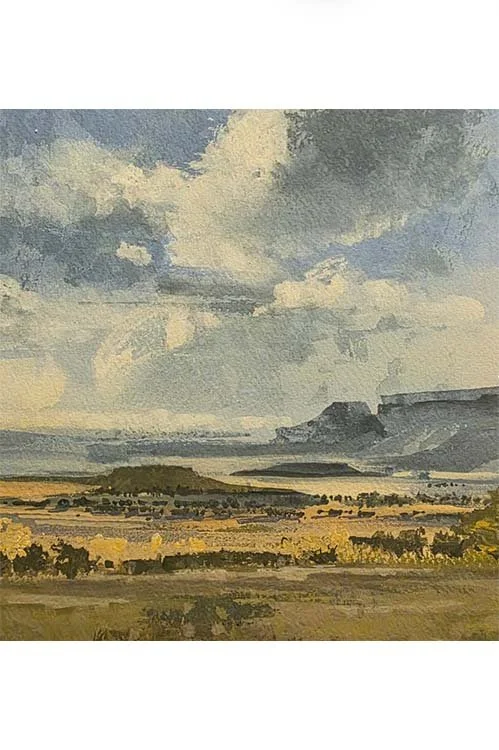 Image 5 of 5
**All sessions are live and will be recorded, students do not have to be present. All recordings will be available to students for 3 months after the final session, after 3 months the recording will be deleted.
Please check your email spam/junk folder for your Zoom invite. Our business hours are 10:00 AM through 5:00 PM. All course information and email correspondence will be sent during business hours. If students purchase a course, workshop, demo or recording outside business hours or during the weekend the course information or recording will be sent the following business day.
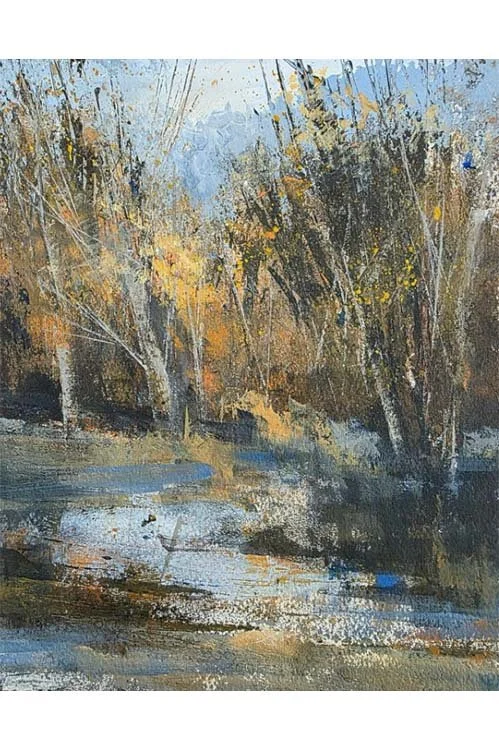
Landscape painting with texture using acrylics. An introduction to working with acrylics using tools such as rollers, squeegees and palette knives to create textured surfaces and dynamic compositions. There will be guidance on how to add pigments into acrylic binder and ways to prepare paper and panels to build a painting substrate. These techniques are a great way to abstract the landscape in a loose and exciting way.
WEEK 1 : TOOLS AND MATERIALS
Facility with your tools makes painting go much more smoothly. We will do several exercises to explore the versatility of rollers, squeegees and palette knives when used with acrylics.
Demo: Tools and paint structure
Exercise: Create a sample board of techniques for reference
Demo and paint along: Show how to combine these tools in a painting with reference supplied.
4 quick studies playing with different textures using a limited palette on paper
WEEK 2 : PAPER AND PANEL PREPARATION
Taking time to prepare the surface you are working on can speed up your painting ( very useful for plein air painting) and also provide an armature or structure for your composition.
Demo: Sealing and preparing a panel and priming paper
Exercise: prepare 4 surfaces with textured materials which are listed in the materials list plus prepare one A3 paper with textured primer
Demo: I will show the same painting side by side on two surfaces to contrast the effects of different primings.
4 quick studies on A3 paper using 3 values of one colour
WEEK 3 : TREES AND RIVER PAINTING
Now we will have some fun with our tools! Often the subject dictates which tools and techniques are the most useful to use in a painting. Trees with their form are easily transcribed using a squeegee and water using a roller.
Warm-up: 4 quick tree studies using squeegee and roller
Demo : I will start a painting with reference supplied on how to set up a painting of trees and river. This will also involve mixing the first layers of colour.
Exercise: Start your armature using my reference image or your own
Demo: Now that my initial surface is dry, I will continue to work with the tools layer by layer working with different viscosities of acrylic paint.
Homework: finish your painting once the initial layers are dry.
WEEK 4 : ROCKS AND OCEAN
By adding pigment into acrylic, we can build the structure of rocks so that they describe their form in an energetic way. By contrast, the surface of the ocean can be smooth by manipulating more fluid paint.
Warm-up: 4 quick seascape studies using palette knife and squeegee
Demo and paint along : I will be using a split priming to differentiate the surface of water and rocks. We will set up our surfaces in preparation for painting. Reference supplied or use your own.
Demo : Using a surface that I have prepared earlier, I will demonstrate how effective having a texture on part of your painting is for manipulating acrylic in both fluid and stiff states.
Paint along: The surface we prepared earlier should be dry and we can paint side by side to put into action all the different techniques demonstrated.
Acrylic paint colours
Black, Ultramarine Blue, Cobalt Teal, Pthalo Green, Cad Yellow
Hue (medium), Yellow Ochre, Pyrole Orange, Magenta, Burnt
Sienna, Raw Umber.
6” Squeegee – from: Messermeister from amazon or cold wax
academy, 3 or 4” is also useful.
4” Soft Brayer or Roller – from: Inovart or cold wax academy
Palette knife – square tip preferable
A3 acrylic paper
8 x 10” panel x4 – Ampersand gesso board
Matte medium
Calcium carbonate – can buy from chemist shop
Powdered pigment – pan pastel or dry pastel in neutral colours – grey
Acrylic ink – Paynes grey or sepia
Paper towels
Wet wipes
Masking tape
Straight edge
Watercolour Pencil – dark colour
Board to tape A3 paper onto
Water jar
**All sessions are live and will be recorded, students do not have to be present. All recordings will be available to students for 3 months after the final session, after 3 months the recording will be deleted.
Please check your email spam/junk folder for your Zoom invite. Our business hours are 10:00 AM through 5:00 PM. All course information and email correspondence will be sent during business hours. If students purchase a course, workshop, demo or recording outside business hours or during the weekend the course information or recording will be sent the following business day.
Landscape painting with texture using acrylics. An introduction to working with acrylics using tools such as rollers, squeegees and palette knives to create textured surfaces and dynamic compositions. There will be guidance on how to add pigments into acrylic binder and ways to prepare paper and panels to build a painting substrate. These techniques are a great way to abstract the landscape in a loose and exciting way.
WEEK 1 : TOOLS AND MATERIALS
Facility with your tools makes painting go much more smoothly. We will do several exercises to explore the versatility of rollers, squeegees and palette knives when used with acrylics.
Demo: Tools and paint structure
Exercise: Create a sample board of techniques for reference
Demo and paint along: Show how to combine these tools in a painting with reference supplied.
4 quick studies playing with different textures using a limited palette on paper
WEEK 2 : PAPER AND PANEL PREPARATION
Taking time to prepare the surface you are working on can speed up your painting ( very useful for plein air painting) and also provide an armature or structure for your composition.
Demo: Sealing and preparing a panel and priming paper
Exercise: prepare 4 surfaces with textured materials which are listed in the materials list plus prepare one A3 paper with textured primer
Demo: I will show the same painting side by side on two surfaces to contrast the effects of different primings.
4 quick studies on A3 paper using 3 values of one colour
WEEK 3 : TREES AND RIVER PAINTING
Now we will have some fun with our tools! Often the subject dictates which tools and techniques are the most useful to use in a painting. Trees with their form are easily transcribed using a squeegee and water using a roller.
Warm-up: 4 quick tree studies using squeegee and roller
Demo : I will start a painting with reference supplied on how to set up a painting of trees and river. This will also involve mixing the first layers of colour.
Exercise: Start your armature using my reference image or your own
Demo: Now that my initial surface is dry, I will continue to work with the tools layer by layer working with different viscosities of acrylic paint.
Homework: finish your painting once the initial layers are dry.
WEEK 4 : ROCKS AND OCEAN
By adding pigment into acrylic, we can build the structure of rocks so that they describe their form in an energetic way. By contrast, the surface of the ocean can be smooth by manipulating more fluid paint.
Warm-up: 4 quick seascape studies using palette knife and squeegee
Demo and paint along : I will be using a split priming to differentiate the surface of water and rocks. We will set up our surfaces in preparation for painting. Reference supplied or use your own.
Demo : Using a surface that I have prepared earlier, I will demonstrate how effective having a texture on part of your painting is for manipulating acrylic in both fluid and stiff states.
Paint along: The surface we prepared earlier should be dry and we can paint side by side to put into action all the different techniques demonstrated.
Acrylic paint colours
Black, Ultramarine Blue, Cobalt Teal, Pthalo Green, Cad Yellow
Hue (medium), Yellow Ochre, Pyrole Orange, Magenta, Burnt
Sienna, Raw Umber.
6” Squeegee – from: Messermeister from amazon or cold wax
academy, 3 or 4” is also useful.
4” Soft Brayer or Roller – from: Inovart or cold wax academy
Palette knife – square tip preferable
A3 acrylic paper
8 x 10” panel x4 – Ampersand gesso board
Matte medium
Calcium carbonate – can buy from chemist shop
Powdered pigment – pan pastel or dry pastel in neutral colours – grey
Acrylic ink – Paynes grey or sepia
Paper towels
Wet wipes
Masking tape
Straight edge
Watercolour Pencil – dark colour
Board to tape A3 paper onto
Water jar