
 Image 1 of 4
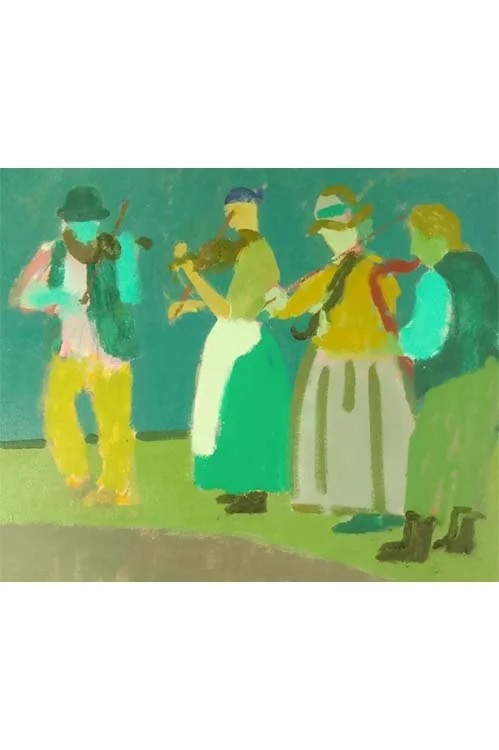 Image 2 of 4
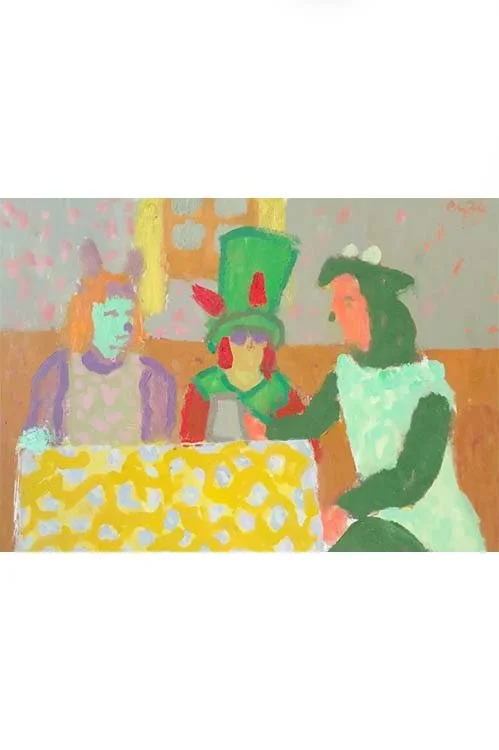 Image 3 of 4
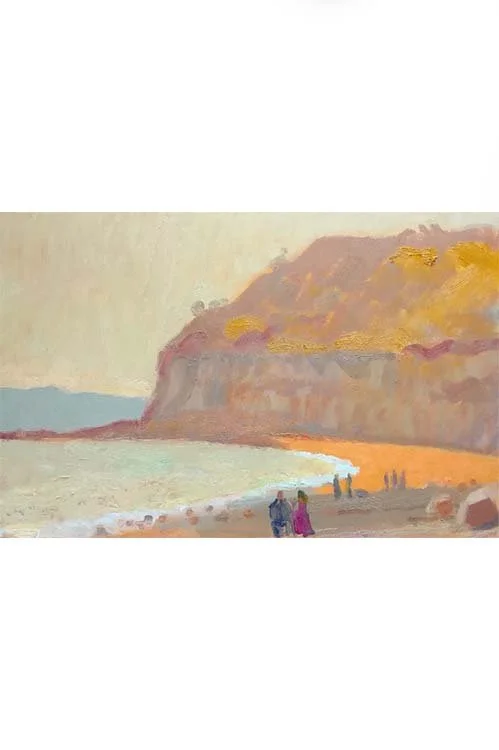 Image 4 of 4
**All sessions are live and will be recorded, students do not have to be present. All recordings will be available to students for 3 months after the final session, after 3 months the recording will be deleted.
Please check your email spam/junk folder for your Zoom invite. Our business hours are 10:00 AM through 5:00 PM. All course information and email correspondence will be sent during business hours. If students purchase a course, workshop, demo or recording outside business hours or during the weekend the course information or recording will be sent the following business day.
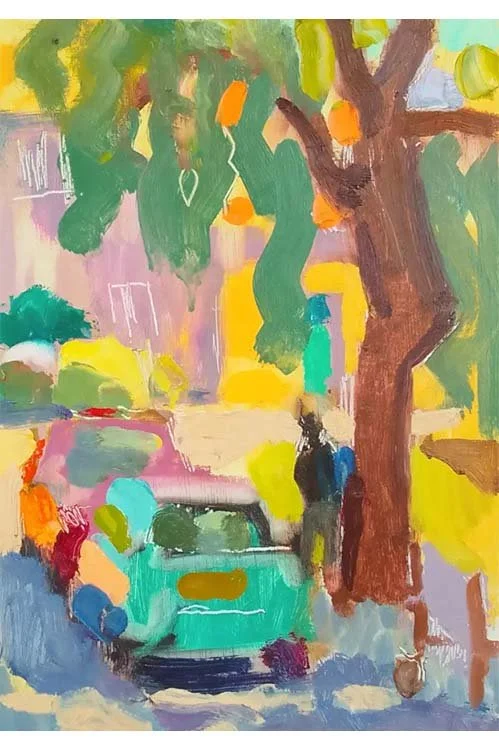
What is it that makes the paintings of Milton Avery so compelling despite being so simple? How can he “get away with” using only a few shapes and colours? Would you like to occupy that liminal space between the childlike and the sophisticated?
During these sessions Alex will invite you into his studio to witness how he makes painting from start to finish. Neither Alex nor Avery know what a painting will look like until it is done: the excitement and fun comes from trying things out and seeing what”works.” Students will not be required to paint during the sessions, but in their own time between sessions. Alex will attempt three paintings: one from his own drawing, one based on an Avery painting and one from a photograph - students are invited to do the same.
Week 1:
Alex will start two paintings, one from a drawing and another based on a Milton Avery painting. He will demonstrate how to grid up, enlarge and transfer an image onto a new support. Watch the application of the first layer of paint, demystify the process of colour choice and even chip in and help out with the decision making. There will be a chance to go through the materials in case you need to get something for the next session. Alex will demonstrate some colour mixing exercises.
Week 2:
Students who have started their own paintings will receive personal feedback between sessions. It may also be helpful to discuss this advice with the whole class at the start of each session. Alex will start a third painting from a photograph. How do we choose a colour palette or “key”? What details can be deemed unnecessary and be stripped away? How do we make an image simple and abstract but still enjoyable to look at?
Week 3:
Students will have continued with their paintings and can share their own journey with the rest of the class. How do we continue working on a painting and keep it fresh? How do we know when it is finished?
Weeks 4/5:
By the end of week 5, Students should have started at least 3 paintings similar to those done by Alex. These paintings might not be “finished” at the end of the course. In fact, there is a good chance that one of Alex’s paintings will not only be incomplete, but will “fail”. Learning to deal with disappointment and knowing when to cut your losses is part of the process. However, if things go well, Alex may start more than three paintings. There is no upper limit on the number of paintings students can do. Sometimes a painting takes 30 minutes, sometimes 30 weeks, one never knows until it is over!
Students can work in oil paint, acrylic, gouache or any opaque medium. Watercolour is not advisable as it is very hard to change ones mind, edit and refine the image.
Brushes: at least one skinny (rigger), one small (no.2/3), one medium (half inch), one big (an inch or more). The more brushes, the better so you don’t have to keep cleaning them.
Palette knife, rags
Mediums (if using oils): turpentine or low odor equivalent (eg. sansodor or zest it), linseed oil, white spirit.
2 jars, one for mediums one for washing brushes
Source material: A few sketches/drawings, an exsisting image by Milton Avery, a photograph. You may want to wait until after the first session before choosing these.
At least three supports (canvas, board, paper) primed and ready for paint. Students can paint on any size, but the proportions should relate to those of the source material.
Colours:
Cold yellow (eg. lemon, cadmium yellow pale)
Warm yellow (eg. cadmium yellow, cadmium yellow deep)
Warm red (eg. cadmium red, bright red)
Cool red (eg. rose, magenta, crimson)
Cool blue (eg. french ultramarine)
Warm blue (eg. cobalt, cerulean, turquoise, manganese blue)
Titanium white
It is not essential to have secondary colours (orange, purple, green) or earth colours (ochre, black, sienna, umber) but do include them if you already have them. They will feature in Alex’s demonstrations.
**All sessions are live and will be recorded, students do not have to be present. All recordings will be available to students for 3 months after the final session, after 3 months the recording will be deleted.
Please check your email spam/junk folder for your Zoom invite. Our business hours are 10:00 AM through 5:00 PM. All course information and email correspondence will be sent during business hours. If students purchase a course, workshop, demo or recording outside business hours or during the weekend the course information or recording will be sent the following business day.
What is it that makes the paintings of Milton Avery so compelling despite being so simple? How can he “get away with” using only a few shapes and colours? Would you like to occupy that liminal space between the childlike and the sophisticated?
During these sessions Alex will invite you into his studio to witness how he makes painting from start to finish. Neither Alex nor Avery know what a painting will look like until it is done: the excitement and fun comes from trying things out and seeing what”works.” Students will not be required to paint during the sessions, but in their own time between sessions. Alex will attempt three paintings: one from his own drawing, one based on an Avery painting and one from a photograph - students are invited to do the same.
Week 1:
Alex will start two paintings, one from a drawing and another based on a Milton Avery painting. He will demonstrate how to grid up, enlarge and transfer an image onto a new support. Watch the application of the first layer of paint, demystify the process of colour choice and even chip in and help out with the decision making. There will be a chance to go through the materials in case you need to get something for the next session. Alex will demonstrate some colour mixing exercises.
Week 2:
Students who have started their own paintings will receive personal feedback between sessions. It may also be helpful to discuss this advice with the whole class at the start of each session. Alex will start a third painting from a photograph. How do we choose a colour palette or “key”? What details can be deemed unnecessary and be stripped away? How do we make an image simple and abstract but still enjoyable to look at?
Week 3:
Students will have continued with their paintings and can share their own journey with the rest of the class. How do we continue working on a painting and keep it fresh? How do we know when it is finished?
Weeks 4/5:
By the end of week 5, Students should have started at least 3 paintings similar to those done by Alex. These paintings might not be “finished” at the end of the course. In fact, there is a good chance that one of Alex’s paintings will not only be incomplete, but will “fail”. Learning to deal with disappointment and knowing when to cut your losses is part of the process. However, if things go well, Alex may start more than three paintings. There is no upper limit on the number of paintings students can do. Sometimes a painting takes 30 minutes, sometimes 30 weeks, one never knows until it is over!
Students can work in oil paint, acrylic, gouache or any opaque medium. Watercolour is not advisable as it is very hard to change ones mind, edit and refine the image.
Brushes: at least one skinny (rigger), one small (no.2/3), one medium (half inch), one big (an inch or more). The more brushes, the better so you don’t have to keep cleaning them.
Palette knife, rags
Mediums (if using oils): turpentine or low odor equivalent (eg. sansodor or zest it), linseed oil, white spirit.
2 jars, one for mediums one for washing brushes
Source material: A few sketches/drawings, an exsisting image by Milton Avery, a photograph. You may want to wait until after the first session before choosing these.
At least three supports (canvas, board, paper) primed and ready for paint. Students can paint on any size, but the proportions should relate to those of the source material.
Colours:
Cold yellow (eg. lemon, cadmium yellow pale)
Warm yellow (eg. cadmium yellow, cadmium yellow deep)
Warm red (eg. cadmium red, bright red)
Cool red (eg. rose, magenta, crimson)
Cool blue (eg. french ultramarine)
Warm blue (eg. cobalt, cerulean, turquoise, manganese blue)
Titanium white
It is not essential to have secondary colours (orange, purple, green) or earth colours (ochre, black, sienna, umber) but do include them if you already have them. They will feature in Alex’s demonstrations.